
The Support Services Learning Programme consists of 31 modules designed to be delivered as short video presentations (approximately 3-5 minutes each). Modules progress from foundational understanding of international schools and learning, through specific skills and knowledge areas, to specialised topics and integration of concepts.
The programme is intended for all support staff including:
- Learning Support Assistants (LSAs)
- Operations staff
- Administrative staff
-

This foundational module introduces support staff to the unique nature of international schools where multiple cultures, languages, and educational backgrounds converge. It explains how international schools prioritize student thinking over mere compliance, emphasises the importance of calm and respectful behaviour from all staff, and teaches appropriate ways to support teachers' approaches. The module highlights that support staff are part of one team with a shared goal: helping students feel safe, respected, and ready to learn.
What is an international school education? -

This module distinguishes between students who appear busy and those who are genuinely engaged in deep thinking and learning. It explains that learning happens when students' minds are active with questions and understanding, not just completing tasks. The module demonstrates why teachers create calm environments and how support staff contribute to conditions that enable thinking - through calm voices, patient responses, and quiet management of hallways and transitions.
How Learning Happens -

This module teaches all staff their fundamental responsibility in keeping children safe from harm. It explains what safeguarding means, what signs of concern to notice (from obvious distress to subtle worrying comments), and the critical rule that staff should pass concerns on immediately to teachers or leaders - never investigate, question deeply, or promise secrecy. The module emphasises that safeguarding is everyone's job and that reporting concerns protects both children and staff.
Your role in safeguarding -

This module focuses on how daily behaviours - tone of voice, word choice, body language, and small actions like greetings and patience - build a respectful school community. It addresses cultural differences in communication styles and emphasises choosing calm, polite, and respectful behaviour when in doubt. The module explains that students learn respect by watching adults, and that seemingly small actions collectively shape the entire school culture.
Creating a respectful school culture -

This module distinguishes between physical safety and emotional safety, explaining how simple adult actions - a smile, calm voice, friendly greeting - create feelings of safety and belonging. It teaches staff to recognize when students need support (appearing quiet, upset, lost, or alone), how to check in gently with simple questions, and when to pass concerns on to teachers or leaders rather than trying to solve every problem independently.
Helping every child feel safe and welcome -

This module explains how teachers and learning support assistants work as a team with shared goals, clarifying that teachers plan and lead while LSAs support that work in focused ways. It emphasises that good support means helping students think for themselves - prompting and encouraging rather than giving answers or doing work for students. The module stresses the importance of clear roles, asking questions when unsure, and recognizing that strong teamwork between teachers and LSAs helps students learn better.
Teacher-LSA Partnership -

This module teaches LSAs why student independence matters and how to support learning without taking away the thinking. It provides practical prompting phrases like "Try again," "What did your teacher say?" and "What's the next step?" The module explains why giving answers stops learning, even when students look frustrated, and emphasises that sometimes the best support is stepping back to give students time and space to think
Supporting learning (without doing the work) -

This module teaches LSAs the fundamentals of behaviour support: staying calm (because adult calm helps students calm down), using simple language and soft voices, being present through proximity, and following established routines. It explains when to pass serious behaviour issues to teachers rather than trying to handle them alone, and emphasises that responding calmly doesn't mean ignoring behaviour - it means responding in ways that help learning continue.
Behaviour Support Basics -

This module explains how the words LSAs use with students shape student thinking. It teaches the power of questions over answers ("Show me again," "What's your plan?"), the importance of encouraging phrases that help students persist ("Take your time," "You're getting there"), and how modeling calm, respectful language teaches students to communicate the same way. The module emphasises that careful language choices support thinking, build confidence, and guide deeper learning.
Language for learning -

This module teaches LSAs and office staff how to handle private information about students, families, and staff with care. It covers the critical rule never to promise secrecy to students, instead saying "I may need to share this with someone who can help." The module explains the importance of not gossiping, not discussing students in hallways or break rooms, and redirecting inappropriate questions politely. It emphasises that respecting privacy and protecting information builds trust throughout the school community.
Confidentiality and boundaries -

This module teaches operations, cleaning, security, and maintenance staff how to interact professionally with students even without teaching roles. It emphasises being respectful through polite language and calm speech, keeping appropriate physical distance, and knowing what to say (clear, kind instructions like "Please walk") and what not to say (avoiding sarcasm, shouting, threats, or embarrassing comments). The module reminds staff that students watch all adults and learn from their behaviour, making everyone a role model.
Professional conduct with students -
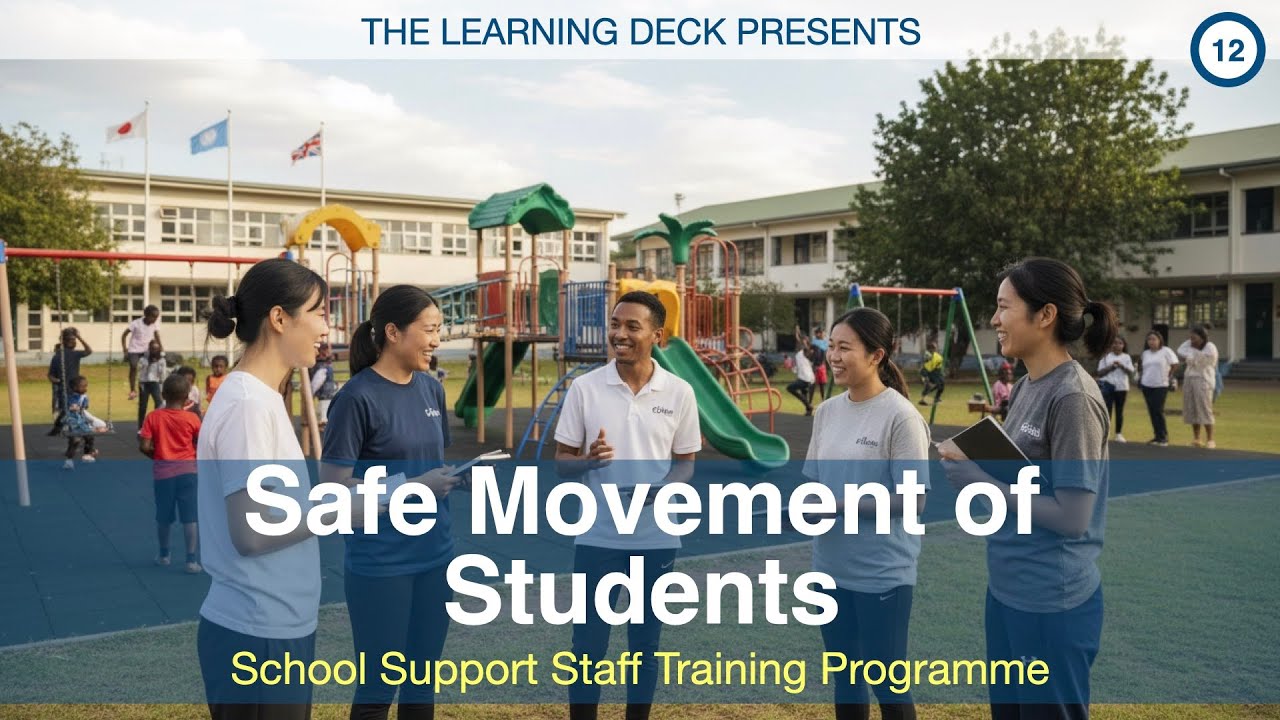
This module teaches security, transport, and maintenance staff how to ensure students move safely through hallways, stairs, entrances, and outdoor areas. It covers predicting risk by looking ahead and noticing crowding or running, using calm presence and clear simple instructions ("Please slow down," "Walk, please"), and knowing when to intervene to prevent injuries. The module emphasises that safe movement is about prevention not punishment, and that adult awareness keeps everyone protected.
Safe movement of students -

This module helps operations staff understand that in international schools, behaviour means different things to different people from different cultures. It teaches staff not to assume someone is rude when they simply have different communication norms (volume, personal space, gestures), to pause and observe before reacting, and to use simple polite language that works across cultures. The module emphasises giving space, lowering voices, using calm gestures, and respecting differences to avoid conflict.
Cultural sensitivity and communication -

This module teaches operations, cleaning, and security staff their responsibilities during rare but critical emergencies like fire drills, lockdowns, or medical situations. It emphasises knowing the school's emergency plan, following directions from leaders exactly without improvising, keeping students calm through steady voice and clear instructions, and never taking shortcuts or acting alone. The module stresses that in emergencies, calm and clear action following established procedures saves lives.
Your role in emergencies -

This module teaches operations and cleaning staff that every person represents the school through their words, actions, and appearance. It explains how first impressions matter - a friendly greeting, holding a door, a calm response - and how simple professionalism (neat appearance, clean work areas, respectful language, being on time, doing work carefully) shows pride and shapes how parents, visitors, and students perceive the school. The module emphasises that staff are ambassadors whose daily actions collectively build the school's reputation.
Being an ambassador for the school -

This module teaches administrative staff professional communication skills for interactions with parents, visitors, and other staff members. It emphasises using calm tone and simple English, active listening techniques (not interrupting, showing attention through nodding and eye contact), and ending conversations politely with clear next steps. The module explains that professional communication doesn't mean being cold - it means being clear, calm, and respectful, which builds confidence and trust.
Customer facing professionalism -

This module teaches administrative staff how to communicate effectively with parents who may be anxious about their children's learning, behaviour, or safety. It emphasises staying neutral and respectful, sharing only factual information rather than opinions or guesses, and knowing role boundaries - referring educational and teaching decisions to teachers and leaders rather than offering advice. The module stresses that remaining neutral and fact-based protects everyone and prevents miscommunication.
Working with parents -

This module teaches administrative staff to handle sensitive information including student records, family details, and staff data with care, following laws like GDPR. It covers sharing information only with those who need to know, avoiding gossip even about seemingly small matters, storing documents and digital data securely, and maintaining calm professional behaviour when managing confidential matters. The module emphasises that protecting information carefully builds trust with families, staff, and the wider school community.
Confidentiality - Admin -

This module teaches administrative staff effective internal communication through clear, concise writing with strong email subject lines, confirming next steps and responsibilities, and avoiding blame even when problems occur. It emphasises that simple writing with polite language and clear purpose prevents mistakes, reduces confusion, and helps the whole school work together smoothly.
Internal communication basics -

This module helps administrative, IT, finance, and HR staff understand how their behind-the-scenes work directly supports student learning. It explains that when systems work well - classes start on time, lessons continue smoothly, staff and resources are supported - students benefit even if they never see the work being done. The module emphasises that efficiency, quality, and dependability in support roles create the foundation that enables teachers to teach and students to learn effectively.
Supporting school systems -

This module teaches administrative and operations staff to work effectively across different cultural norms in international school teams. It addresses that people may communicate, work, and problem-solve differently based on cultural background, and teaches staff to clarify rather than criticize when confused, practice patience, ask polite questions, avoid assumptions, and focus on shared goals. The module emphasises that understanding and respect across differences builds stronger, more effective teams.
Working in a multicultural team -
This module provides guidance for non-native English speakers on using clear, simple professional English in the workplace. It teaches keeping sentences short, avoiding idioms and expressions that confuse non-native speakers, speaking slowly to give others processing time, and actively checking understanding with phrases like "Can you repeat?" and "Is this clear?" The module emphasises that simple, clear English prevents problems and helps diverse teams work together effectively.
Professional English Basics -
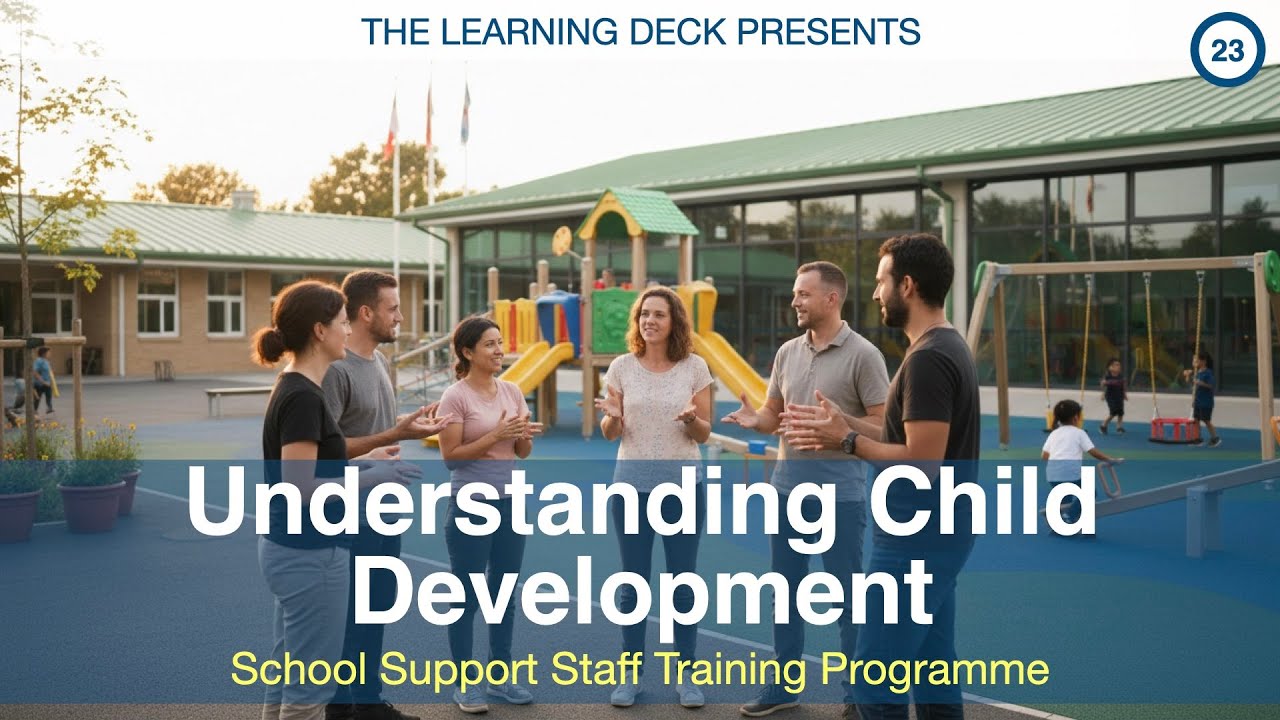
This module teaches staff that children's behaviour changes as they grow, and what's normal at one age may not be normal at another. It explains that young children are still learning to move, focus, and follow rules (so wandering and needing reminders is normal), while teenagers may be moody or withdrawn without it being a problem. The module emphasises that behaviour isn't always disrespect - it may be developmental - and teaches staff when to ask teachers for guidance about concerning behaviour changes.
Understanding child development -

This module explains how all staff contribute to creating an inclusive environment where every student feels they belong - from students who learn easily to those who find school more challenging. It teaches supporting children with additional needs (sensory sensitivities, attention difficulties, emotional challenges) through calm predictable actions, avoiding labels like "difficult" or "problem child," and recognizing that small supports like quiet spaces, gentle reminders, and patient responses help all children feel safe and able to learn.
Your role in inclusion -

This module trains staff to notice behavioural changes that may indicate a child needs support - withdrawal, unusual quietness, sadness, isolation, or stopping participation. It teaches simple check-in techniques using brief questions like "Are you okay?" and "Do you need help?" and emphasises reporting concerns quickly to teachers or leaders. The module stresses the critical rule never to promise secrecy when a child shares something serious, instead explaining that information may need to be shared with people who can help.
Recognising a child needs help -

This module provides practical strategies for supporting students with learning needs, attention difficulties, sensory sensitivities, or emotional challenges through their daily routines. It teaches using clear routines and visual cues, giving one instruction at a time to avoid overwhelming students, providing physical space or quiet time when needed, and exercising patience by allowing silence and avoiding rushing. The module emphasises that understanding needs and responding calmly prevents escalation and helps students stay regulated and focused.
Supporting children with additional needs -

This module addresses staff self-care and mental health, normalising that school work can be rewarding but also stressful. It teaches simple coping strategies including healthy habits (sleep, regular meals, water, breaks) and breathing exercises, encourages asking for help from colleagues or supervisors, emphasises avoiding gossip which increases stress, and reminds staff that supporting each other creates healthier workplaces. The module stresses that "healthy staff means a healthy school."
Wellbeing for staff -

This module explains the school's reporting structure and decision-making hierarchy, teaching staff to know who to report different concerns to (teachers, leaders, office), to avoid guessing about severity of situations, and to escalate urgent matters quickly. It emphasises following established procedures so that communication stays clear, responsibilities are understood, and decisions are made by the appropriate people, ultimately protecting students, staff, and the school.
Understanding chain of responsibility -

This module guides staff on when and how to take initiative appropriately in schools. It distinguishes low-risk actions staff can take independently (like moving obstacles from walkways to prevent tripping) from situations requiring permission, emphasises communicating what actions were taken and why, and stresses that safety always comes first - if a situation looks unsafe, don't handle it alone but get help and follow procedures. The module clarifies that initiative means helping, not acting independently without thought.
Taking initiative safely -

This module reinforces that every role in a school - from teachers to cleaning staff - contributes to the learning community and shares the mission of helping students feel safe, valued, and able to learn and grow. It emphasises taking pride in quality work shown through small actions (doing work carefully, treating others respectfully, helping when able, taking responsibility), and recognizes that when everyone works together with shared purpose, learning becomes stronger for all students.
Being part of a learning community -

This concluding module celebrates participants' completion of the training programme and reinforces key learnings: that small actions like calm voices, clear communication, and respectful behaviour shape students' daily experiences. It encourages continued questioning, observation, and mutual support, thanks staff for their care, effort, and professionalism, and affirms that every staff member is an essential part of the school community whose actions have meaning and impact.
Programme closure