Induction Guide
Board Deck
Eight short sessions to bring clarity to how your board makes decisions. Pick a card to start.
Sessions 2–9 are available to registered purchasers — tap a locked card to enter the access password.
This session is locked
Sessions 2–9 are available to registered purchasers of the Board Deck. Enter your access password to read this and the other locked sessions.
Don't have a password? Email nik@learning-deck.com.
Session 01 · Open
Start here: an introduction to the Board Deck
What this deck helps boards do, and how the cards fit together. About 20 to 30 minutes.
Companion cards 1–2 · Start here and Find your way in
Before you begin
Open the box. You will notice multiple copies of some cards. This is deliberate. The Practices, Principles and Governance Lenses come in several sets so they can be distributed around the table and every member can take part.
What this deck helps you do
Most boards are well organised. Agendas are set, minutes are recorded, policies are reviewed. That does not guarantee effective governance.
The Board Deck gives a board a shared language for how it directs its attention and thinks together: clarifying information, testing assumptions, widening possibility, creating constructive conditions, focusing attention, and supporting responsible action.
What's in the box
Eight kinds of card, each playing a different role. They share the same six principles as every other deck in the suite, so the language carries across governance, leadership and learning.
6 Principles & 9 Profiles
The six ways a board directs attention, and the nine governance modes formed where they meet.
9 Governance Lenses
Each profile extended: when to adopt it, the risk of over-relying on it, and how to shift.
12 Standards
Two areas of effective governance for each principle, each with a rubric.
48 Practices
Four observable expressions of each standard: what an effective board actually does.
48 Inquire cards
Questions across eight styles that redirect thinking when discussion narrows.
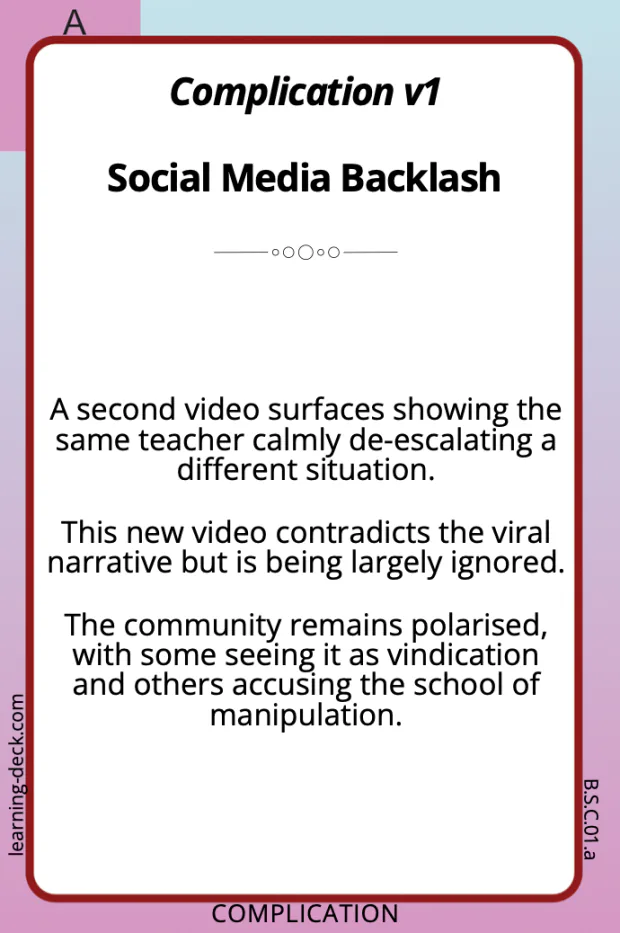
16 Scenarios & 48 Complications
Five perspectives on one situation, with developments that test the board's thinking.
Finding your way in ℹ︎
You do not need to read every card. Enter through the part that matches the work:
- A live decision: start with a Principle, then choose relevant Practices.
- Meeting dynamics: use Governance Lenses to see which mode is dominant and what is missing, and Inquire cards to redirect thinking when discussion stalls or narrows.
- Board development: start with a Standard or a Practice.
- A difficult or unfamiliar situation: use a Scenario set and its Complications.
- Annual evaluation: use the Standards and their rubrics, supported by evidence from the Practices.
The parts connect, but they do not need to be used in a fixed order.
1. The structure: the Board Nine Map ℹ︎
The nine map is the structure that holds everything together. It crosses two sets of three principles:
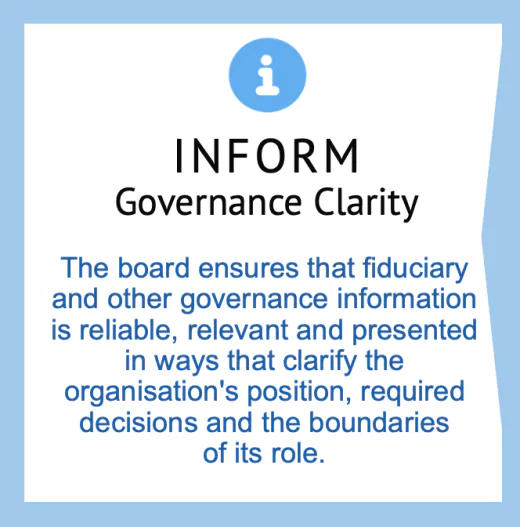
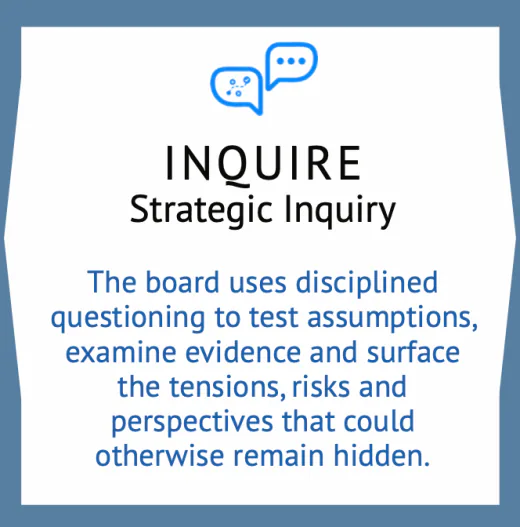
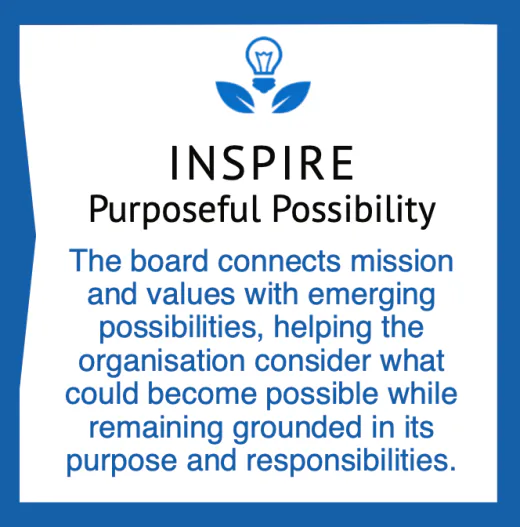
- How the board directs attention (the design intent): Inform, Inquire, Inspire
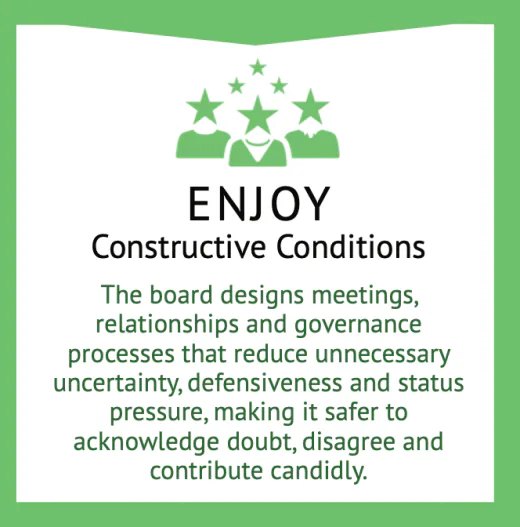
- What emerges in the board (the adaptive response): Enjoy, Engage, Empower
Three by three gives nine governance profiles, each a distinct mode of board thinking. They are modes, not personality types: the same board moves between them as the work requires. Hover or tap any profile to open its Governance Lens.
Read it like a bar chart: the design-intent columns (Inform, Inquire, Inspire) run along the base, and the rows rise from Enjoy at the foundation, through Engage, up to Empower.
Full lens detail is printed on the card.
2. The six principles ℹ︎
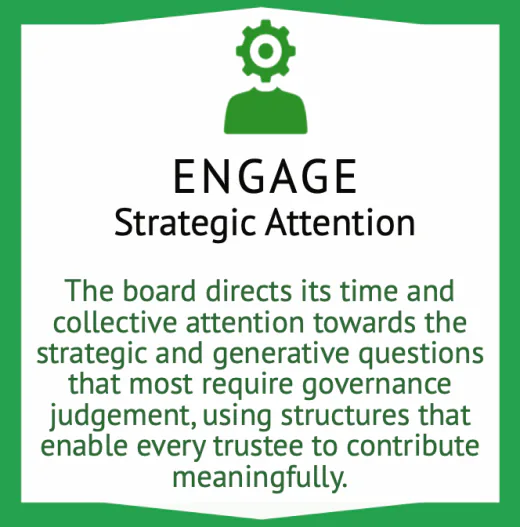
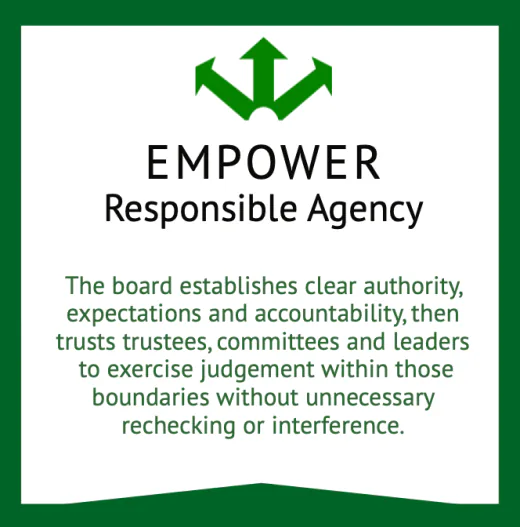
Three describe what the board designs. Three describe what then emerges.
Two that are easy to misread
Inform is not just sending papers. It reduces uncertainty and creates orientation, so trustees arrive knowing where an issue sits and what is being asked of them. Enjoy is not fun or entertainment. It is the reduction of unnecessary cognitive cost: when people no longer spend attention on status, self-protection or decoding avoidable ambiguity, that attention is released for the work.
3. Governance Lenses ℹ︎
Each of the nine profiles extends into a Governance Lens. A profile names a mode of thinking. Its lens turns that mode into something the board can use:
- When to adopt it: the situations where this mode serves the work
- The risk of relying on it alone: every mode has an inverse, a way it fails when overused
- A provocation: one question that tests whether the board is using the mode or hiding in it
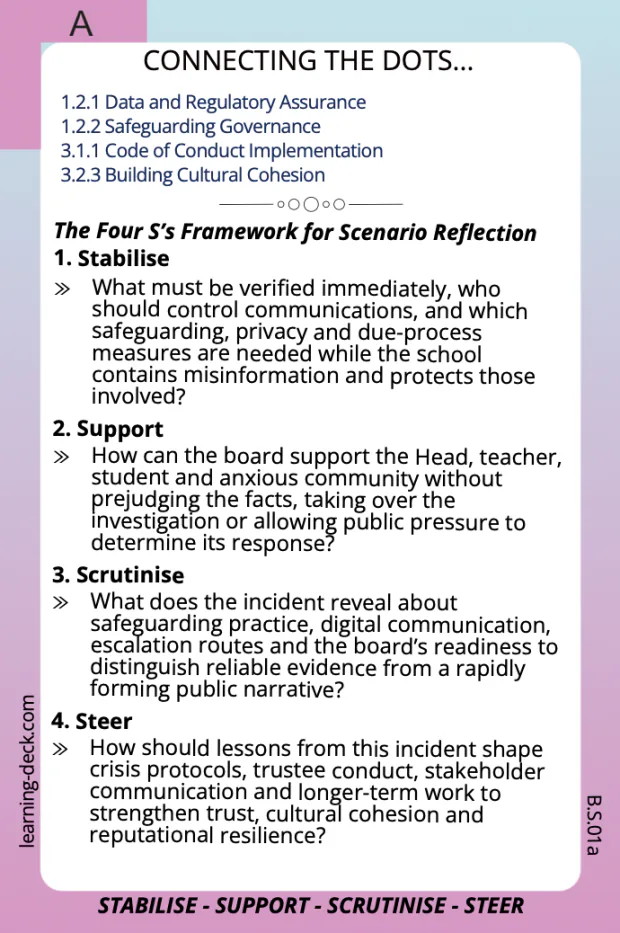
- The four S's: Stabilise, Support, Scrutinise, Steer, to guide a shift
Return to the nine map above and open a few lenses. The lens is where a mode becomes a move. (For example, the Vision Aligner's inverse is the Endless Examiner: questioning long after the decision is ready.)
4. Governance Standards ℹ︎
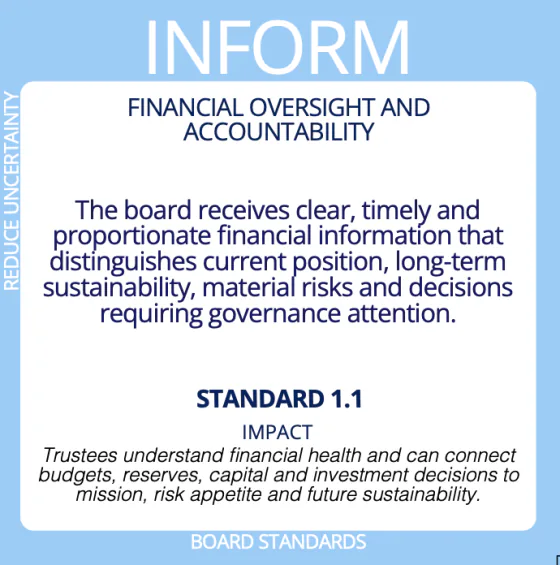
There are 12 standards, two for each principle. Each names an area of effective governance and comes with a rubric that distinguishes emerging, proficient and exemplary practice.
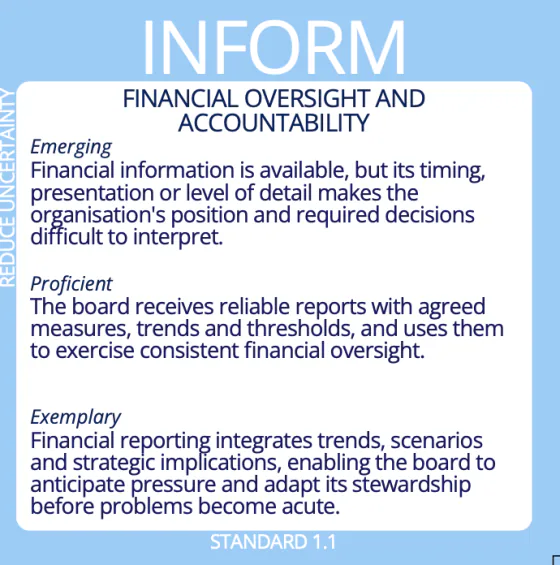
Use a standard to assess the wider pattern, then turn to its practices for what to do about it.
5. Board Practices ℹ︎
Each standard is expressed through four practices, forty-eight in all. They describe observable governance behaviours and answer a simple question: if we want to govern better, what do we actually do differently?
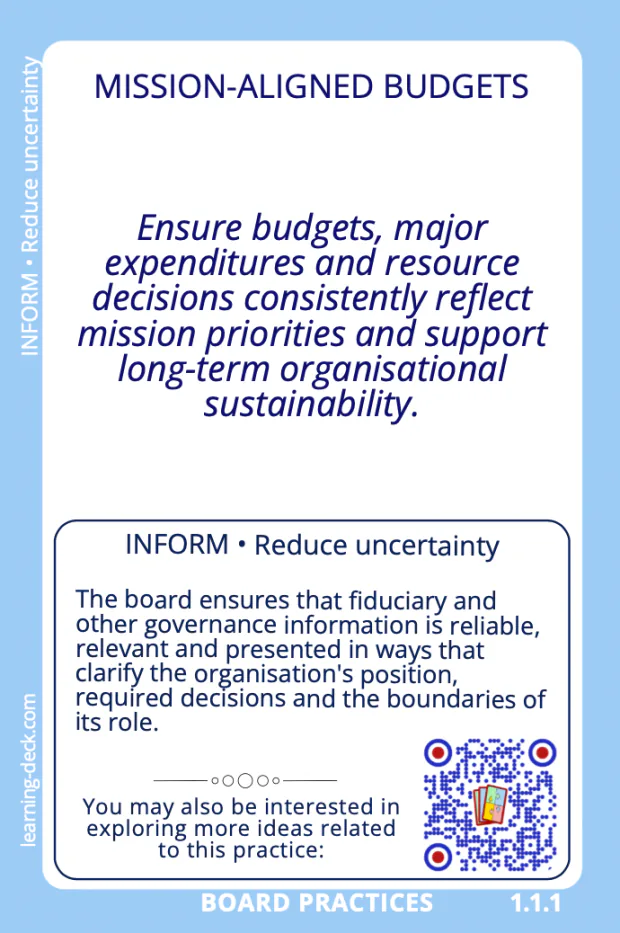
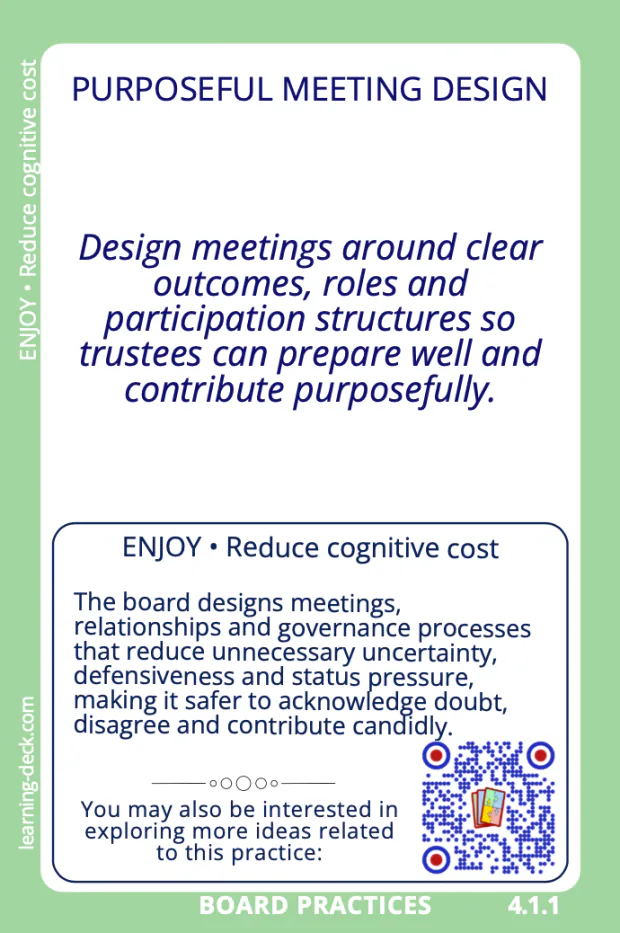
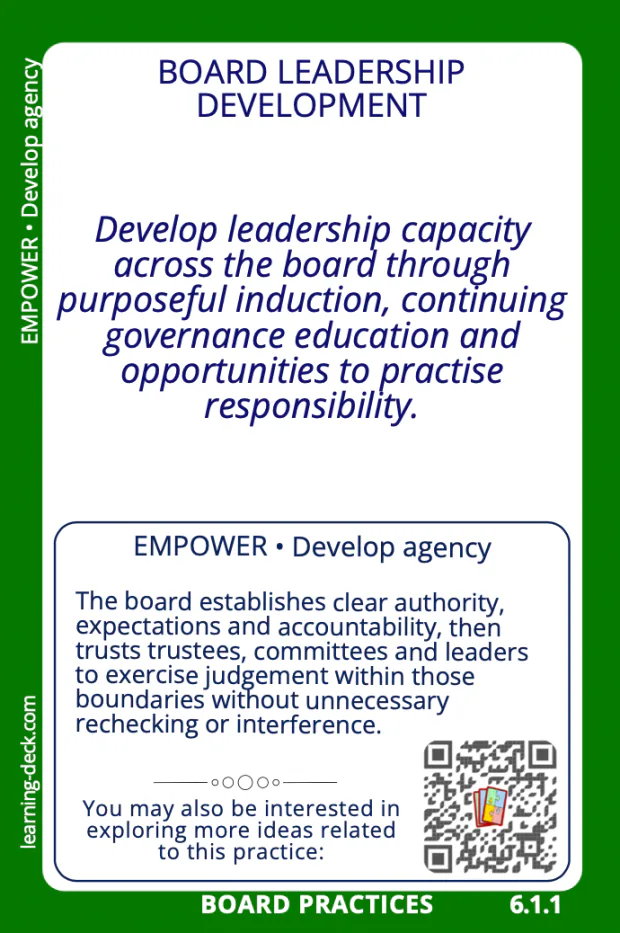
6. Inquire cards ℹ︎
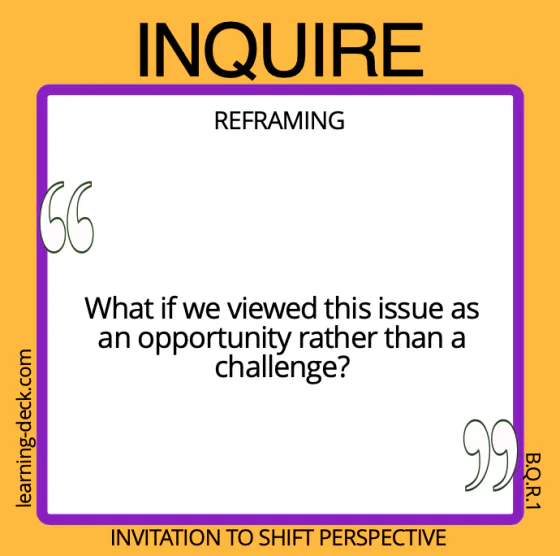
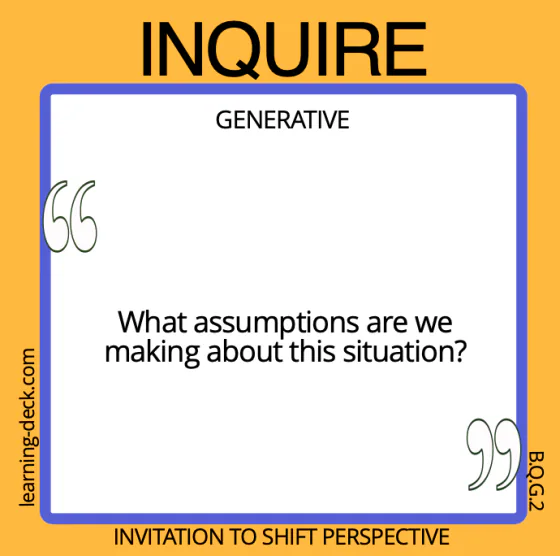
There are 48 Inquire cards across eight styles: clarifying, probing, reframing, generative, reflective, scaling, big picture and hypothetical. Each redirects thinking when a discussion narrows, an assumption goes untested, or the board needs a different way in.
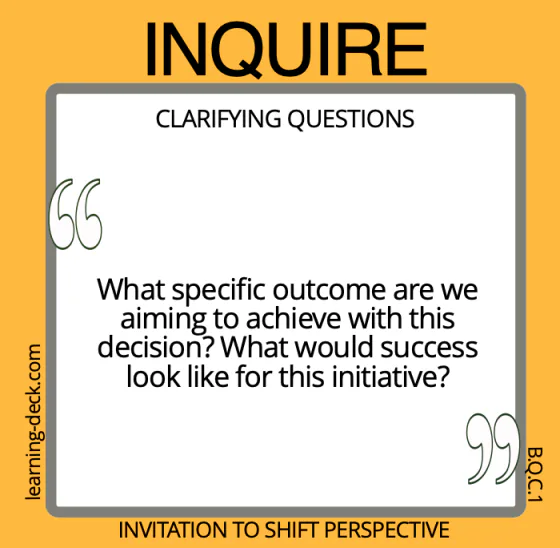
7. Scenarios and complications ℹ︎
There are 16 scenarios. Each is written from five perspectives on the same situation, and every brief holds different information, pressures and assumptions. The board's task is to govern the situation, not to find a perfect answer.
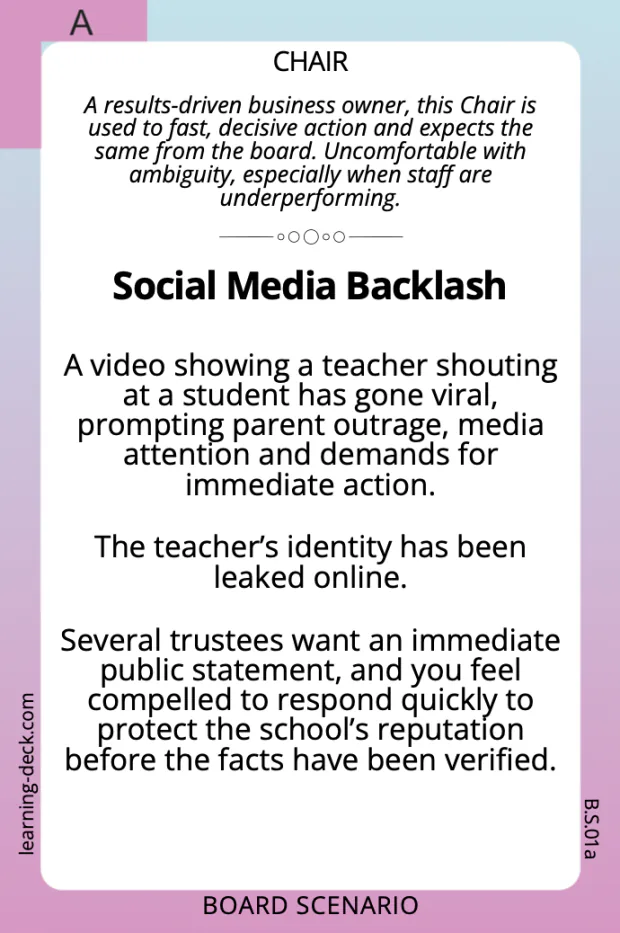
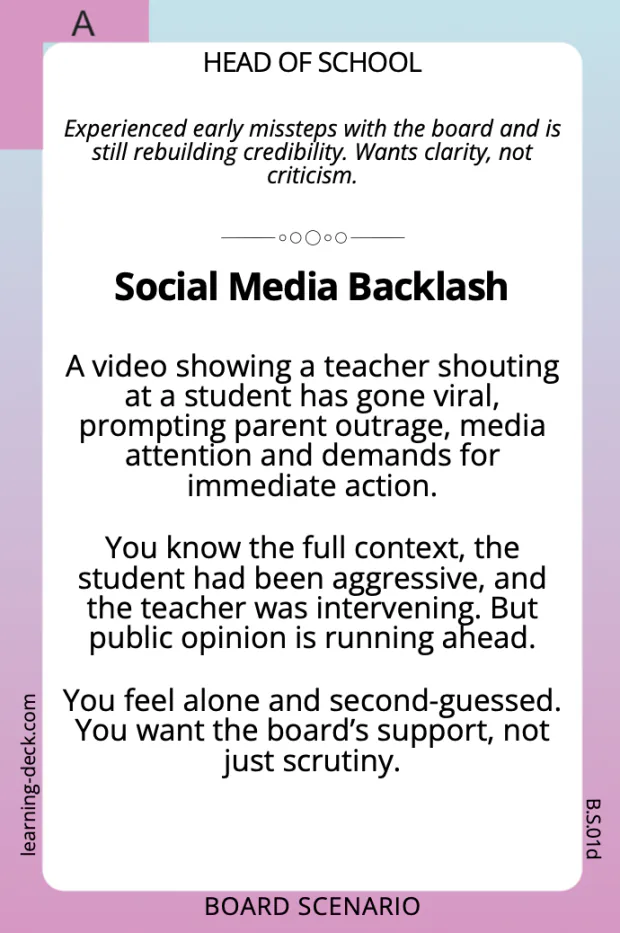
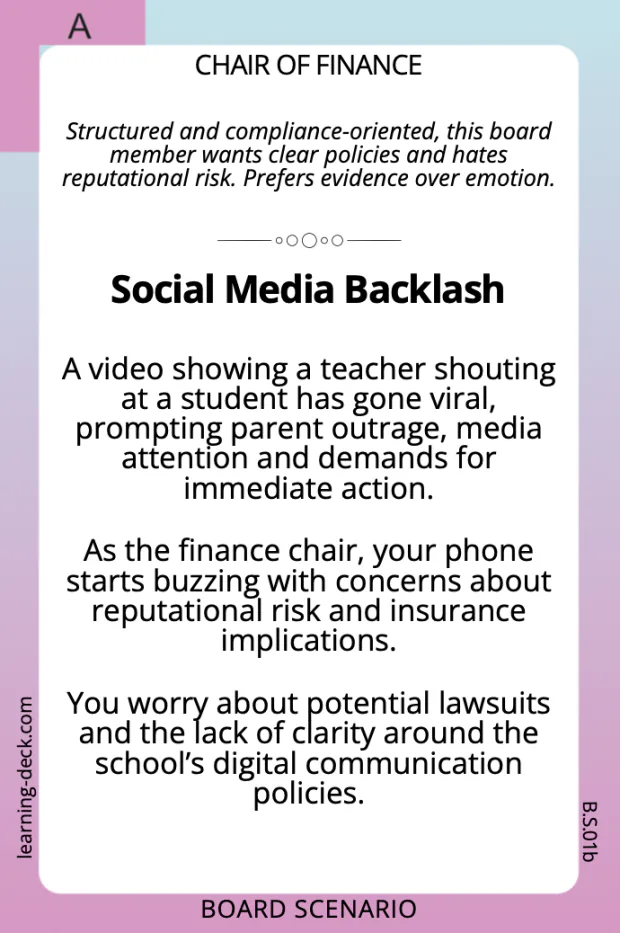
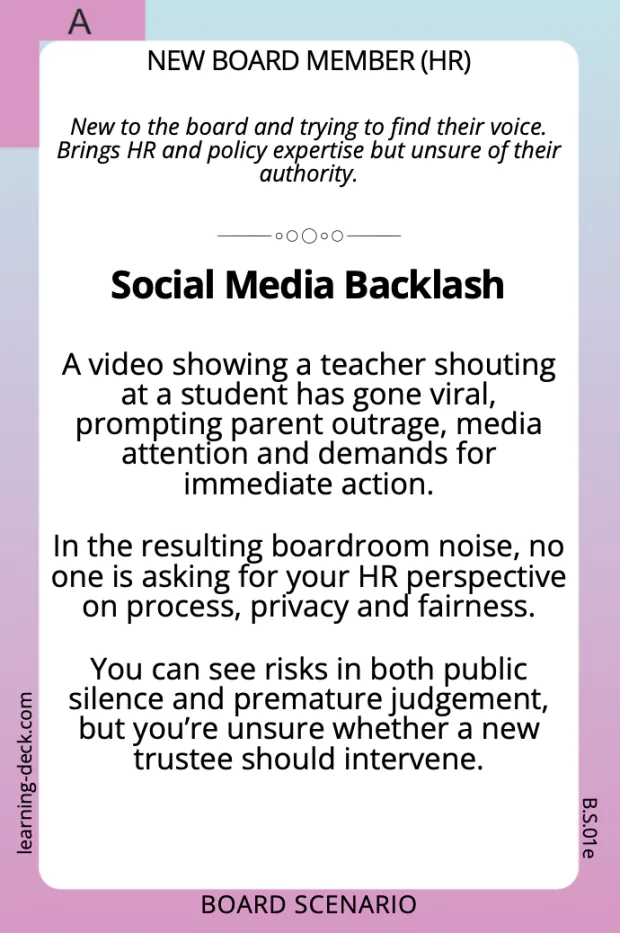
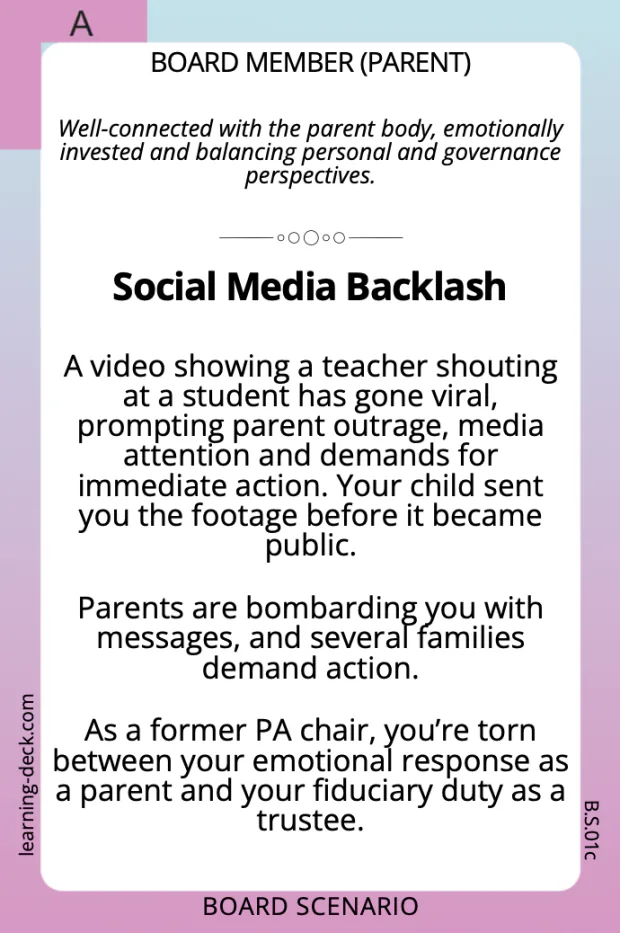
The reverse of each scenario connects it to the relevant Practices and to the four S's: Stabilise, Support, Scrutinise, Steer. Then one of three complications is revealed, changing what the board thought it knew.
How it fits together
- The nine map shows the whole governance system
- Principles and profiles make thinking visible
- Governance Lenses turn a mode into a move
- Standards provide structure for review
- Practices shape behaviour
- Inquire cards deepen discussion
- Scenarios and complications apply the thinking safely
One line to hold
Effective governance is not what a board discusses. It is how the board thinks.
Where this deck fits in the suite ℹ︎
This deck answersHow should we govern effectively?
Across all eight: make the invisible visible → choose deliberately → act precisely → reflect and adapt.
Your first five minutes
Choose one significant item from the next board agenda. Lay out the six Principle cards and ask: what does this issue require from us? Greater clarity? Better questions? A wider sense of possibility? Safer conditions for candour? More focused attention? Clearer authority and ownership?
Choose the most relevant Principle, find one or two connected Practice cards, and use their wording to sharpen the agenda question or the board paper. Afterwards, ask: did this change how we approached the issue? That is enough to begin.
Where to go from here
You have now seen all the materials: the nine map, the six principles, the Governance Lenses, practices, standards, Inquire cards, and scenarios. That is enough to begin. The next session takes the board into its first structured exercise, using two principle cards to look at how decisions are owned.
If you are facilitating
Do not:
- evaluate individuals
- rush to solutions
- over-explain the model
Instead:
- keep discussion collective
- use examples, not theory
- allow patterns to emerge
Avoid: turning this into a compliance exercise · using standards too early · jumping to "fixing" the board · treating the deck as a checklist or set of techniques to apply.
The Board Nine Map connects directly to leadership and learning. Governance is not separate: it shapes the whole system. The next session begins your first structured board exercise.