Insights for International School Leaders
Resources
Essays on pedagogy, leadership, governance, and school culture — for international school leaders who think in systems.
31
modules
Learning Deck · Support Staff
Support Services Learning Programme
Short training videos for teaching assistants, operations, and administrative staff in international schools - covering safeguarding, learning support, professional conduct, and more. Available in six languages with role-based filtering.
Browse all modules →20
minutes
Free diagnostic tool
Synnovate · Diagnostic Tool
The Culture Diagnostic
See your school's operating patterns before you try to change them. A free twenty-minute diagnostic that reveals what your culture is actually rewarding - before a single workshop is booked.
Take the diagnostic →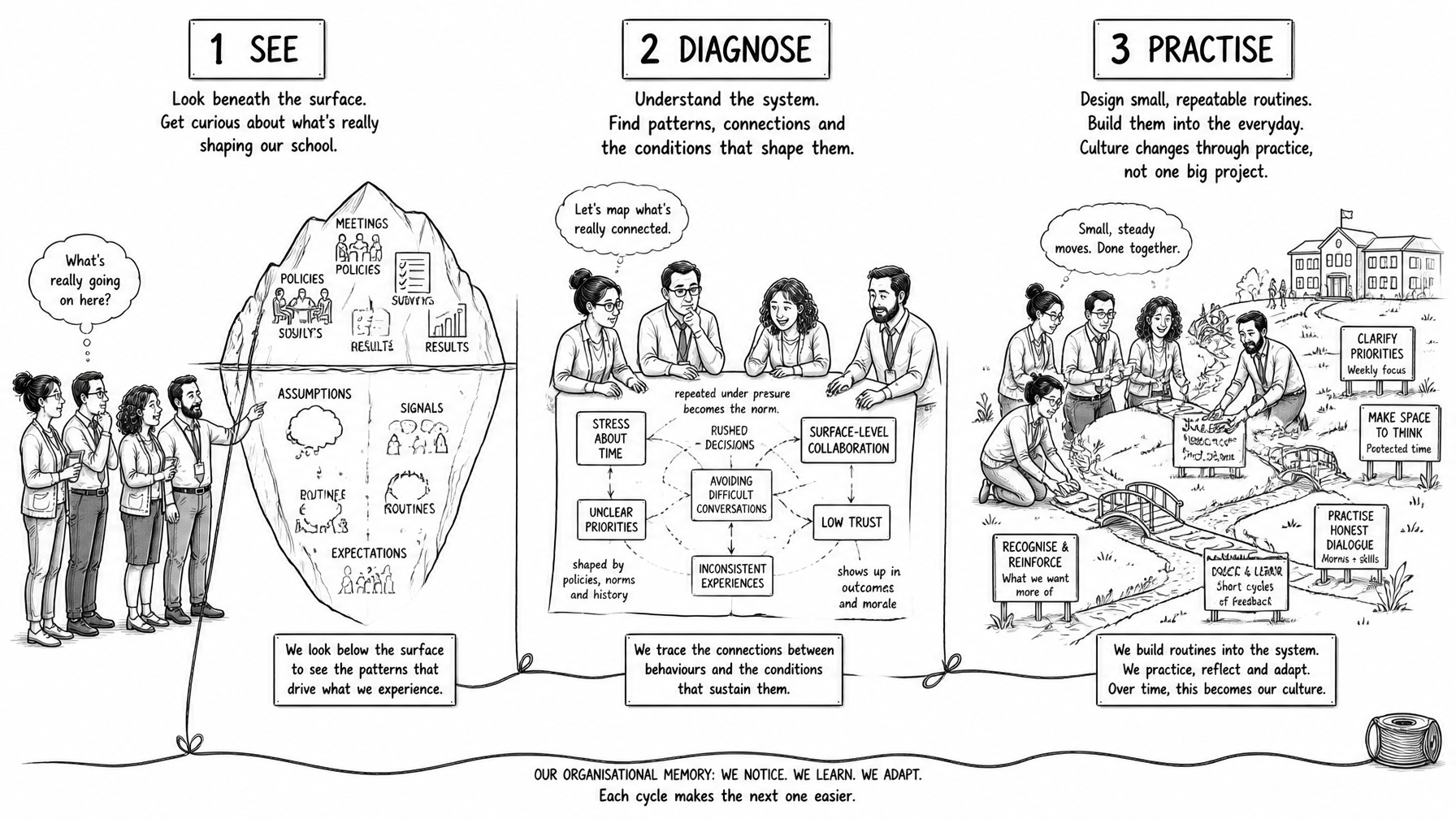
Learning & Leadership · Culture
Your school already has a culture strategy - it's called experience
Culture is not a set of shared values. It is a set of shared adaptations - what experience has taught people to expect. Why most culture work targets the wrong layer, and the three capabilities a school actually needs.
Read the article →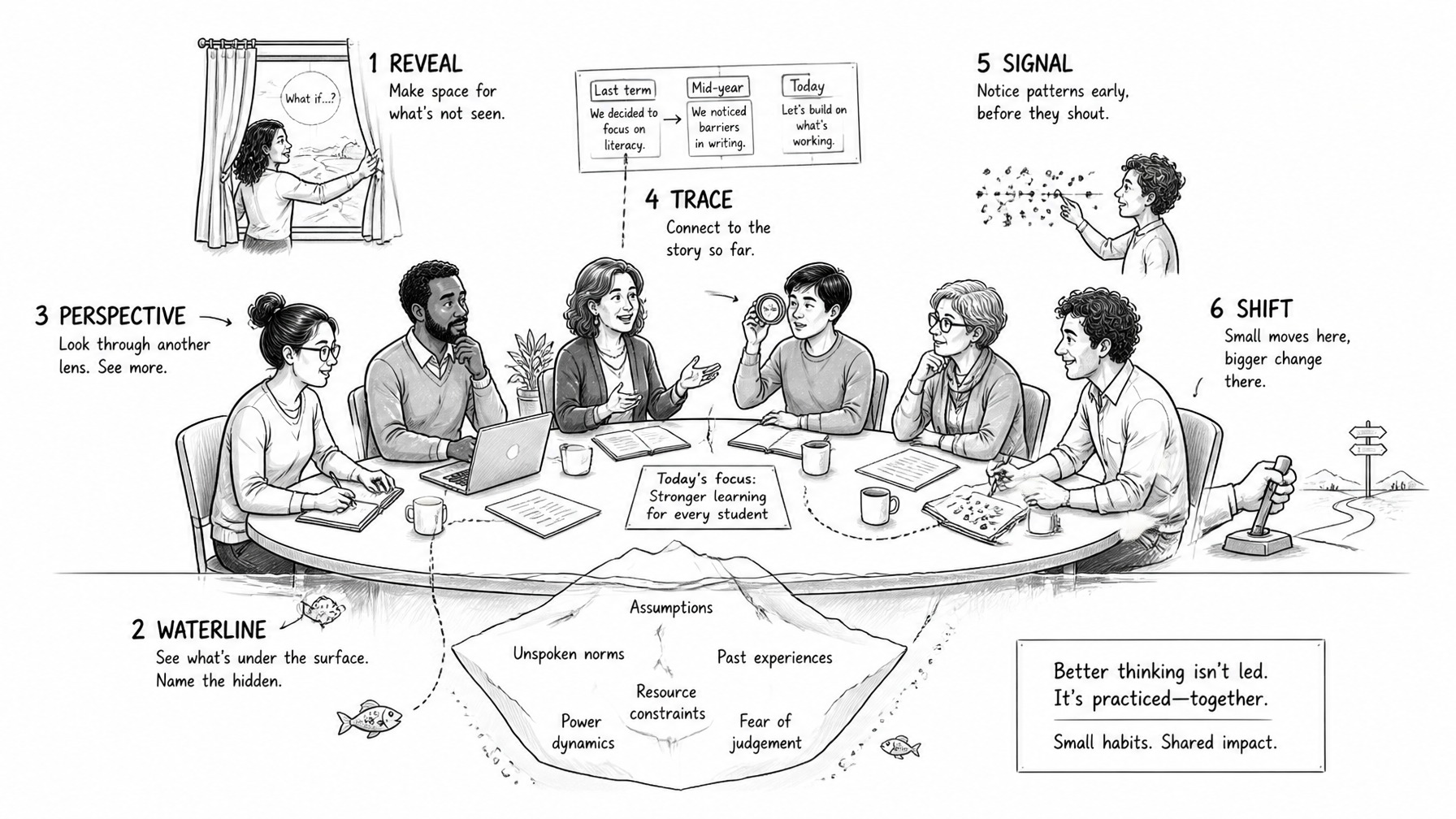
Learning & Leadership · Leadership
Building a thinking culture in schools
After every meeting, responsibility for action is distributed but responsibility for thinking quietly concentrates in a few people. How groups can share the thinking, not just the tasks.
Read the article →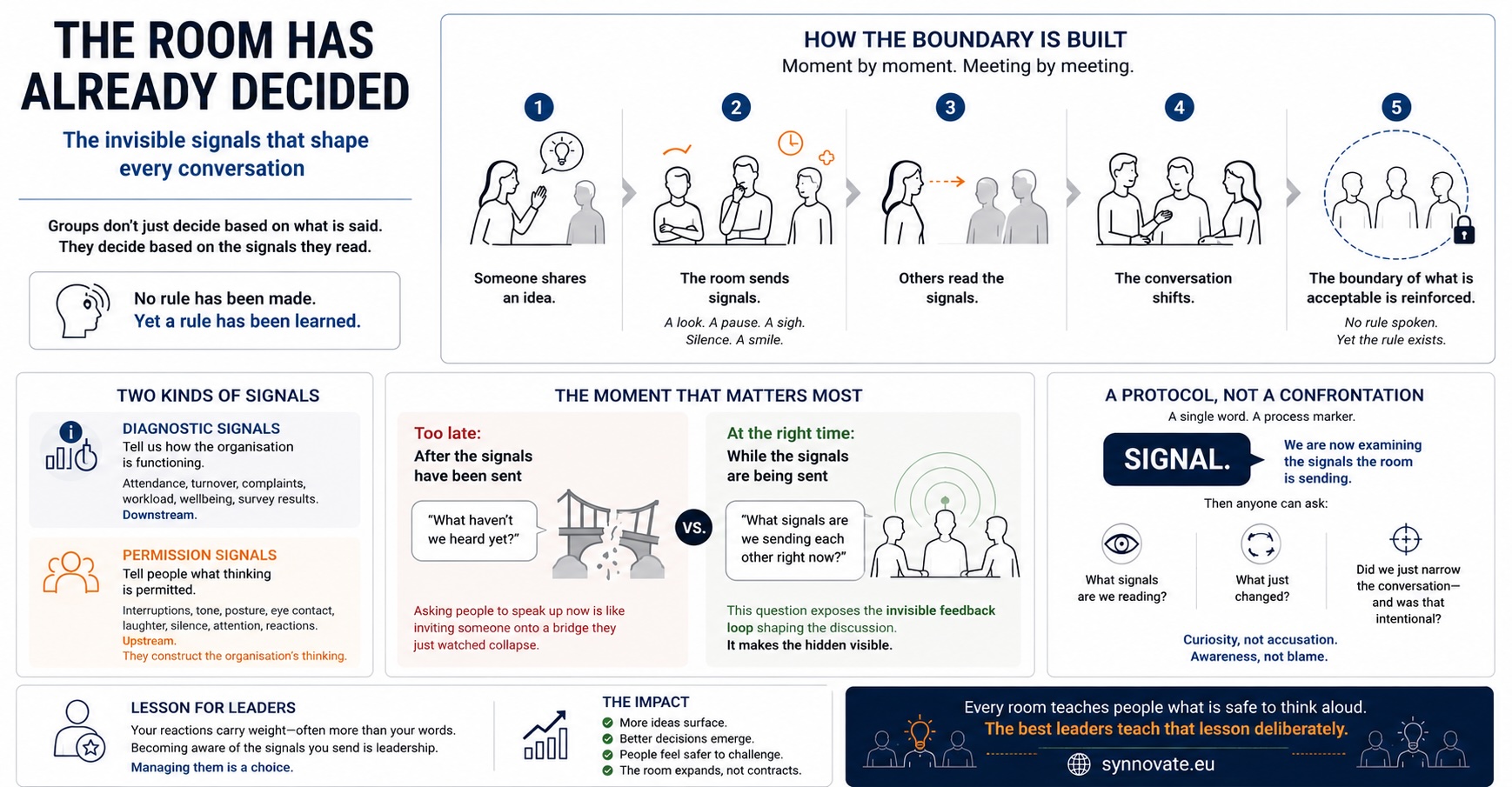
Learning & Leadership · Leadership
Permission Signals
Every meeting teaches people what is safe to think aloud. The best leaders teach that lesson deliberately — by learning to read the signals their own smallest reactions are broadcasting.
Read the article →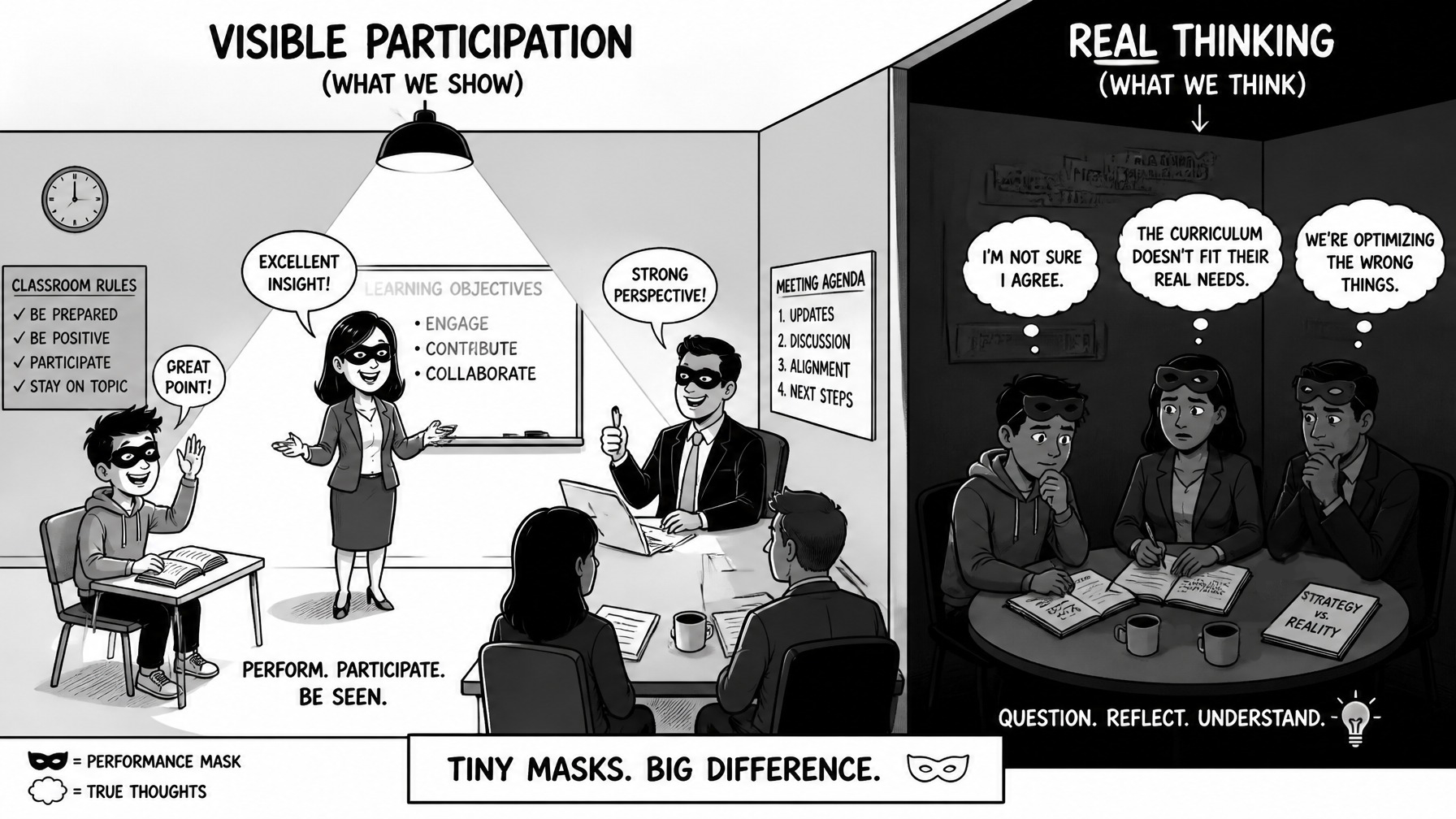
Learning & Leadership · Environment
The environments we build often destroy the learning we want
The structures schools build to make learning visible often make self-protection the more rational choice. Why environment shapes cognition before content.
Read the article →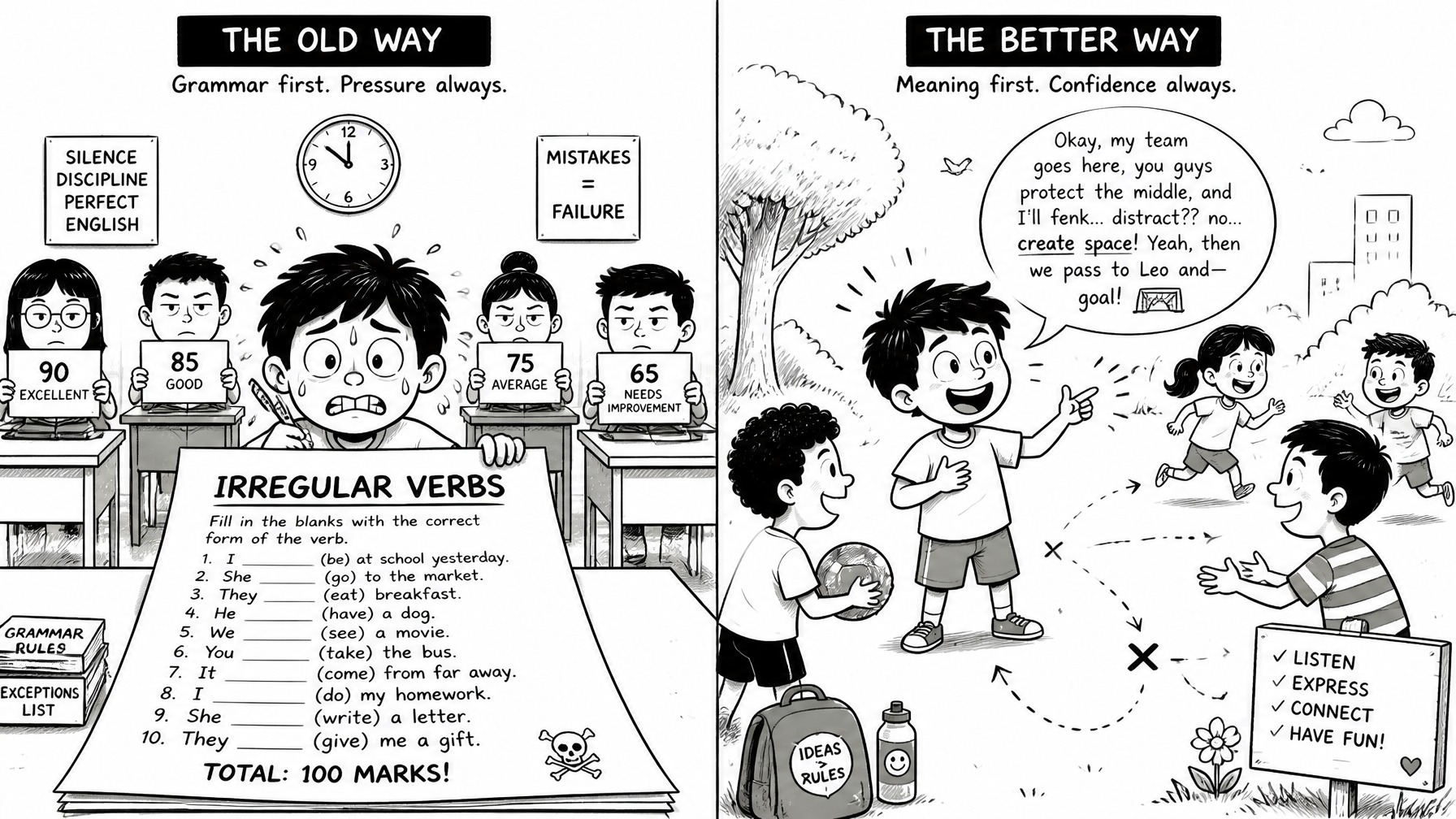
Learning & Leadership · Language Learning
Why children learn languages faster through play than lessons
Children don't acquire language faster through play because it's enjoyable. They acquire it faster because play creates structured necessity - participation driven by need, not performance.
Read the article →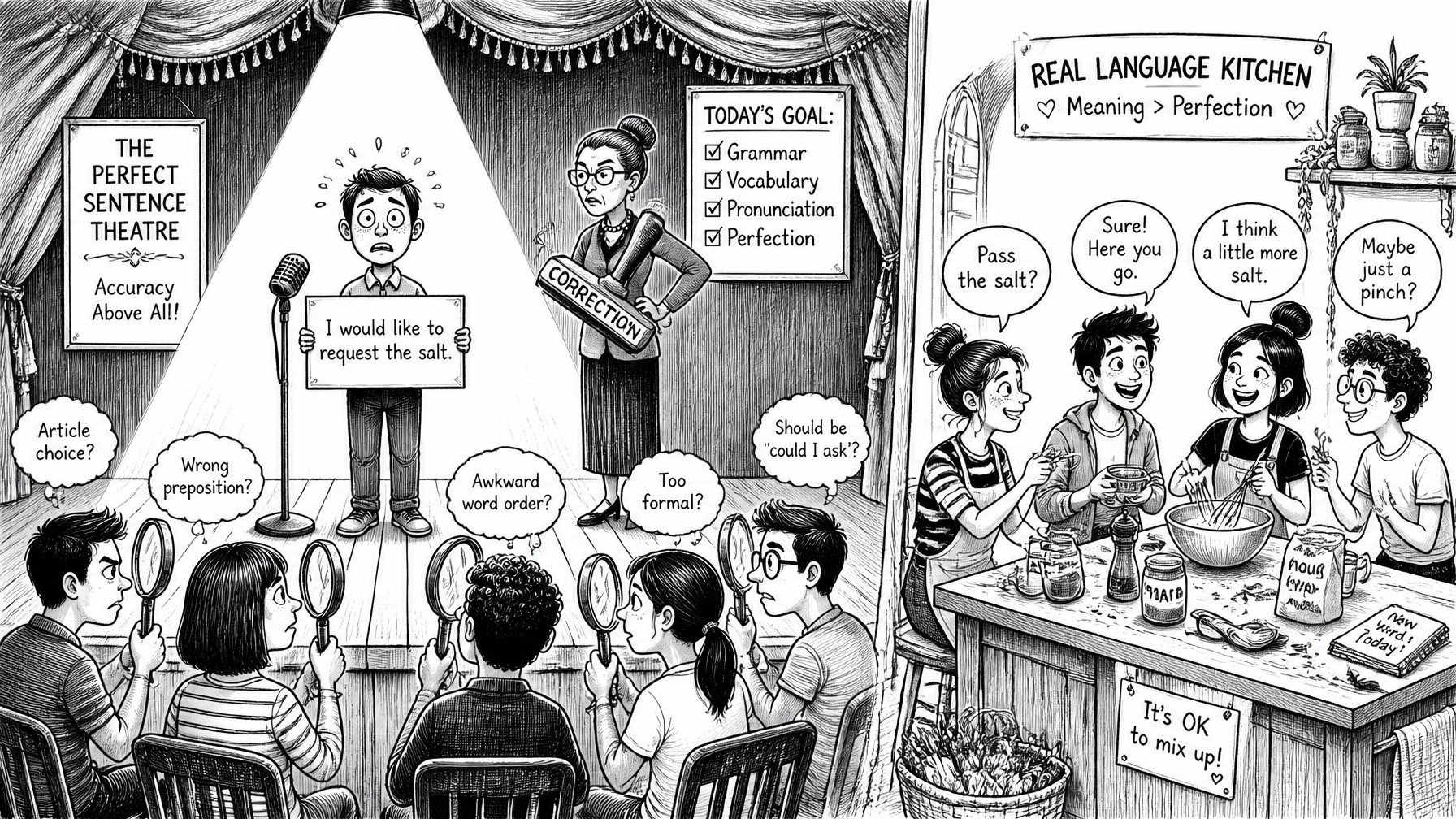
Learning & Leadership · Language Learning
The hidden problem with most language classrooms
The problem in most language classrooms isn't exposure or method. It's that correction has become the primary feedback loop - and students have learned accordingly.
Read the article →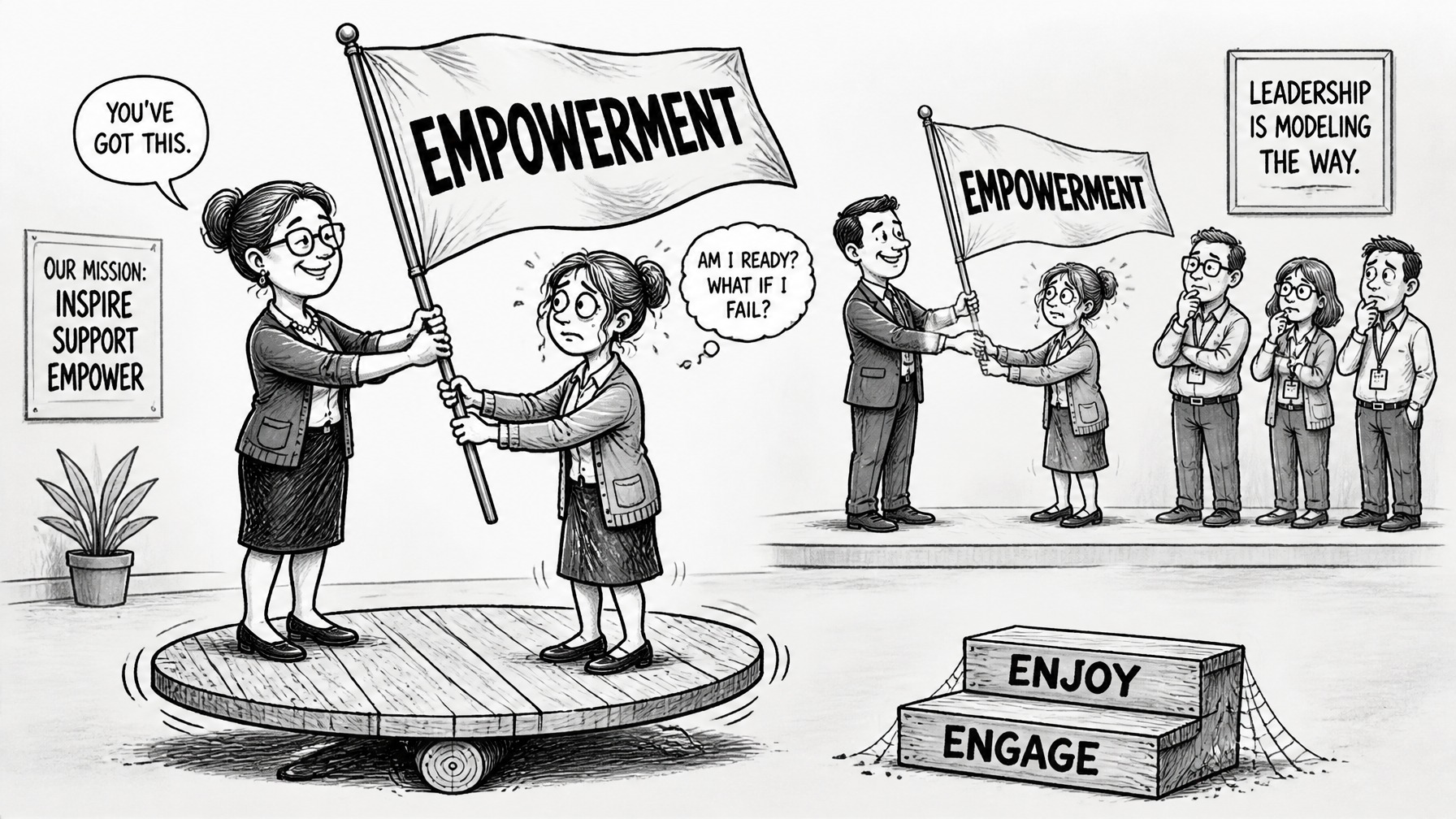
Learning & Leadership · Learning Design
Enjoy before Empower
Enjoy reduces unnecessary background processes. Engage invests attention in meaningful work. Empower emerges when new adaptive routines become useful.
Read the article →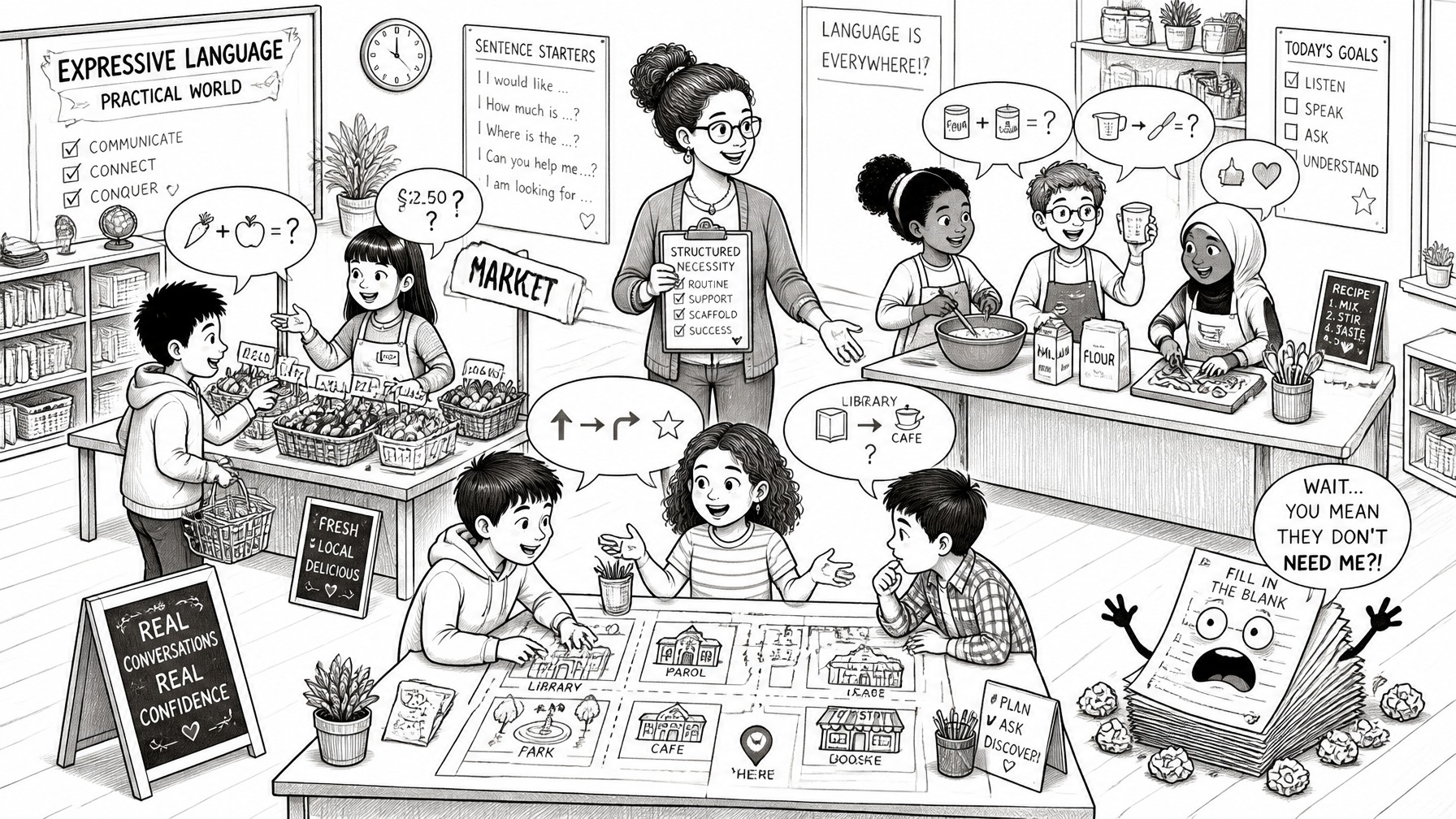
Learning & Leadership · Learning Design
What would a language acquisition environment actually look like?
Not a classroom with better resources, but an environment where participation is driven by genuine social necessity. What deliberate language acquisition spaces actually require.
Read the article →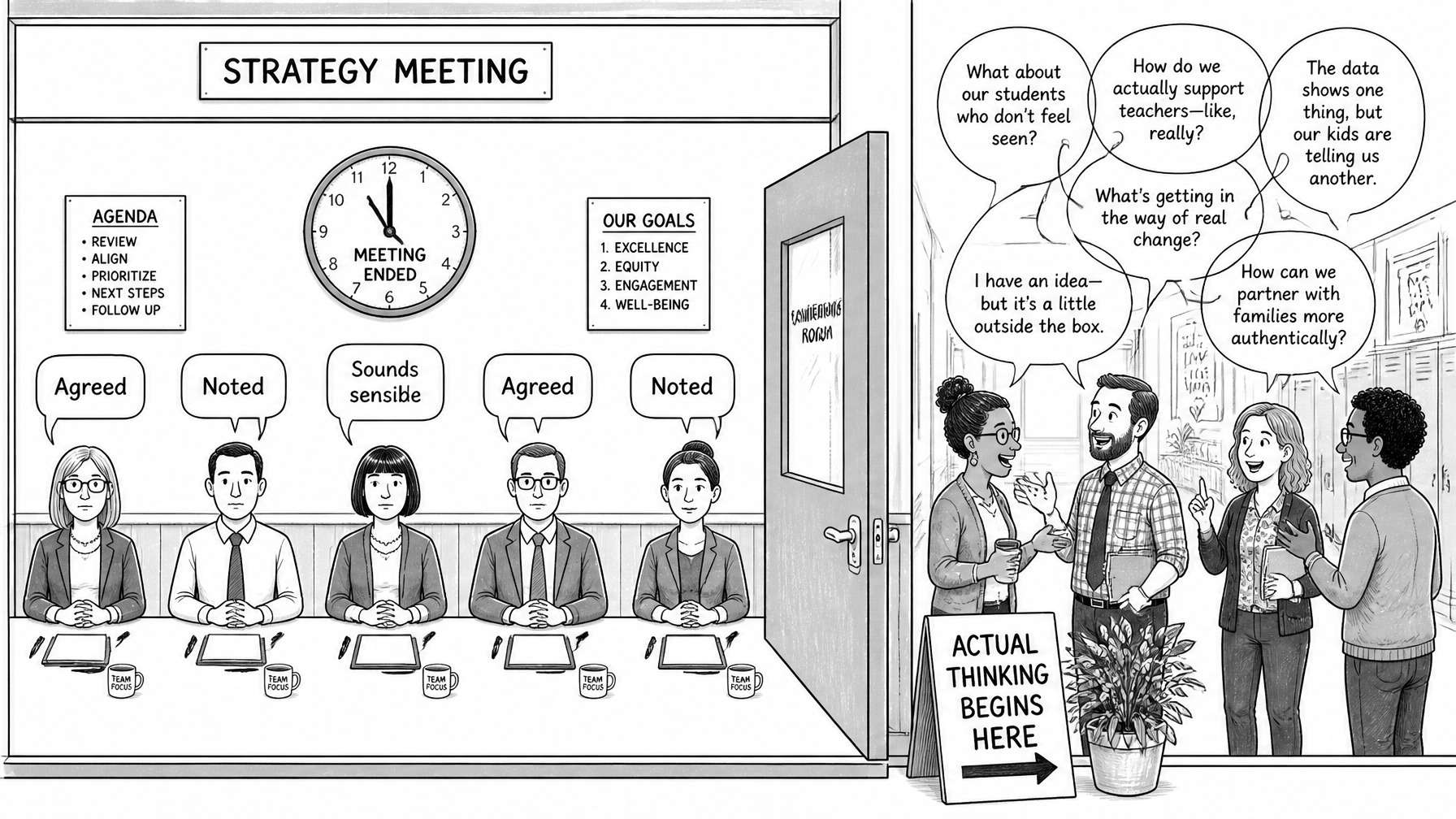
Learning & Leadership · Leadership
Most meetings are not thinking environments
Most meetings are performance environments. The same dynamics that silence students in classrooms operate in leadership meetings - just with higher stakes and better vocabulary.
Read the article →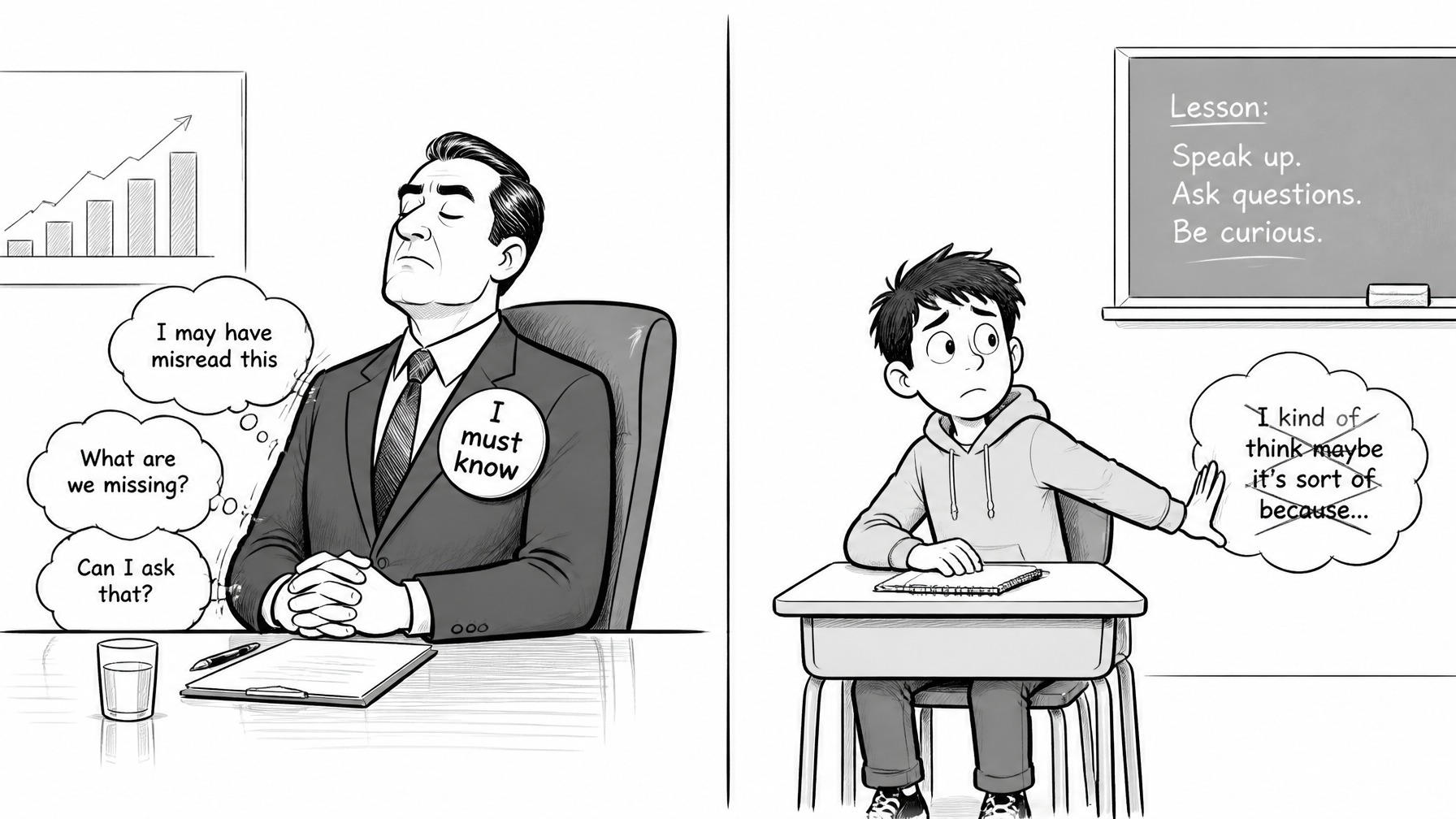
Learning & Leadership · Leadership
Why leaders stop learning in meetings
Leaders are expected to learn constantly. But learning requires a person to be unfinished in public - and that is not always safe when you are in a leadership role.
Read the article →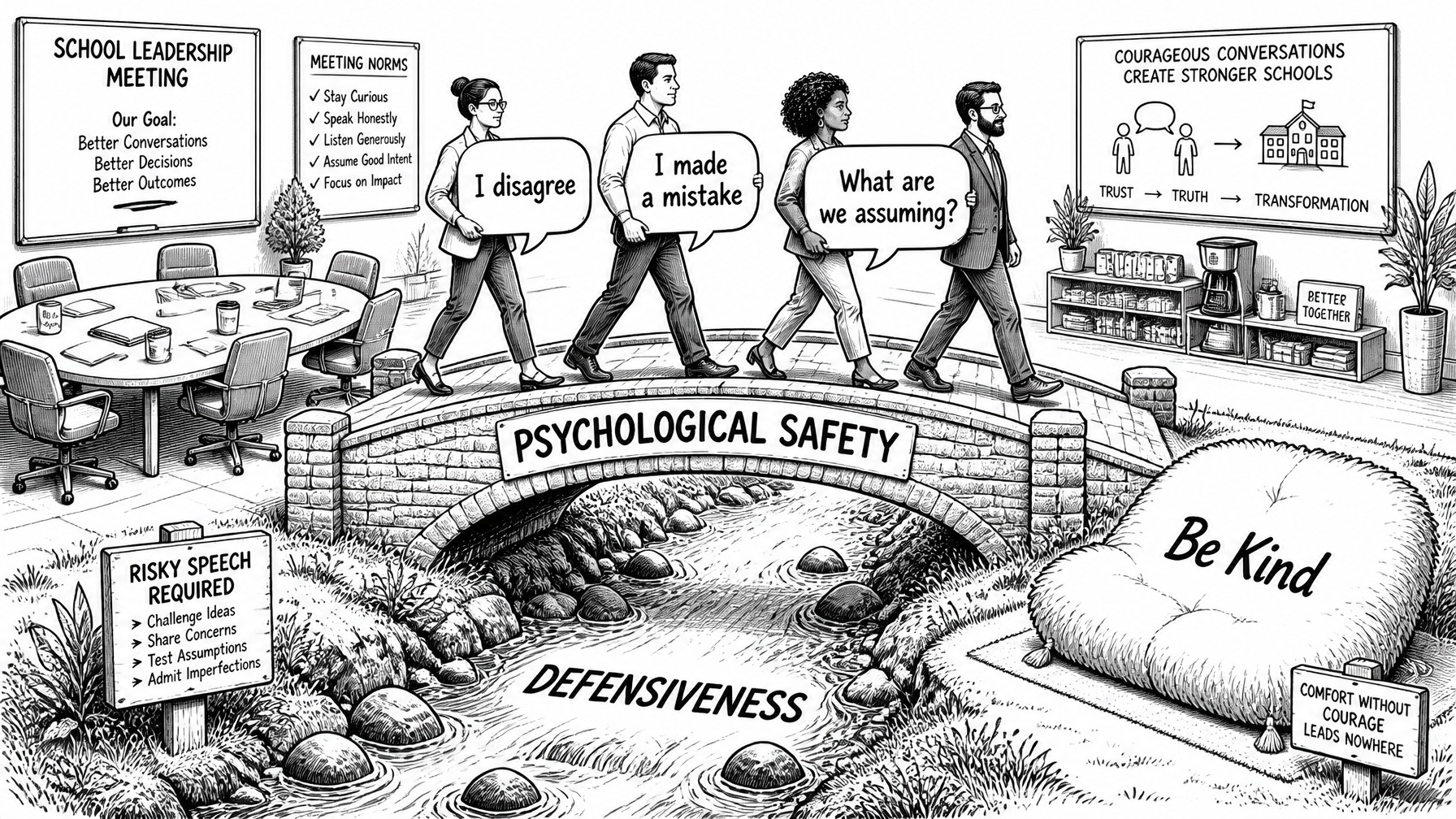
Learning & Leadership · Culture
Psychological safety is not kindness
Psychological safety isn't warmth or comfort. It's a condition for disciplined collective cognition - a room where discomfort can be used without becoming personal threat.
Read the article →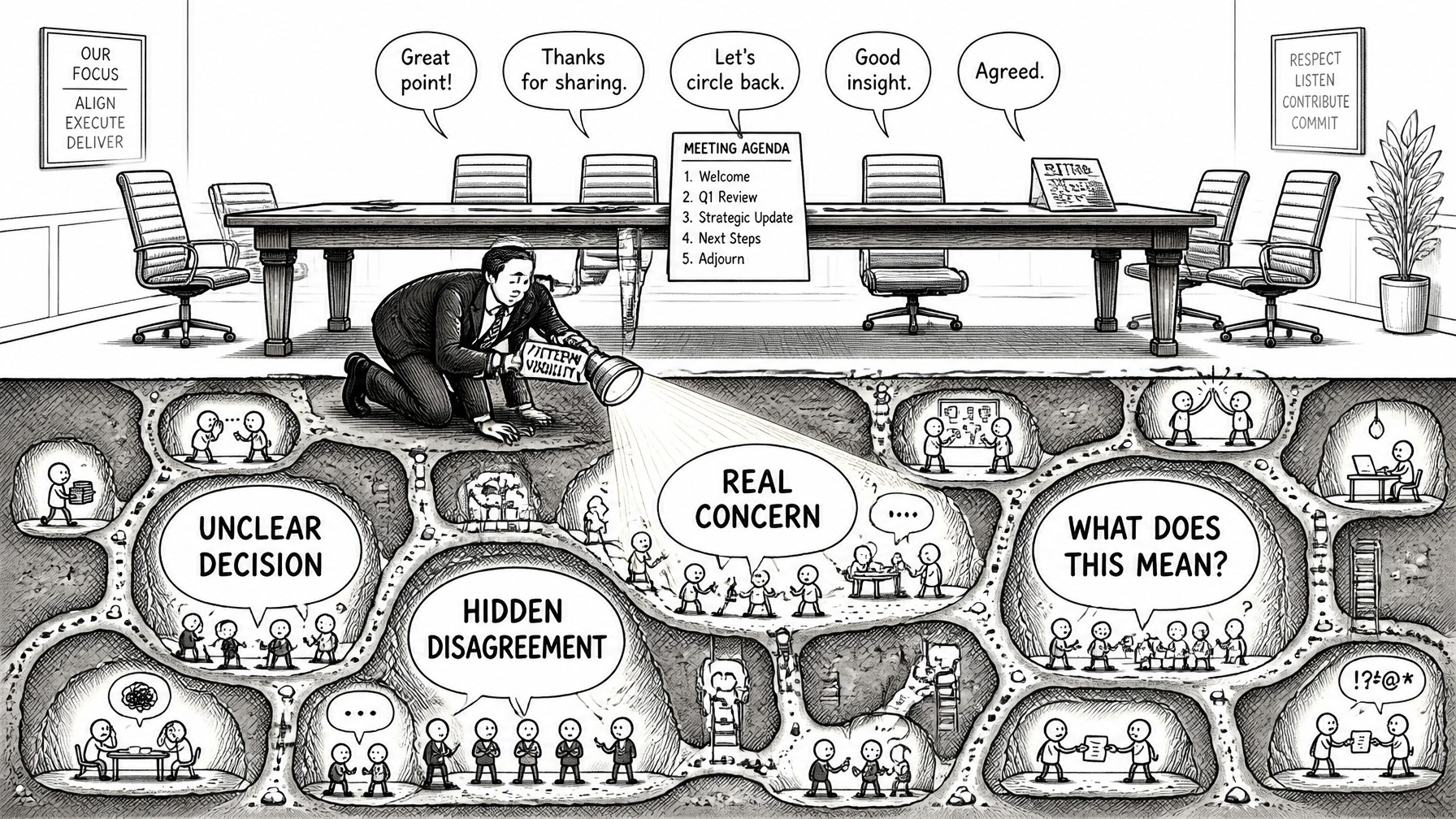
Learning & Leadership · Governance
Why side conversations matter more than schools think
Side conversations aren't noise. They carry information the formal system failed to hold. The question isn't who is talking - it's what the system is failing to make discussable.
Read the article →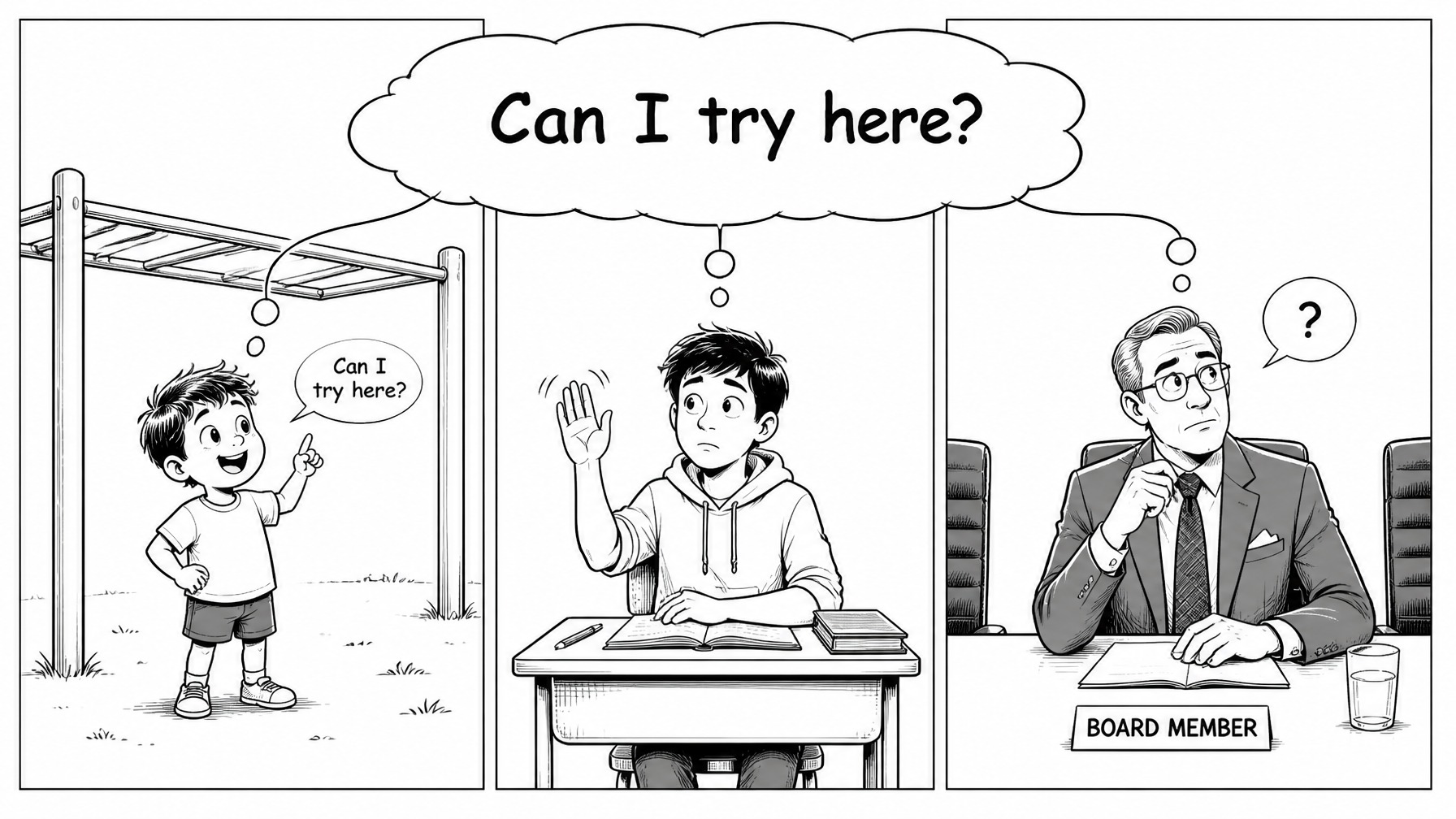
Learning & Leadership · Synthesis
The child, the classroom, and the boardroom
A language learner, a classroom student, a teacher in professional development, and a board member are all asking the same silent question: can I try here? One system, one pattern.
Read the article →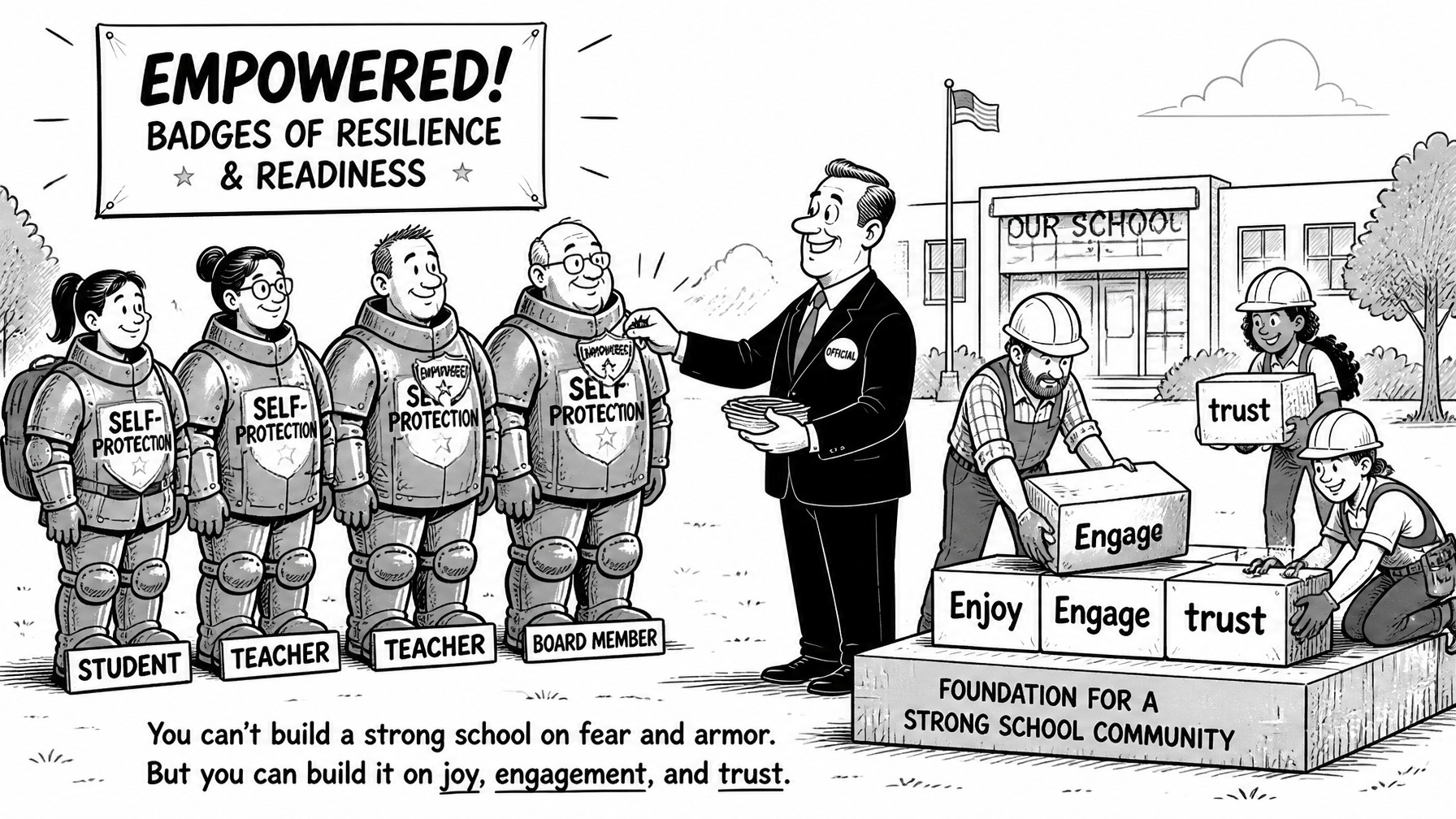
Learning & Leadership · Empowerment
Schools cannot empower people they have trained to self-protect
Schools cannot empower people they have trained to self-protect. When conditions don't change, empowerment becomes a word placed on top of anxiety.
Read the article →
Pedagogy · Professional Development
Why it's hard to develop a shared understanding of learning in international schools
International schools rarely lack words like inquiry or agency — they lack aligned meaning and use. The structural mechanisms that make shared language change classroom decisions.
Read the article →
Essay · Nikolas Bishop
What's Worth Learning
Convergence, uncertainty, and the conversations we're not yet having in education. Why the deeper crisis is one of meaning and identity — and what schools must now develop to meet it.
Read the essay →
Governance · Tools & Systems
When the cards go back in the box
The Board Deck makes governance principles visible in a room. Loom makes them persistent across meetings, roles, and years. How the two work together as a complete governance system.
Read the article →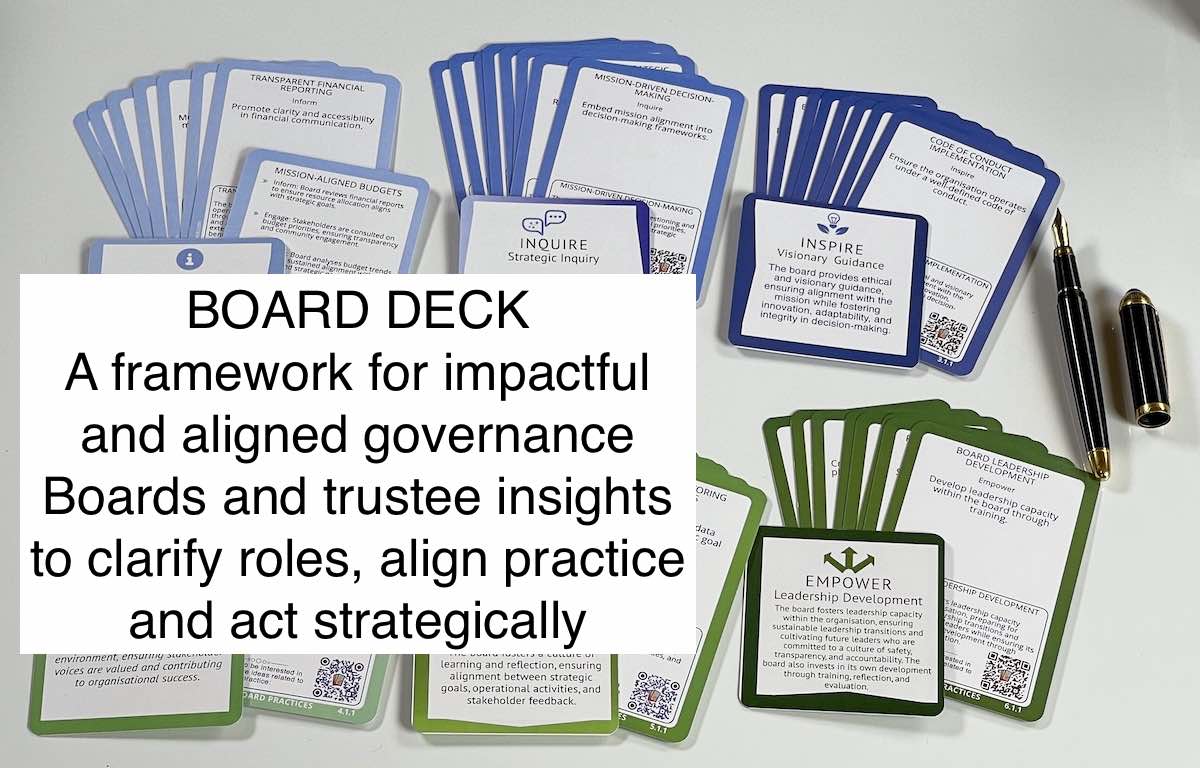
Governance · Board Development
What makes international school board governance effective?
Most international school boards are compliant and functional. Few are coherent over time. Why pattern recognition matters more than individual decisions.
Read the article →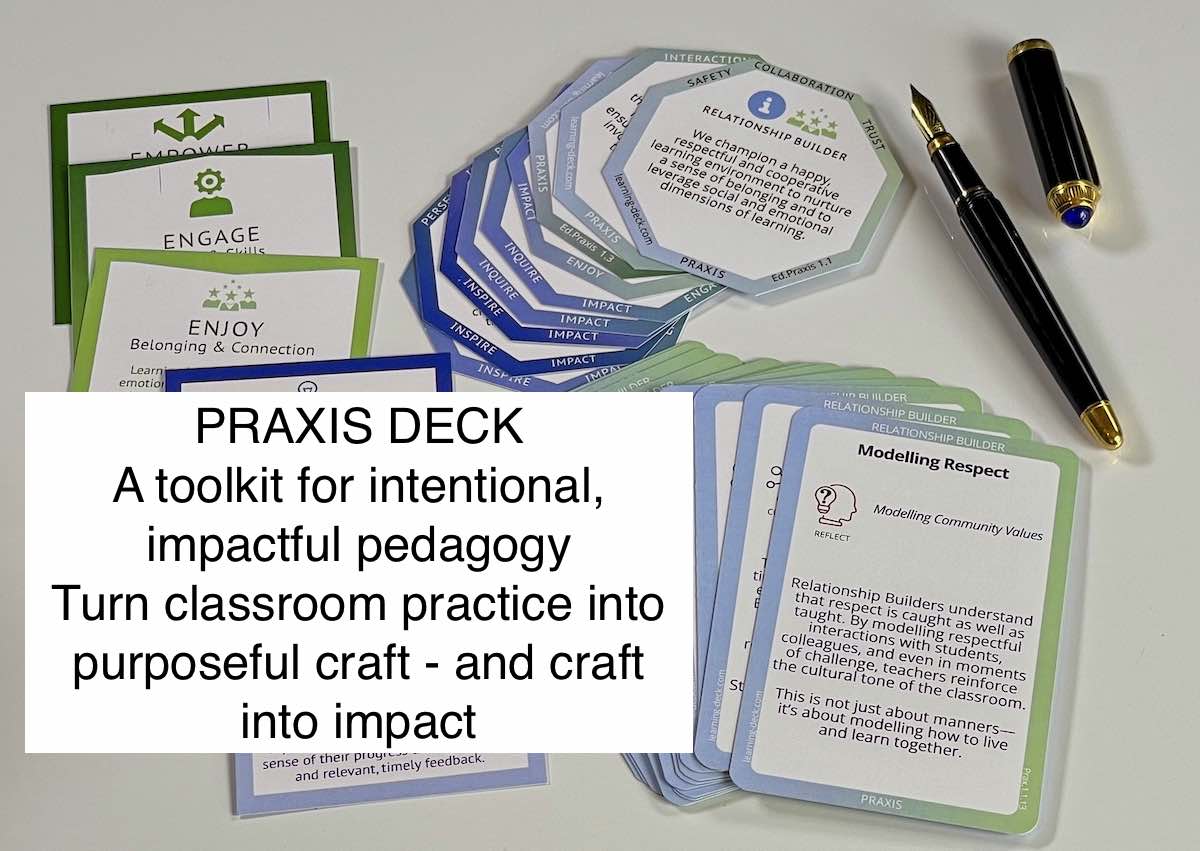
Professional Development · School Leadership
Designing whole-school professional development that changes practice
Most PD programmes are collections of activities, not systems that change teaching. How to design whole-school PD that converges practice over time.
Read the article →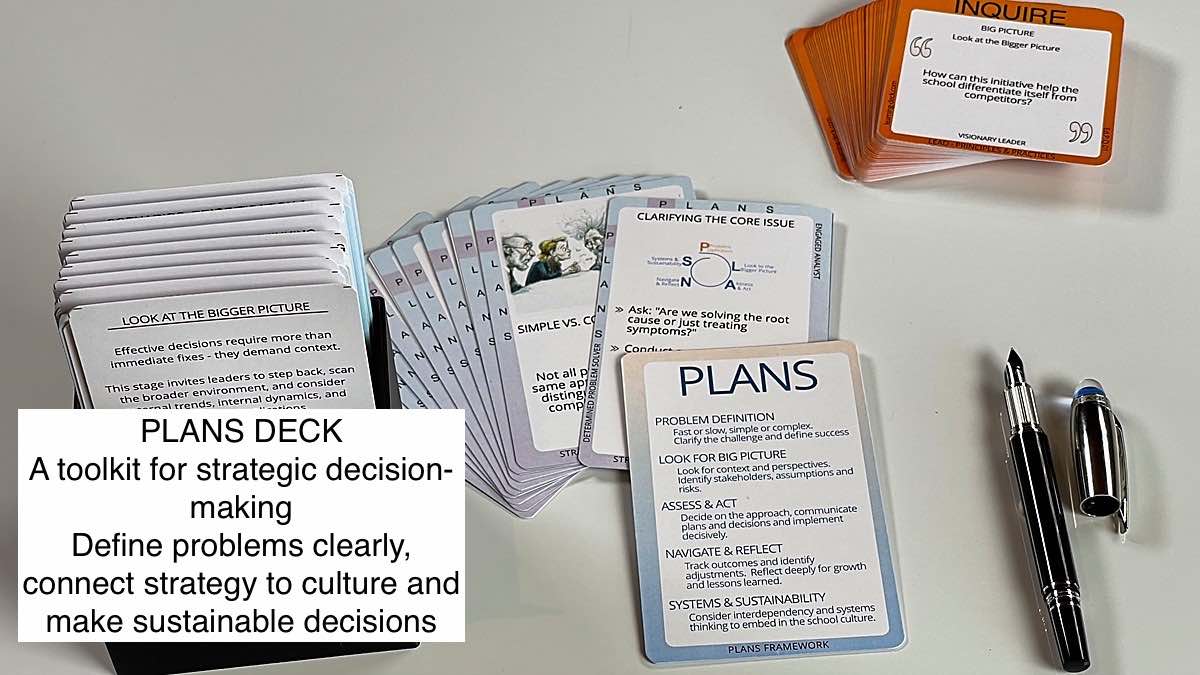
Strategic Planning · Facilitation
Running a strategic planning retreat with visual tools
Strategic retreats generate plenty of ideas but rarely produce usable clarity. Why visual tools matter and how to facilitate a retreat that leads to real decisions.
Read the article →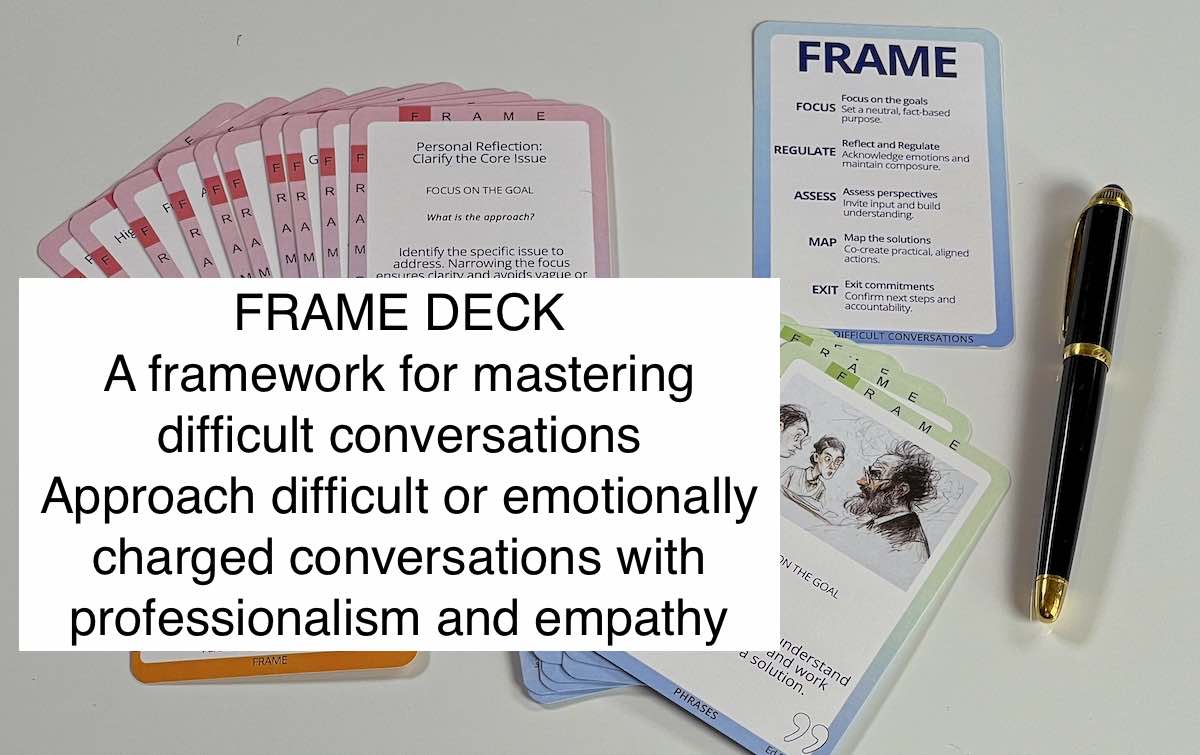
Leadership · Difficult Conversations
Difficult conversations in international school leadership
International school leaders don’t avoid difficult conversations because they lack skill, but because of relational and cultural risk. A framework for movement with relationship intact.
Read the article →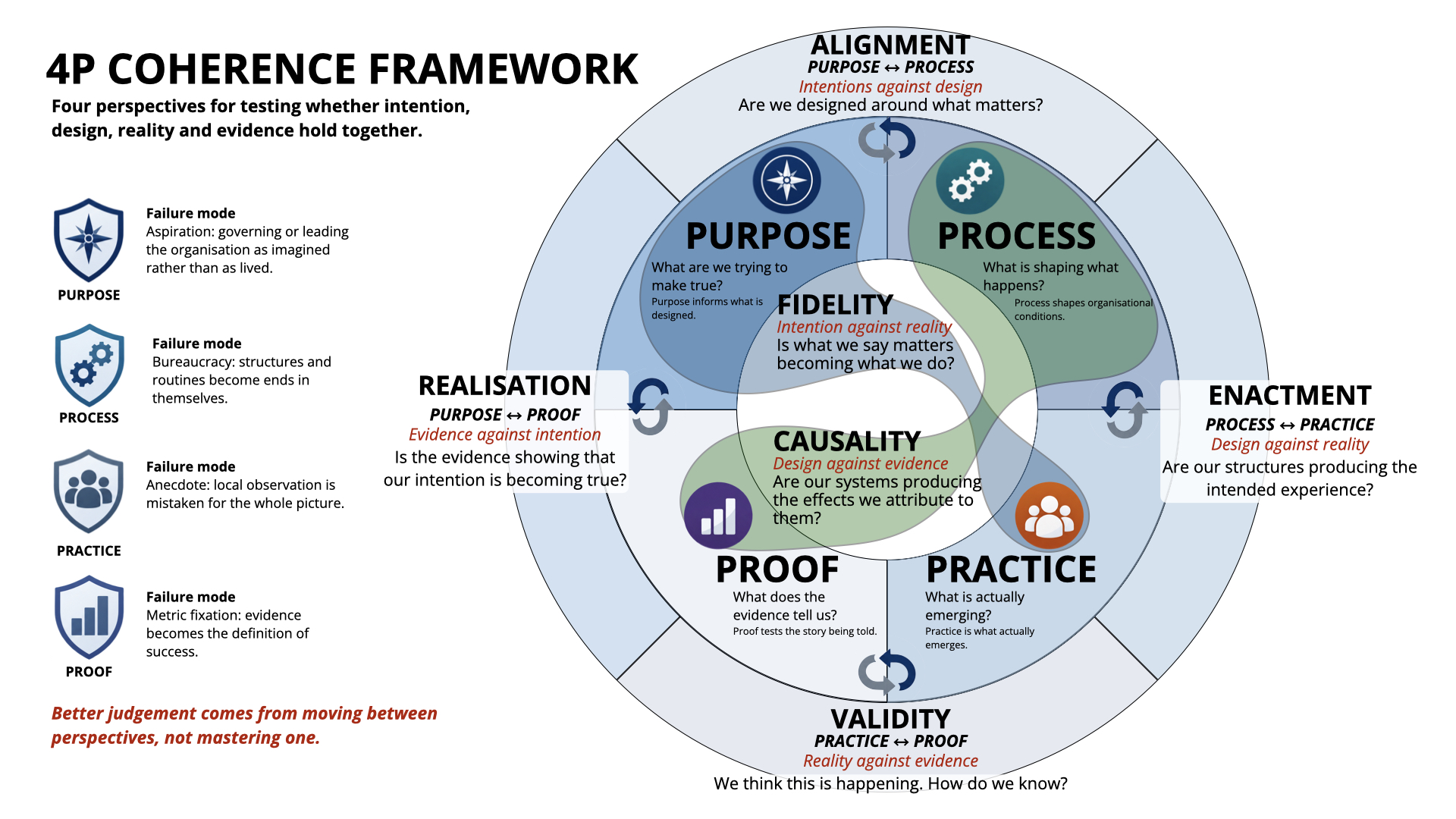
Strategy · Coherence
Your strategy can be working perfectly - and still not be working
A strategic plan can be executed exactly as designed and still not work. The 4P Coherence Framework tests whether intention, design, reality and evidence hold together - six tests across four perspectives.
Read the article →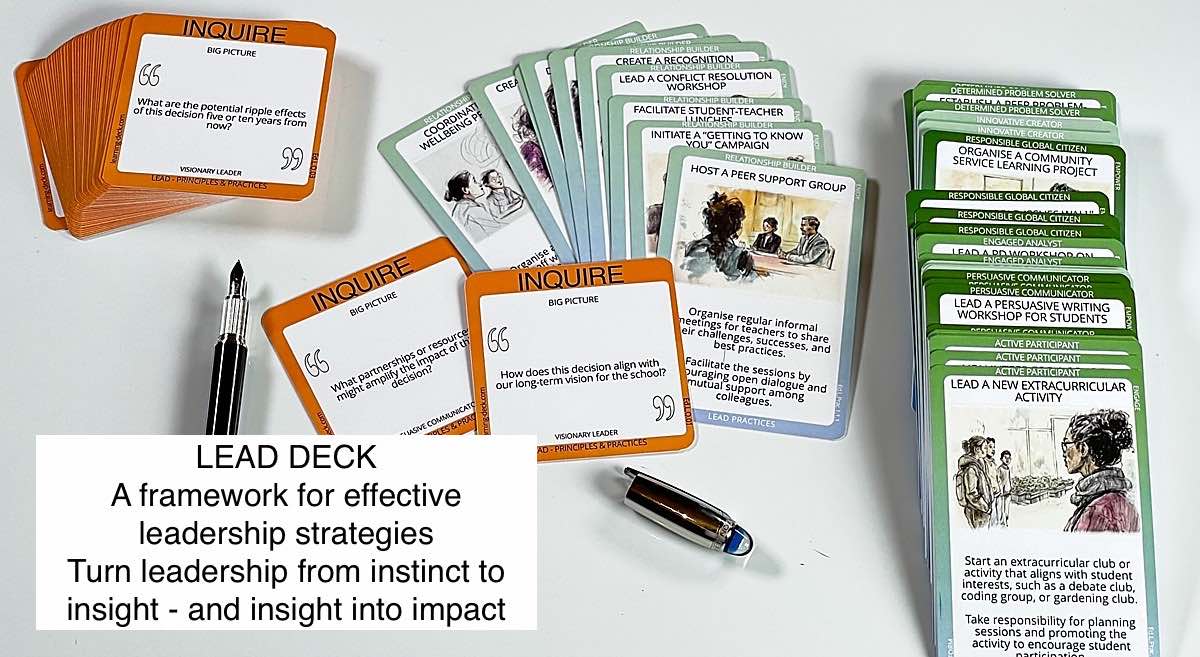
School Leadership · Strategy
From mission statement to daily practice: coherence in international schools
Most international schools have strong missions. The gap is translation into daily decisions. Why coherence is less about alignment and more about constraint.
Read the article →
Professional Development · School Leadership
What the penguins can’t see
The iceberg model is one of professional learning’s most familiar images. The piece that’s missing from it changes what good professional development actually looks like.
Read the article →Video
Watch
Short videos and long-form essays that bring the frameworks to life - from classroom practice to board governance.
The Synnovate Suite
Overview
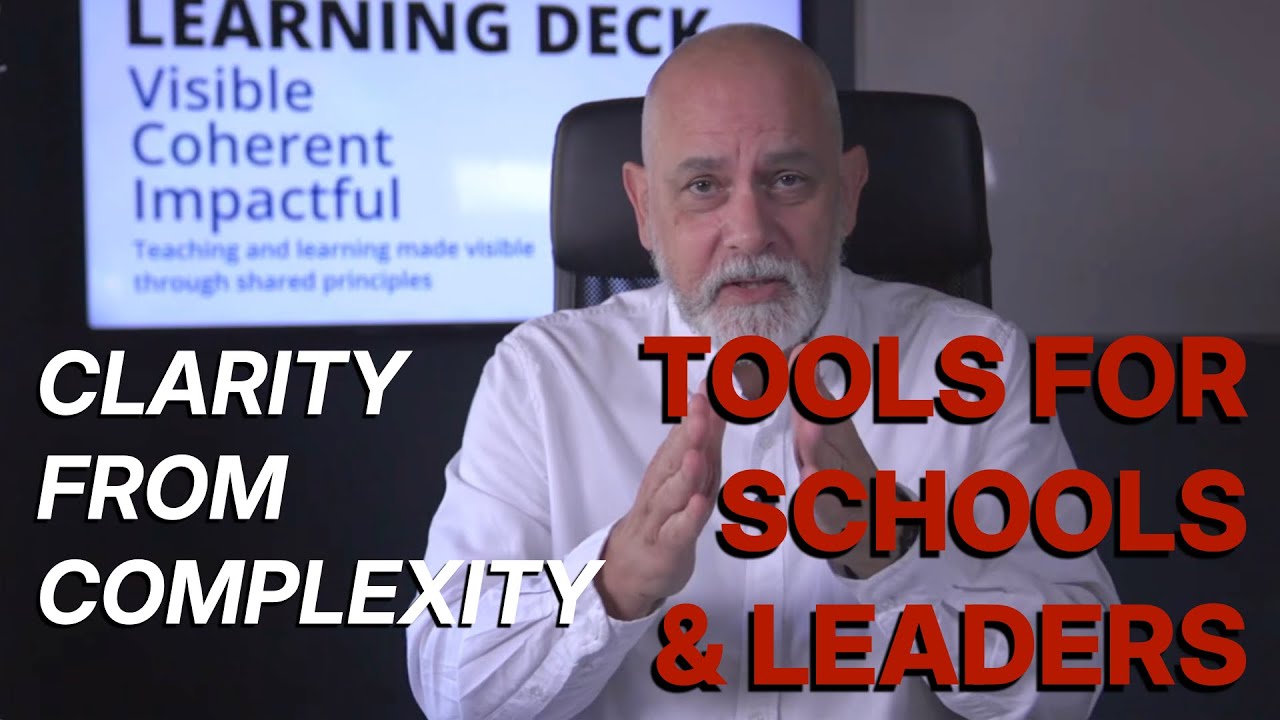
The Synnovate Suite
An introduction to the complete family of card-based tools - Learning Deck, Praxis, Lead, Frame, Plans, Team, Dynamics, and Board Decks. Each shares the same DNA: simplicity with depth and frameworks that turn theory into practice.
Overview
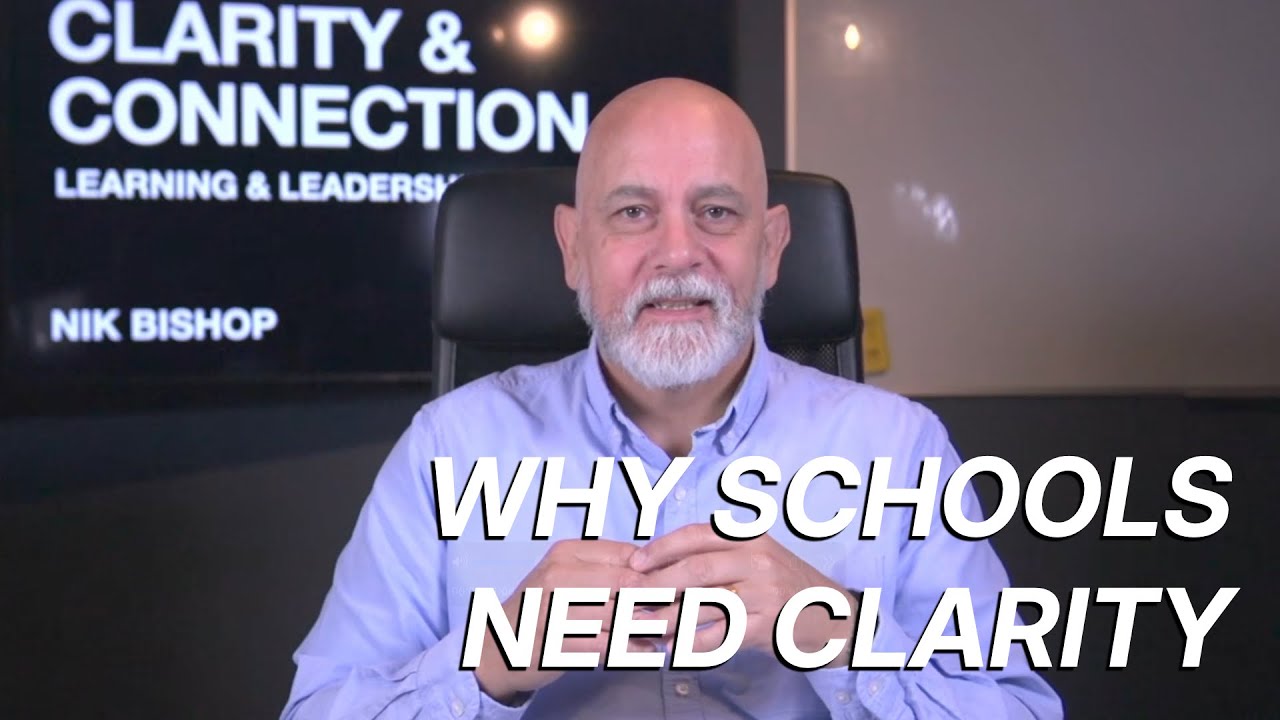
Making Learning Visible
How the Synnovate Suite connects vision with practice across every layer of a school - from classroom to governance - using culture and systems thinking to move from complexity to clarity.

Long Form · Education
What's Worth Learning
A long-form documentary essay on education's deepest crisis - not technology or skills, but orientation: the capacity to judge what matters and create new patterns when old ones collapse.
Read the essay →Learning & Pedagogy
Learning Deck · Pedagogy
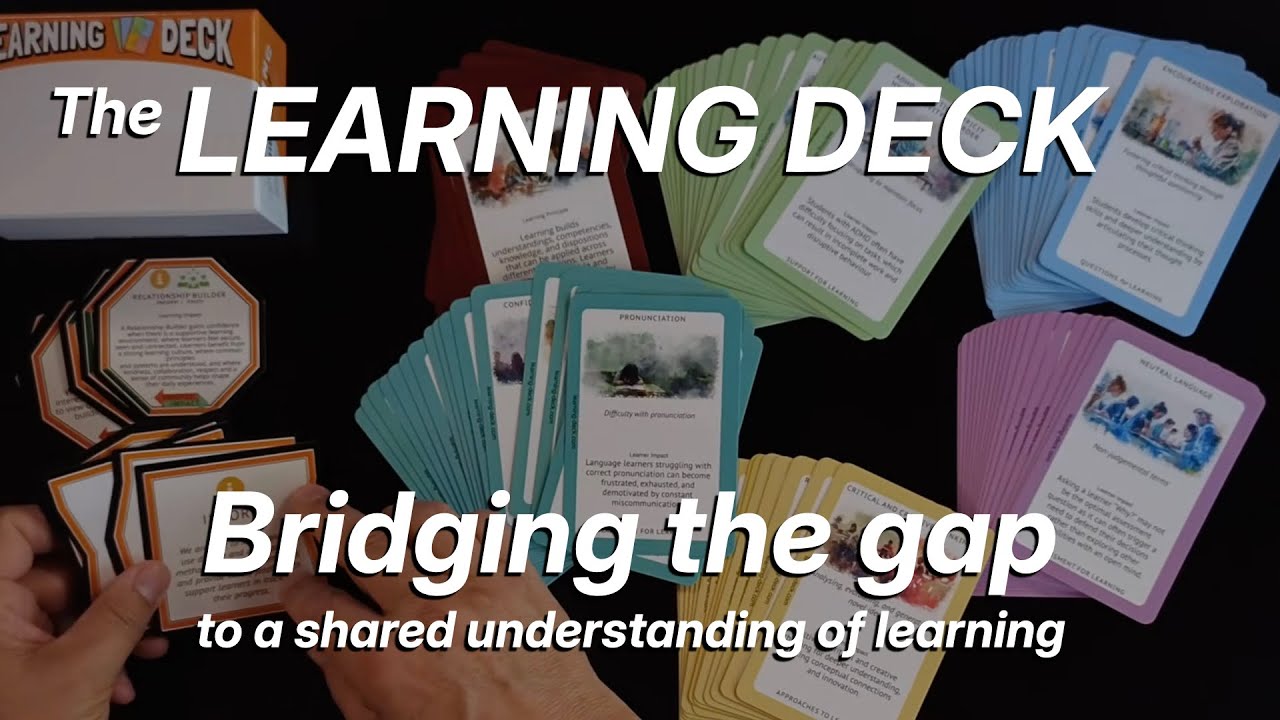
The Learning Deck Nine Map
A visual framework connecting Teaching Principles (Inform, Inquire, Inspire) with Learning Principles (Enjoy, Engage, Empower) - nine learner profiles that make teaching strategies visible, practical, and easy to apply.
Learning Deck · Strategy
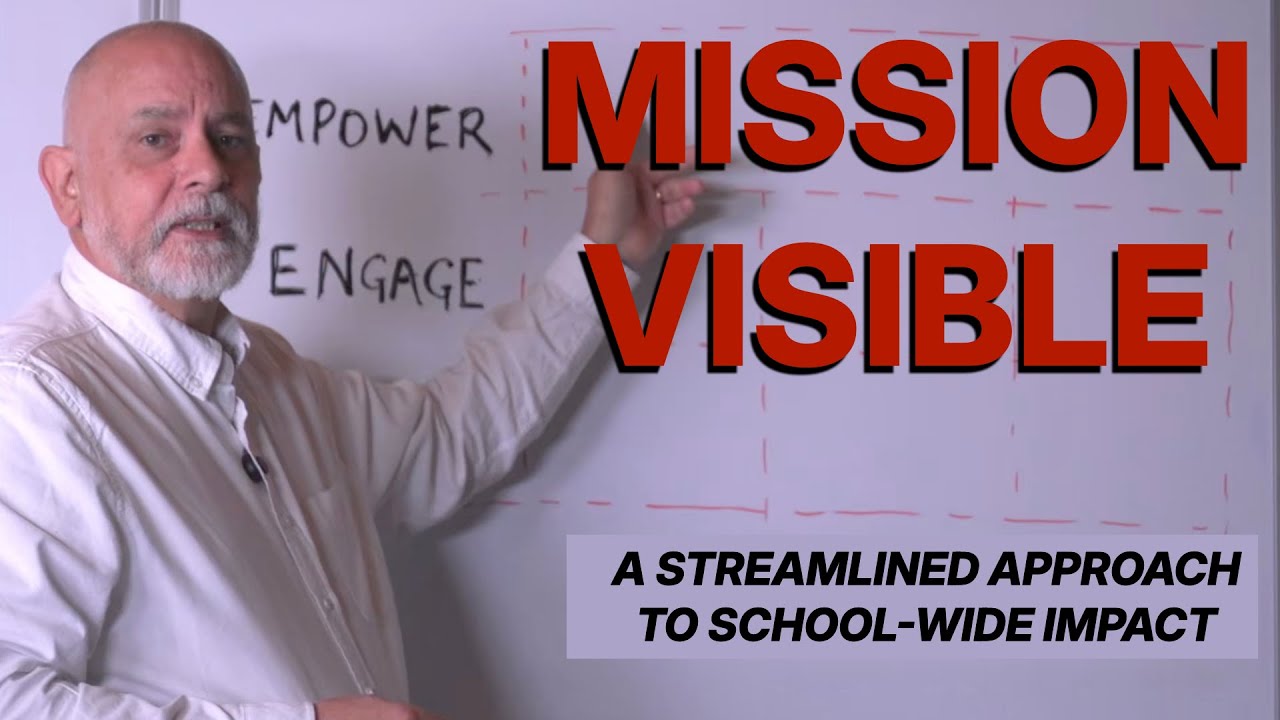
Making Mission Visible
How the Nine Map connects school mission statements to daily classroom practice - bridging the gap between strategy and teaching through a shared language for teachers, leaders, and students.
Praxis Deck · Teaching
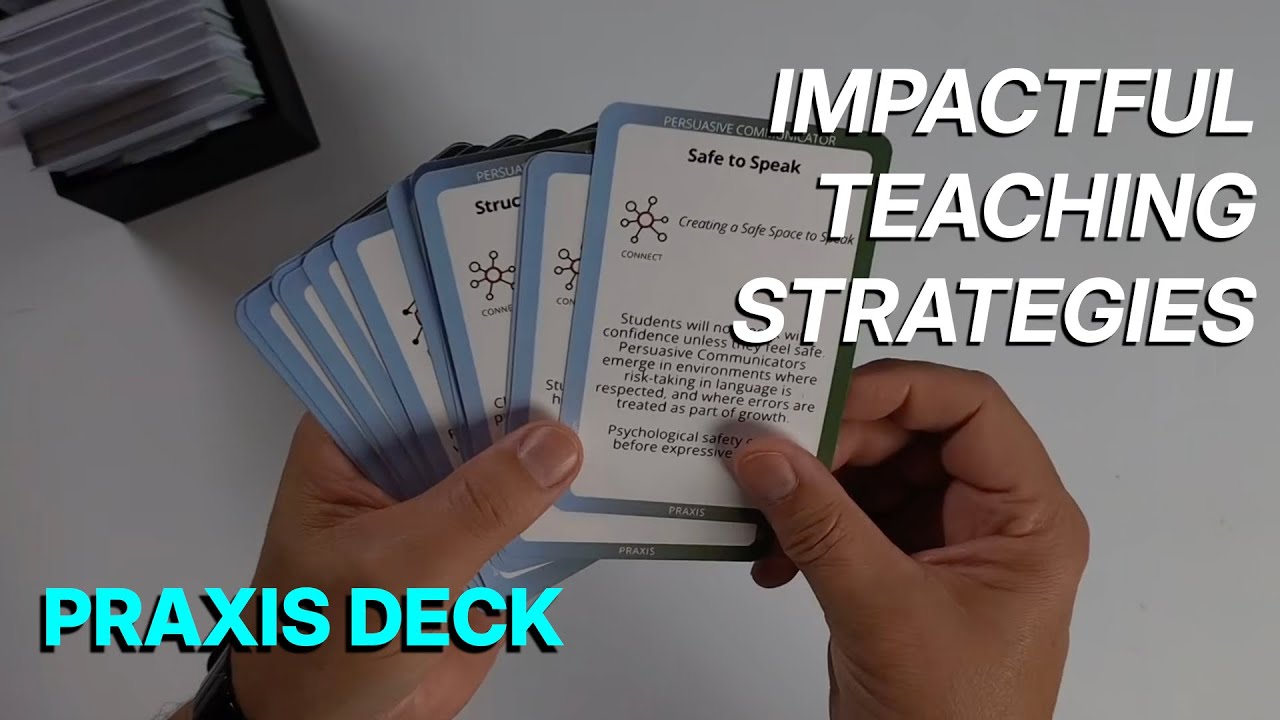
The Praxis Deck
A practical toolkit for the craft of teaching - routines, questioning, feedback, and strategies that make practice visible and reflection concrete. Turns principles of learning into classroom action teachers can use right away.
Leadership & Culture
Frame Deck · Conversations
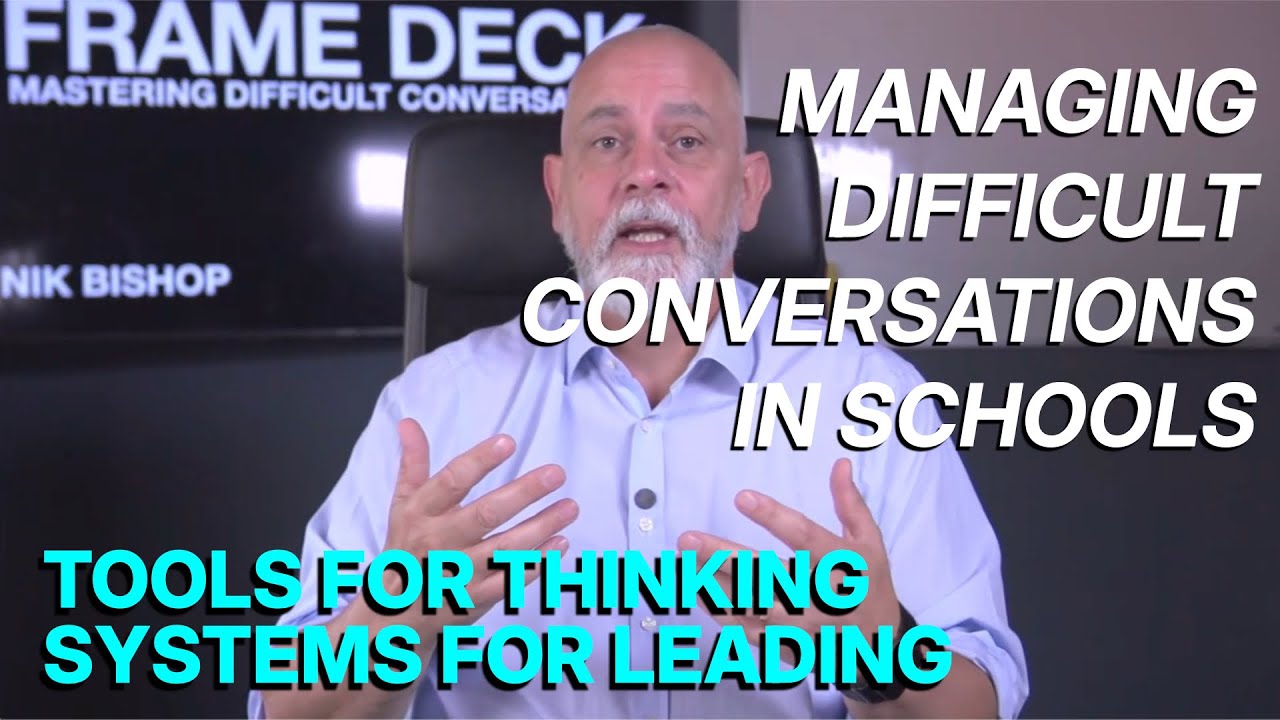
The Frame Deck
A structured approach to difficult conversations built on the F.R.A.M.E. model: Focus, Reflect, Assess, Map, Exit. Helps leaders prepare and respond with clarity rather than react under pressure.
Plans Deck · Strategy
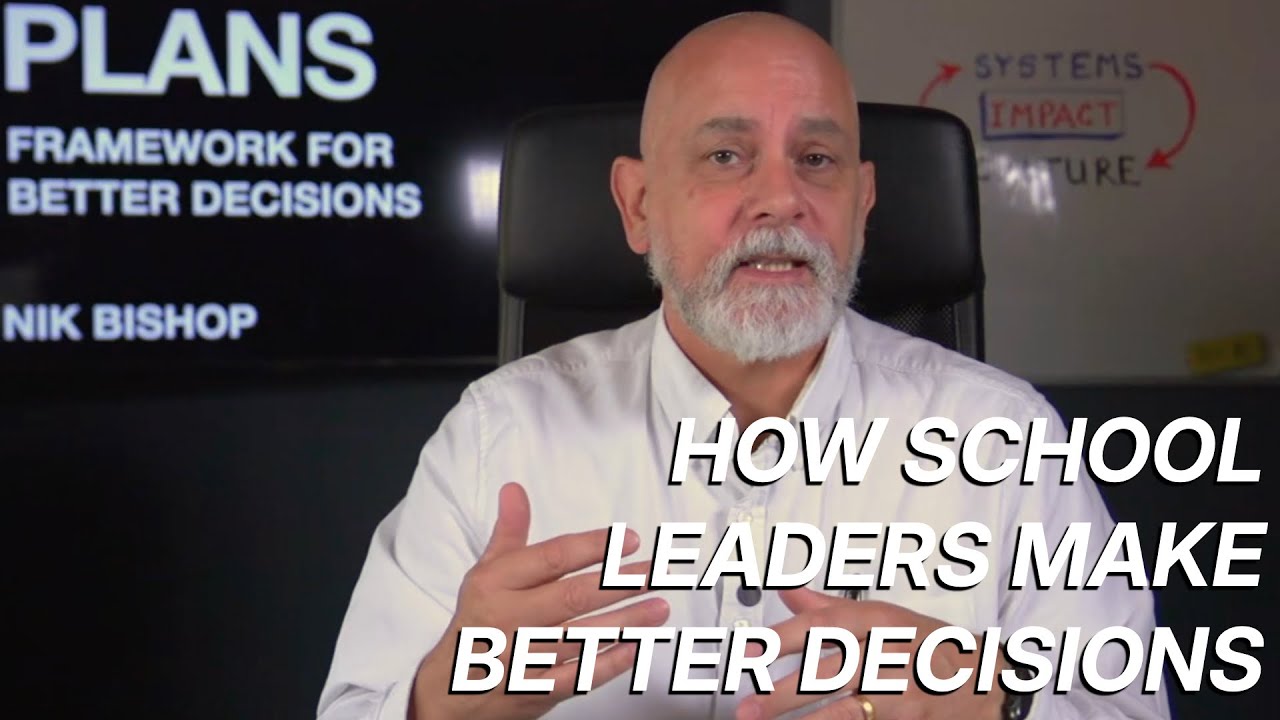
The Plans Deck
A strategic decision-making tool for school leaders - the PLANS framework connects today's choices with long-term values through inquiry cards and scenario cards that sharpen thinking and team dialogue.
Dynamics Deck · Culture
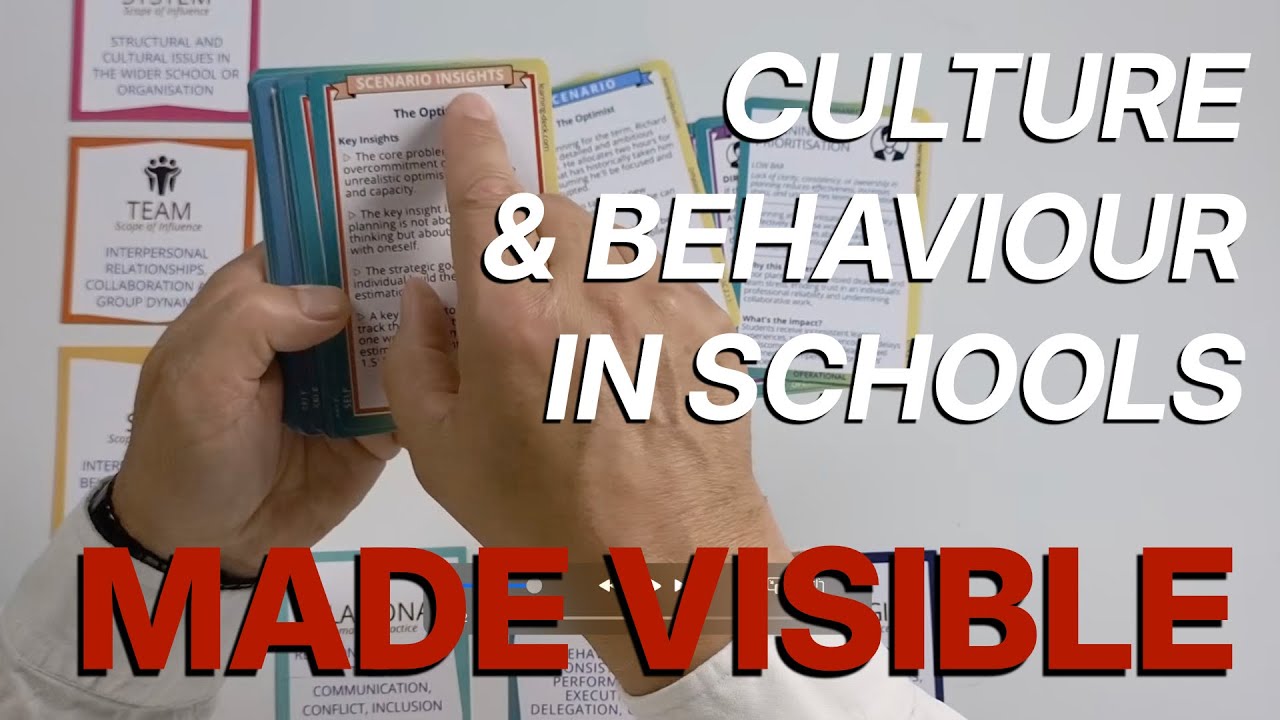
The Dynamics Deck
A diagnostic and coaching toolkit built on a 3×3 framework - Relational, Operational, and Strategic practice across Self, Team, and System. Makes hidden patterns visible, tangible, and solvable.
Dynamics Deck · In Practice
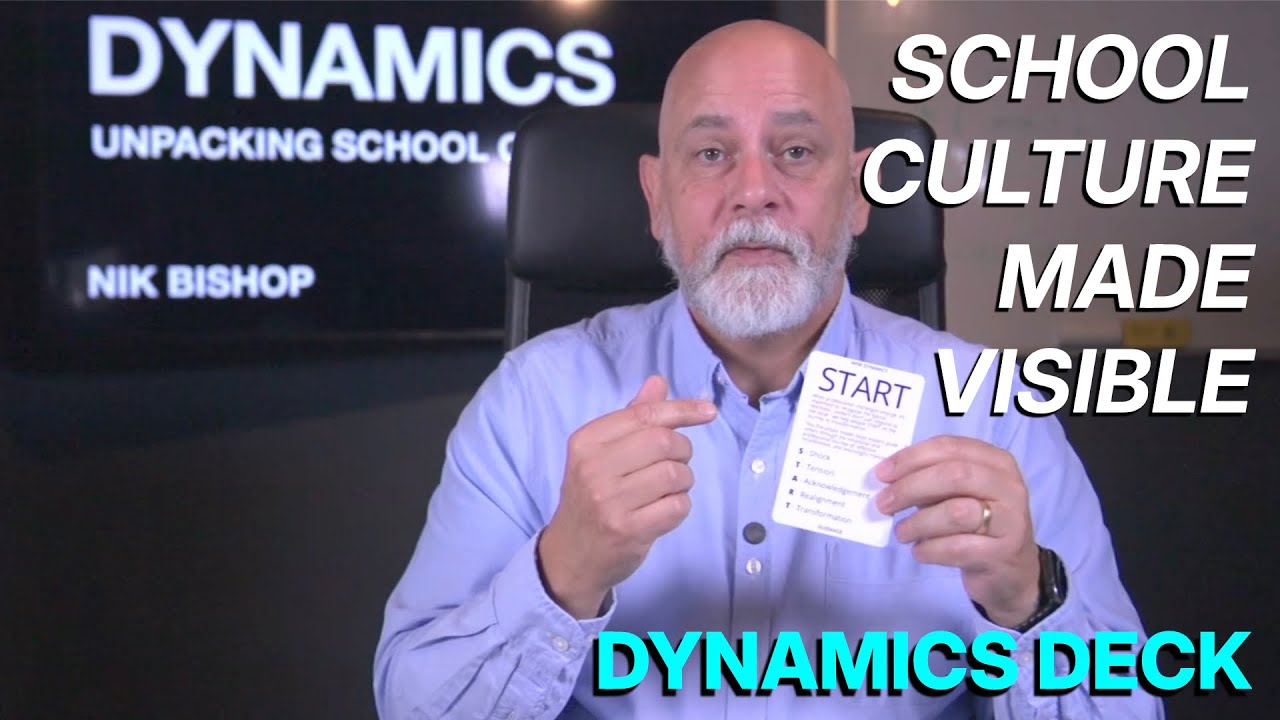
The Dynamics Deck in Practice
A walkthrough applied to a real workplace challenge - showing how subtle shifts in language open dialogue rather than defensiveness, and how micro-scenarios make hidden patterns of culture and behaviour visible.
Board Governance
Board Deck · Governance
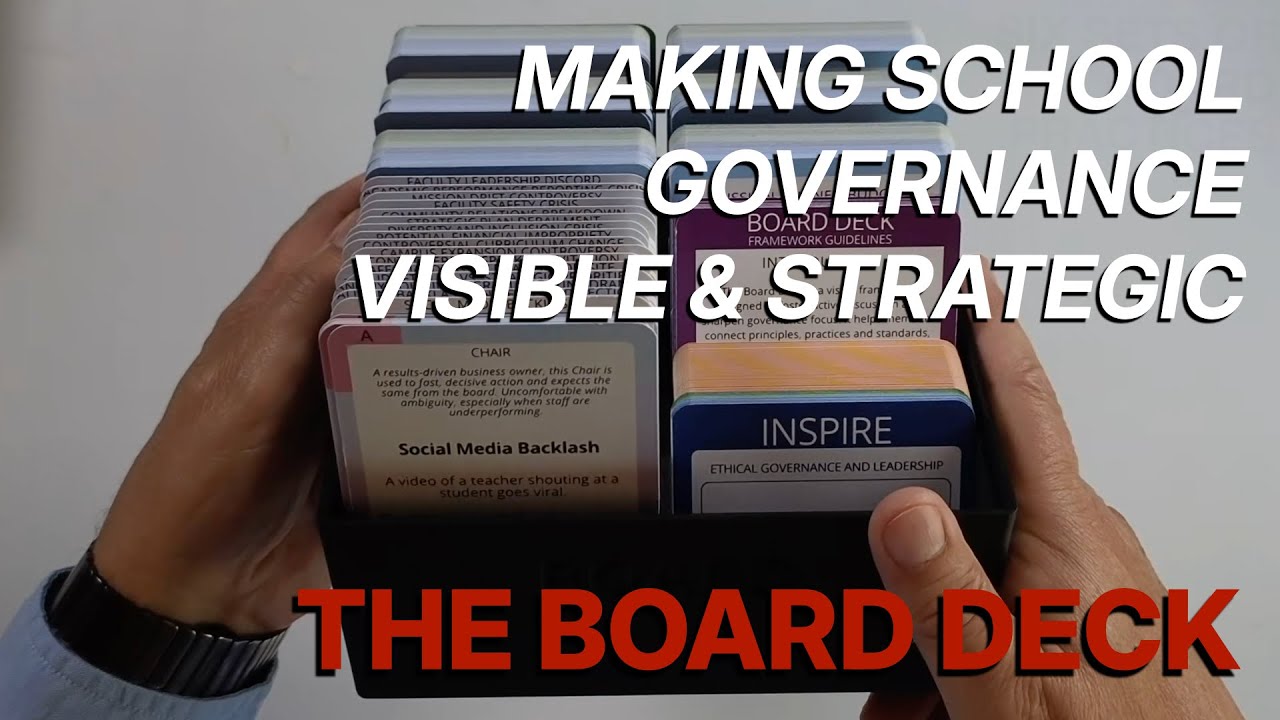
The Board Deck
A practical governance toolkit exploring six principles of effective governance, nine impact roles, and how scenario and complication cards bring real-world board challenges into safe, reflective dialogue.
Governance · Board Practice
Generative Governance
What generative governance looks like in practice - how boards frame problems, diagnose the nature of issues, and orient themselves before moving into oversight or strategy. A practical discipline, not vague 'big-picture' discussion.
Governance · Board Practice
Generative Approaches for Effective Boards
How boards can support complex system implementation without slipping into operational management - why friction and delay are often signals of system strain, and how boards add value through inquiry and restraint.
Governance · Financial Pressure
When Budgets Tighten
How boards can support school leaders during financial constraint without narrowing their field of action - reframing financial pressure as a signal of deeper system and strategic realities.
Governance · Board Practice
Common Thinking Errors
How boards inadvertently misdiagnose problems and spend effort solving the wrong thing - the most common thinking errors under pressure, and how a generative approach improves problem framing before decisions are made.
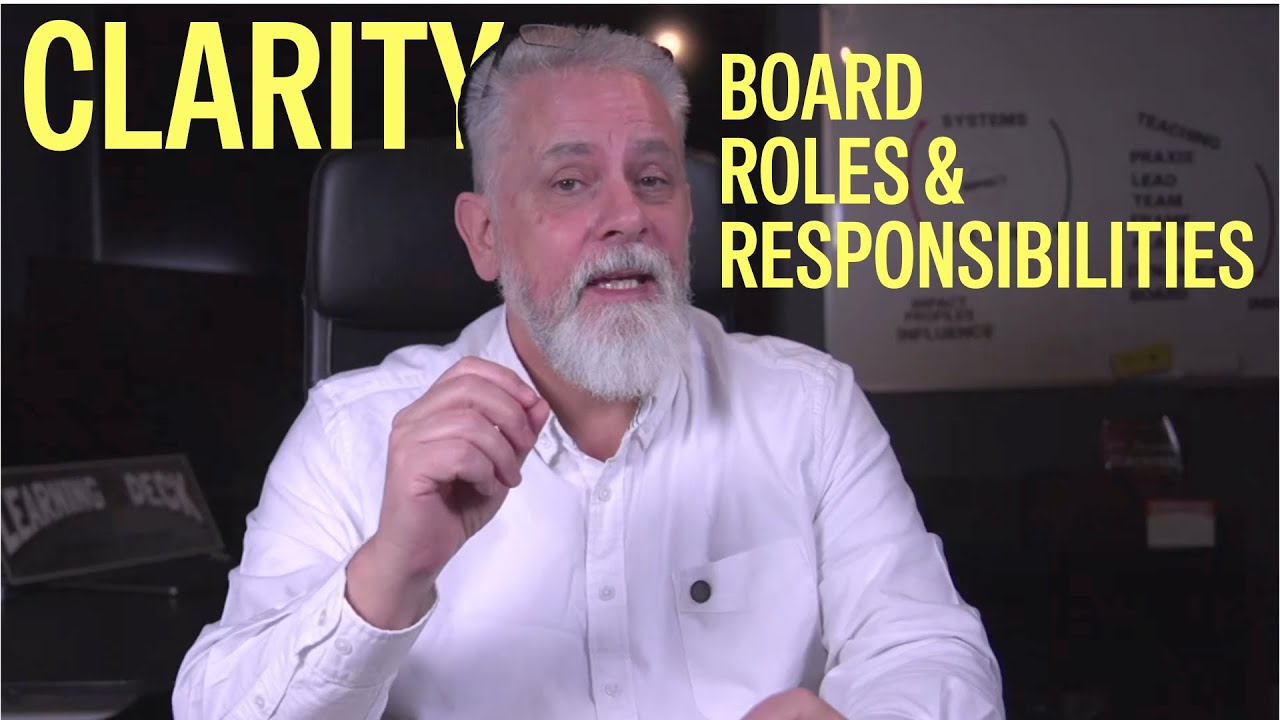
Governance · Board Roles
Finding the Right Balance
How boards unintentionally tip too far into control or too far into distance - holding accountability without micromanaging, supporting leadership without abdicating responsibility, operating at the right level under complexity.
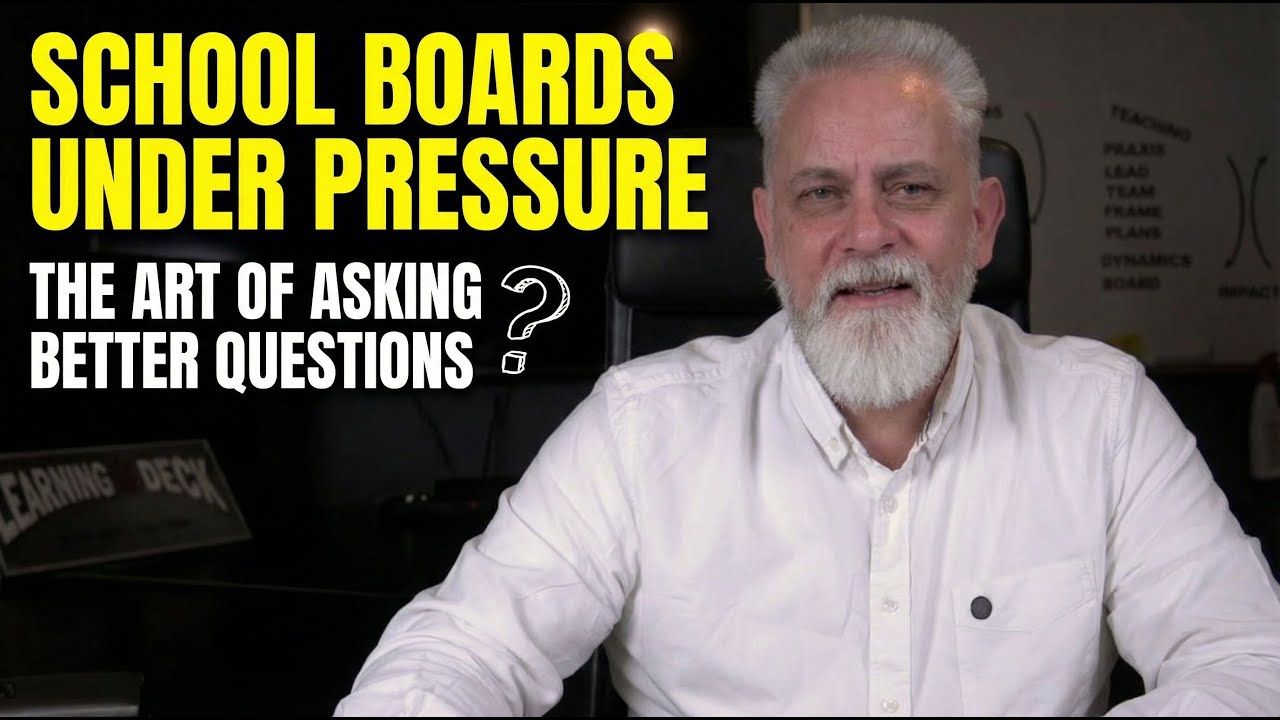
Governance · Board Practice
Boards Under Pressure
How board behaviour during high-stakes moments can strengthen or undermine organisational coherence - reframing pressure situations as system stress tests and examining how boards hold the right governance frame.
From thinking to practice
The Synnovate Suite is the family of visual, card-based tools that international schools use to put these ideas into daily practice — from classrooms to boardrooms.