The Board Deck
Forty minutes on the car park. Four on the strategy for the next five years.
Collective Governance by Design
It isn't for lack of care or competence. So why does a capable board give its scarcest attention to its smallest decisions - and its biggest calls the least real thought?
The problem
Why do capable boards still make weak decisions?
It is rarely a lack of skill or care. Boards drift, over time, into habits of attention that quietly narrow what they see. The symptoms are familiar in almost every boardroom.
We spend too long in operational detail.
The board ends up managing what leadership should run, and governing less.
We get plenty of information, but still can't tell what matters.
The volume of papers rises. The clarity does not rise with it.
The discussion feels sensible, yet we leave without a better decision.
Reasonable conversation, unchanged thinking. Everyone agrees; nothing sharpens.
We keep revisiting the same issues.
Each year the item returns. Nothing is exactly wrong, and nothing resolves.
Everyone brings experience, but not a shared way of thinking.
A room full of expertise, without a common method for using it together.
Sound familiar?
None of these is a compliance failure. Every one is a failure of collective judgement.
The enemy isn't poor governance. Most boards are compliant. Far fewer consistently think well together.
The missing layer
Where does governance actually go wrong?
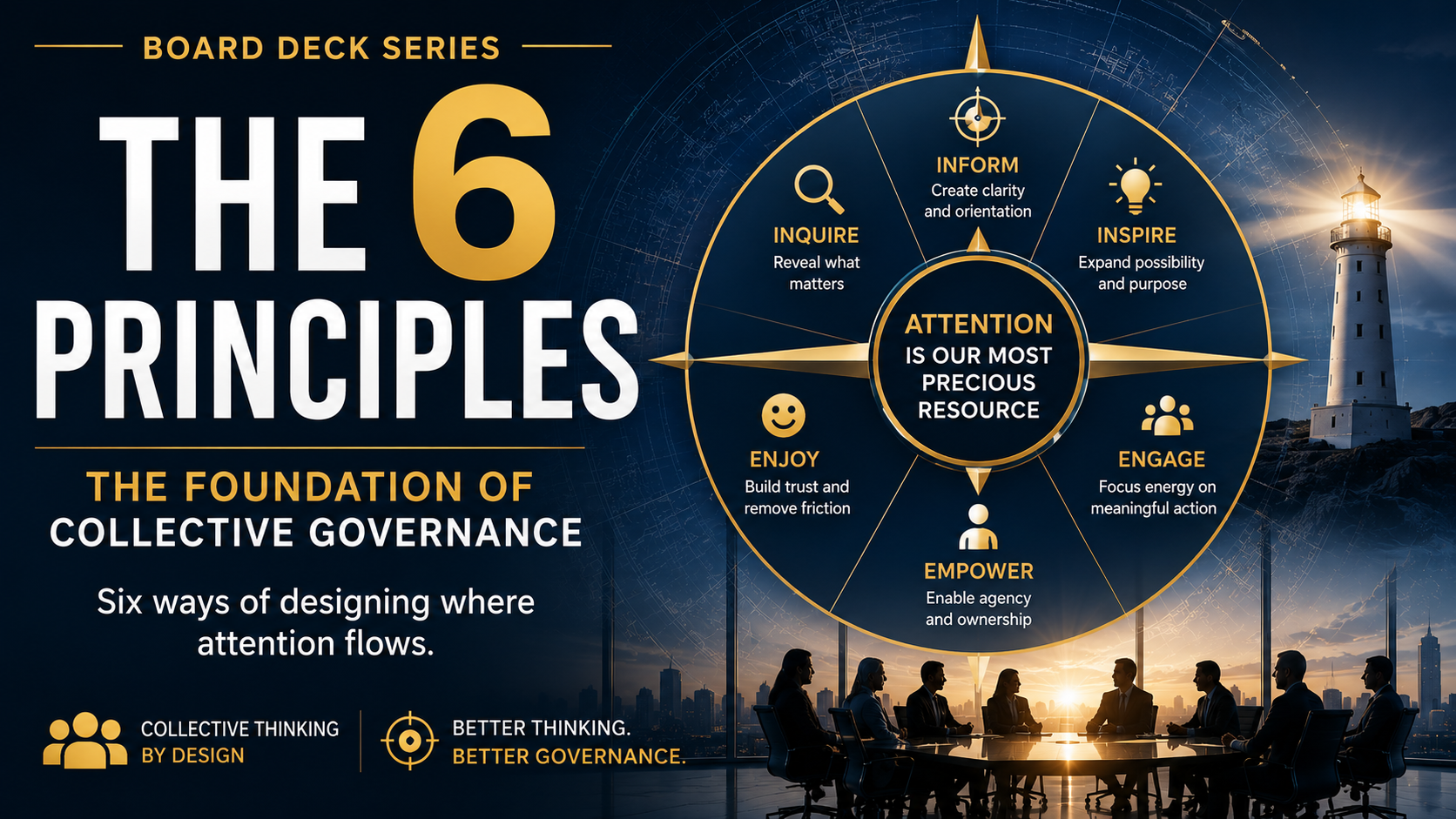
Most governance problems don't begin with a poor decision. They begin earlier, and quieter, with attention - what the board notices, and what it lets pass.
Attention is the first governance act, and usually the least examined. Boards don't need more information. They need better ways of directing attention together.
The mental model
So how does a board direct its attention?
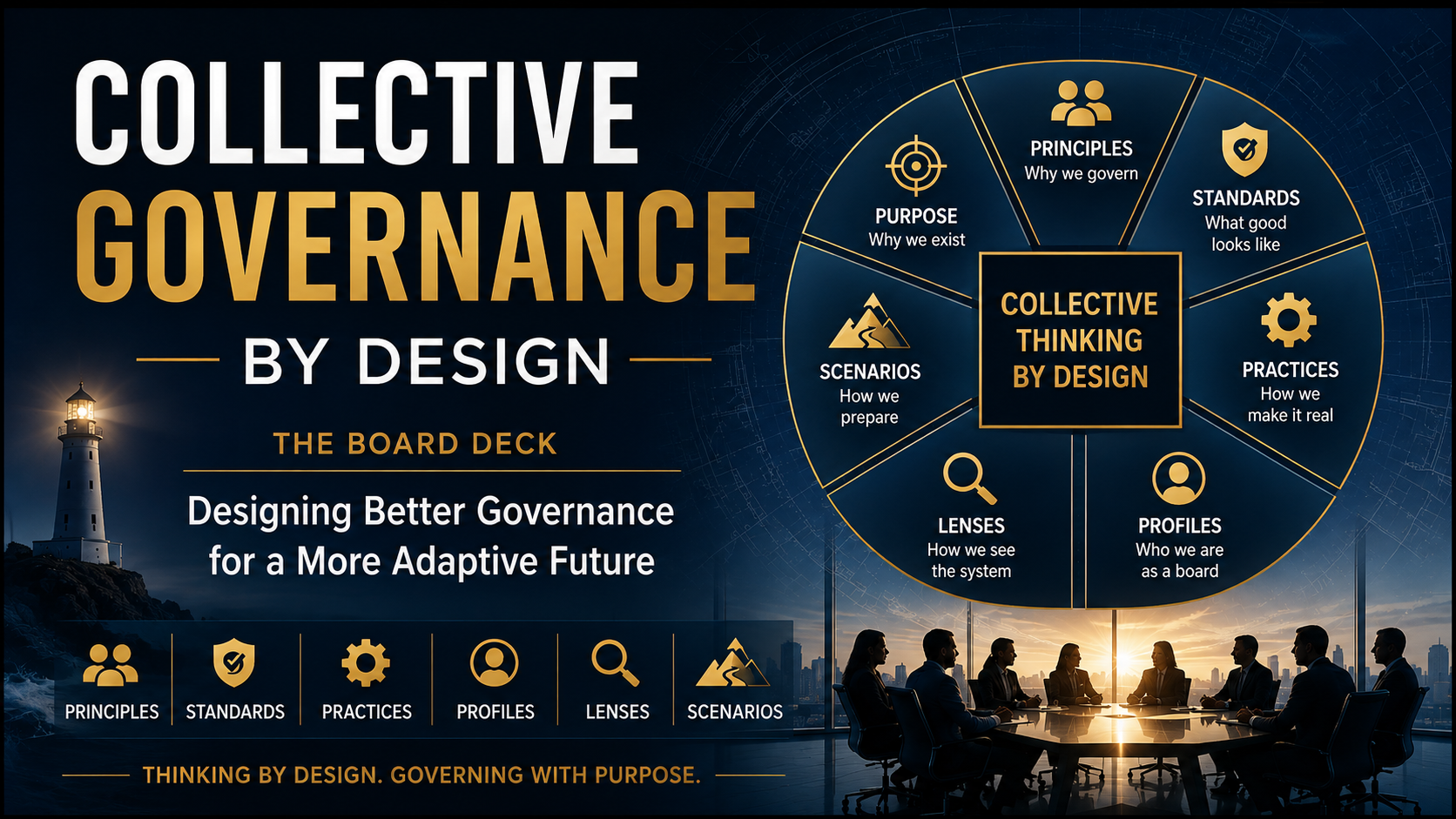
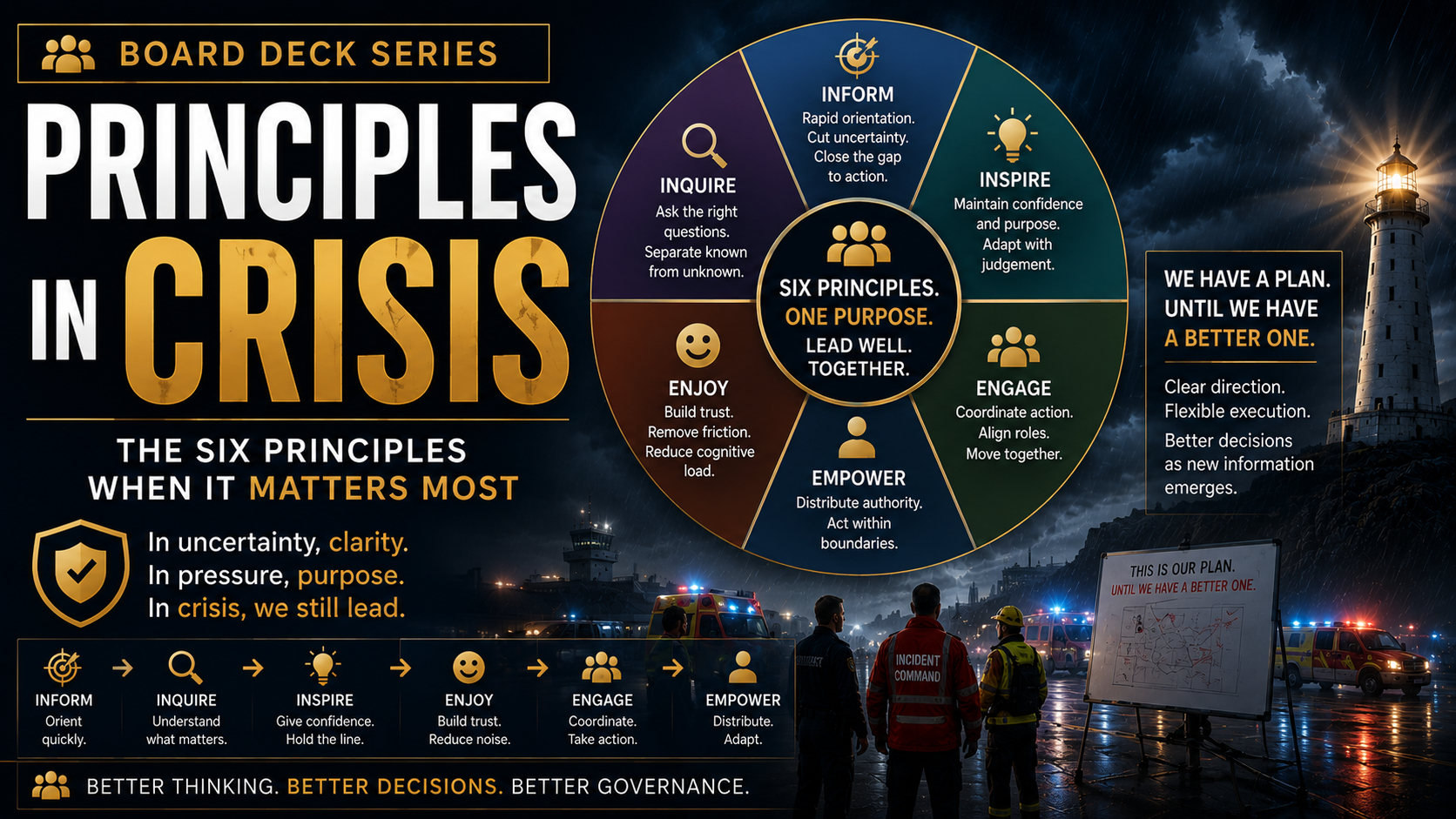
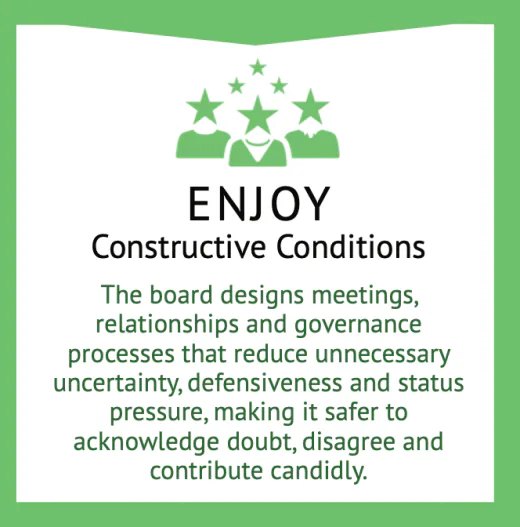
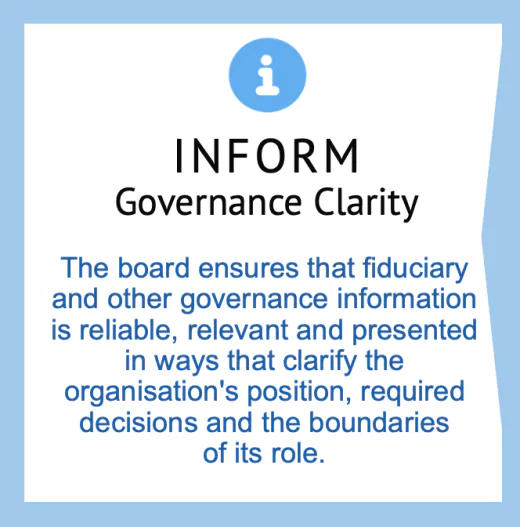
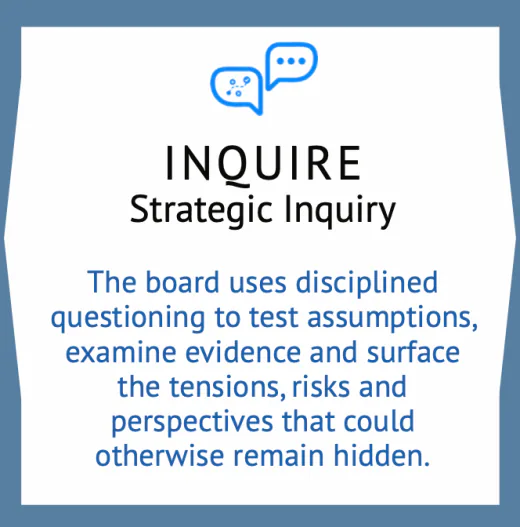
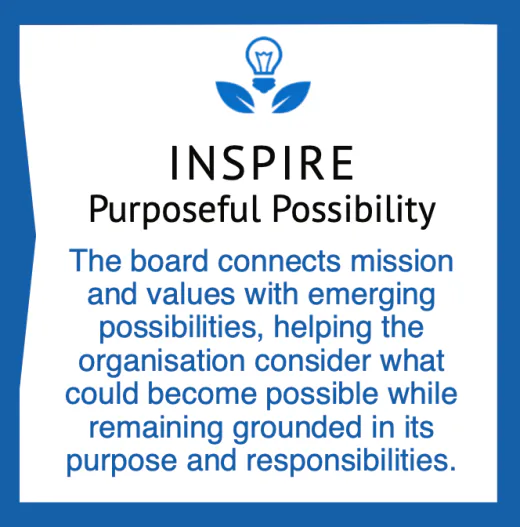
There are six ways. Three shape what the board deliberately sets up. Three shape what then emerges in the room. Named together, they become a shared language for something boards have never quite been able to talk about.
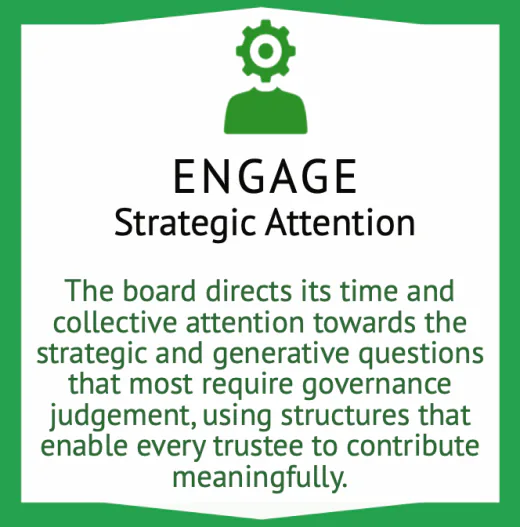
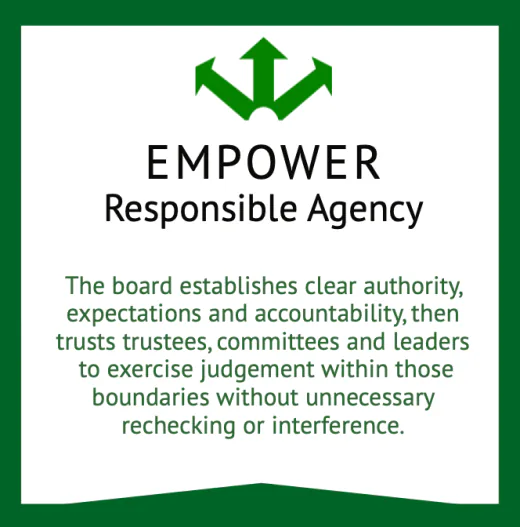
Two that are easy to misread
Inform is not just sending papers. It reduces uncertainty and creates orientation, so trustees arrive knowing where an issue sits and what is being asked of them. Enjoy is not fun or entertainment. It is the reduction of unnecessary cognitive cost: when people stop spending attention on status, self-protection or decoding avoidable ambiguity, that attention is released for the work.
The shift
This is where the Board Deck comes in.
Not a framework to study. Not a toolkit to file away. A shared operating language for governance - one a board picks up in the room, meeting after meeting, to direct its attention on purpose.
It turns the six principles into something a board actually does, before, during and after a meeting:
Reflection feeds the next agenda. The deck stops being training and becomes part of how the board works.
The system, made visible
What does the whole system look like?
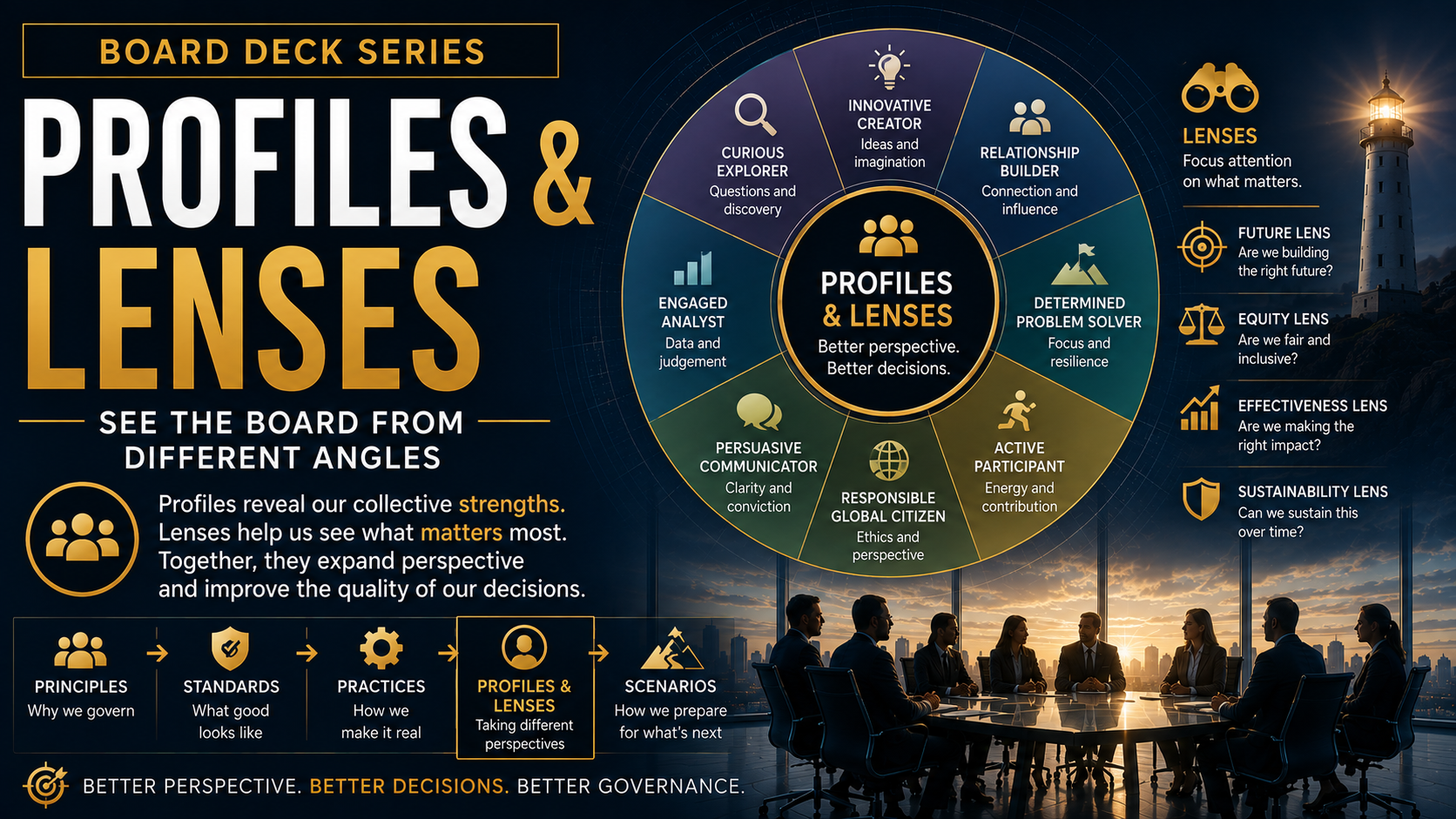
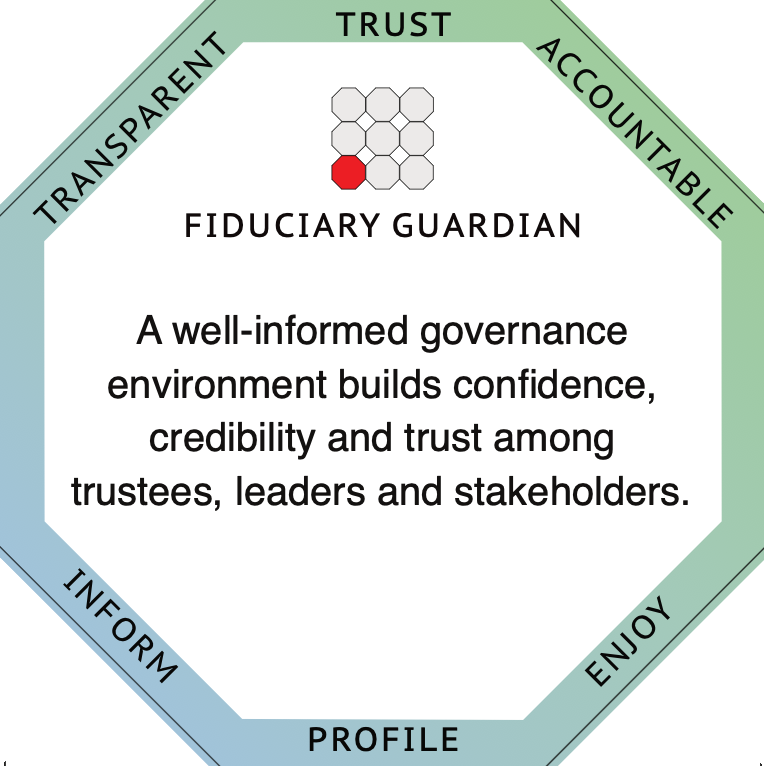
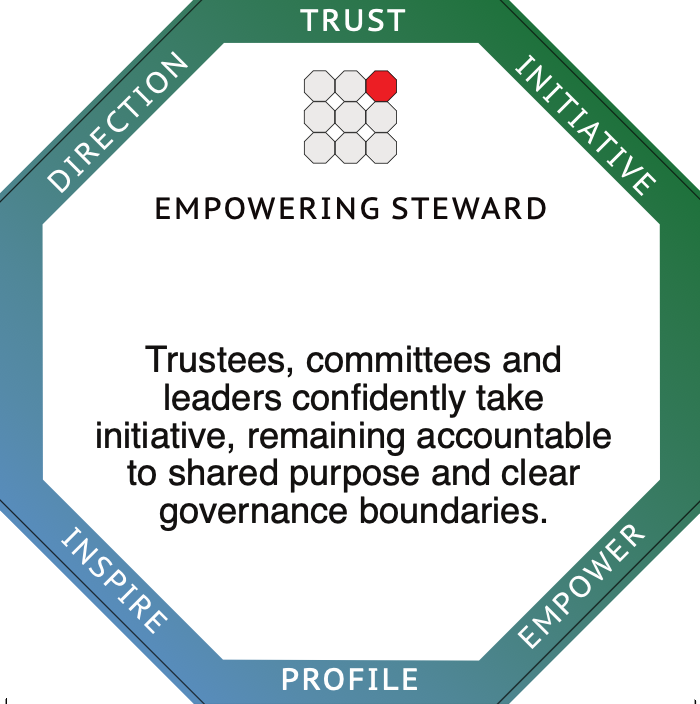
The six principles cross into nine modes of board thinking: the Board Nine Map. Every board already moves between these modes. The map simply makes the range visible - and shows what is being over-used, and what is quietly missing.
Read it like a bar chart: the design-intent columns (Inform, Inquire, Inspire) run along the base, and the rows rise from Enjoy at the foundation, through Engage, up to Empower.
Full lens detail is printed on the card.
Hover or tap any mode to open its Governance Lens
A profile names a mode of thinking. Its Governance Lens turns that mode into a move: when to use it, how it fails when over-used, and one question that tests whether the board is using the mode or hiding in it.
What becomes visible
Collective governance, designed, not assumed.
Where your board's attention actually goes - and what it has been quietly leaving unexamined. Once a board can see that, it can choose differently.
From principle to practice
What does good governance actually look like?
Principles only matter when they reach the table. The deck connects them, step by step, to the conversation a board actually has. The last step is the one that counts.
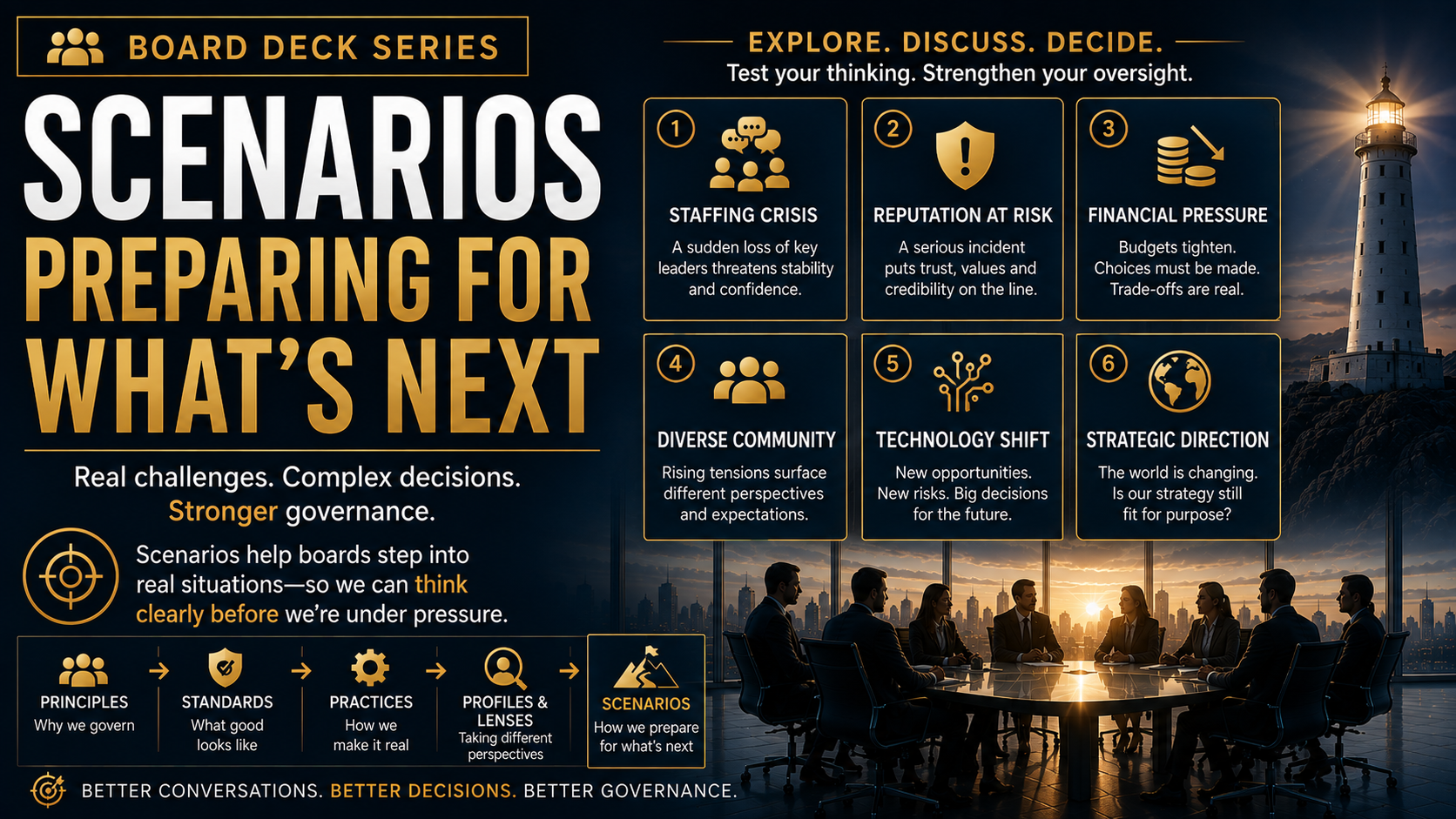
One dilemma, five seats at the table.
The deck takes a single governance dilemma and presents it from each seat around the table - then adds a complication, the way real governance does. The same event looks different to each person. Good governance is the board thinking well across all of them.
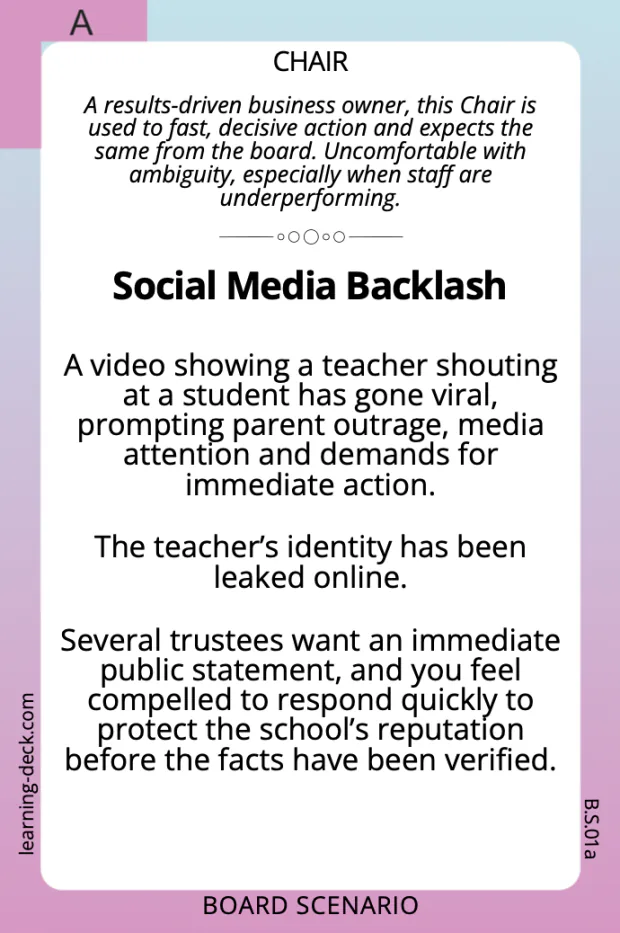
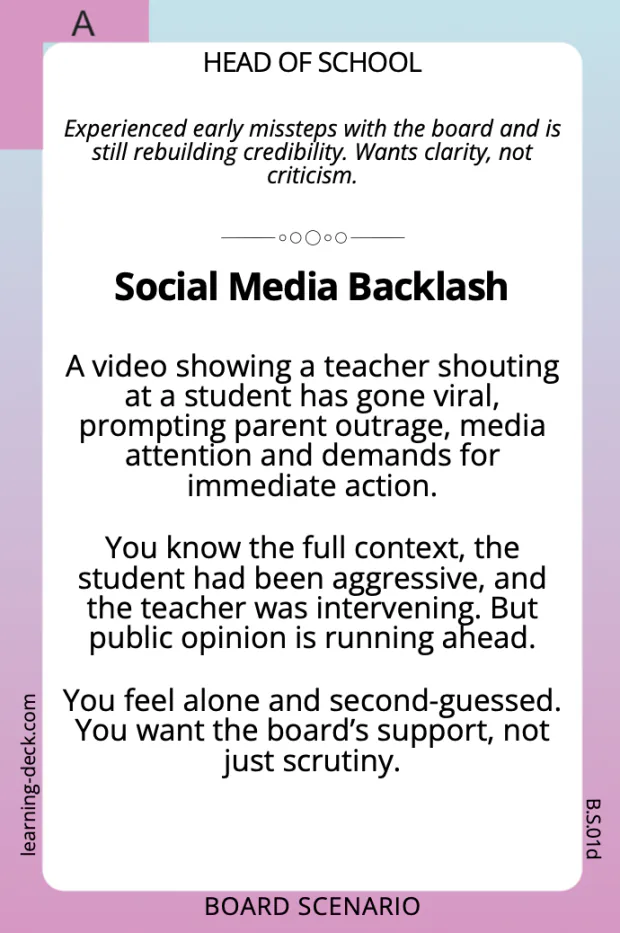
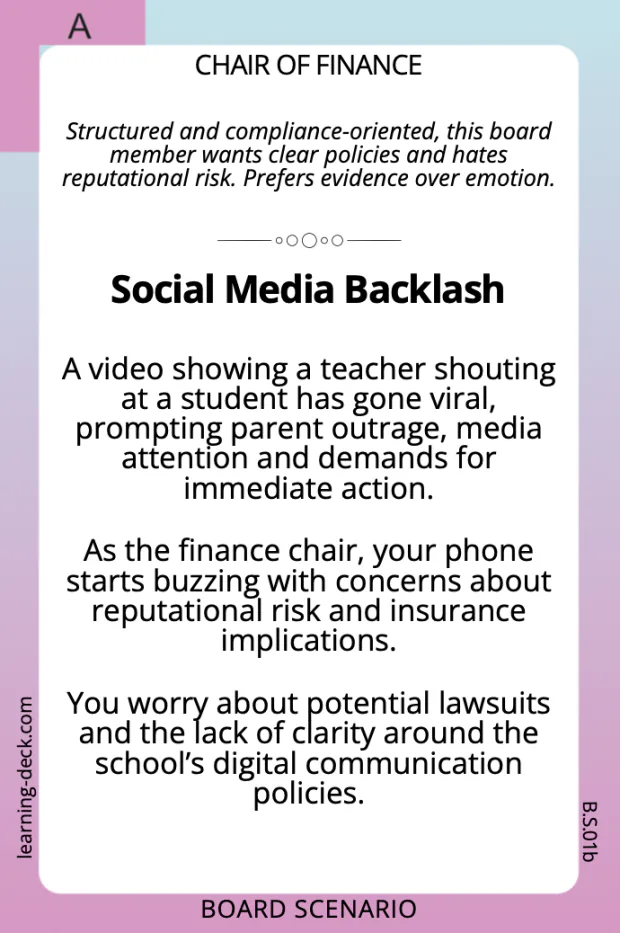
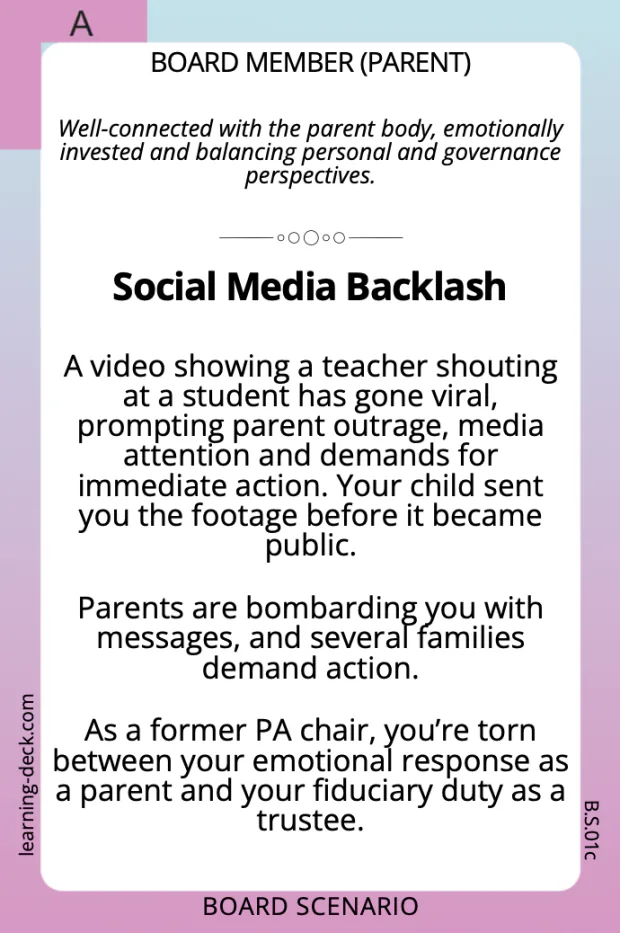
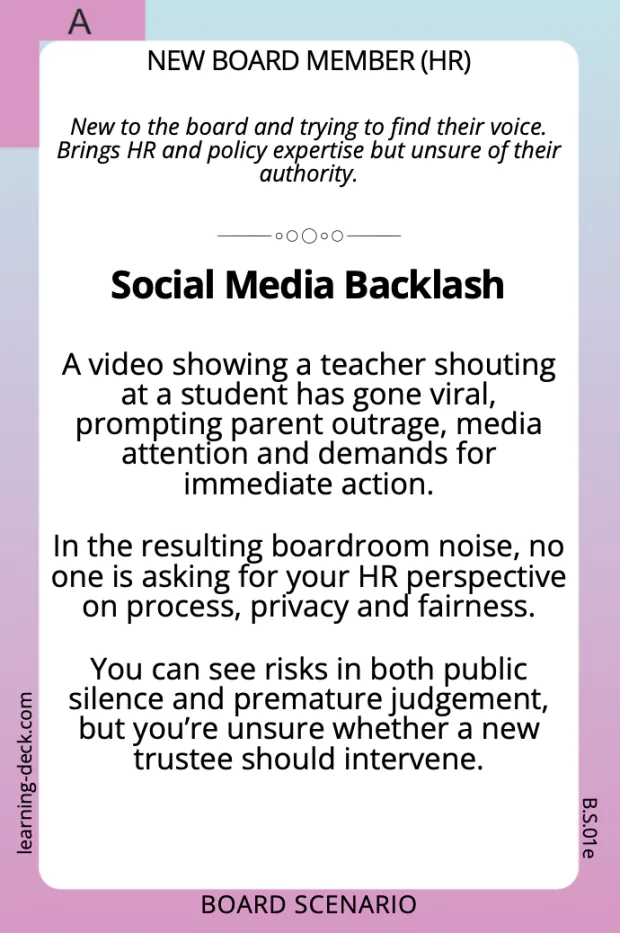
Then a complication card changes the facts - and tests whether the board's thinking holds.
In the rhythm of the year
How does it fit how we already work?
It doesn't add a meeting. It works inside the ones you already hold - a shared language the board reaches for at each point in the cycle.
Before
Agenda planning
Decide where the board's attention should go, and why.
During
Board meetings
Name the mode in play, and choose the move the moment needs.
After
Decision reviews
Test decisions against clear reference points, not gut feel.
Ongoing
Board development
Build a shared method new and long-serving members share alike.
Yearly
Self-evaluation
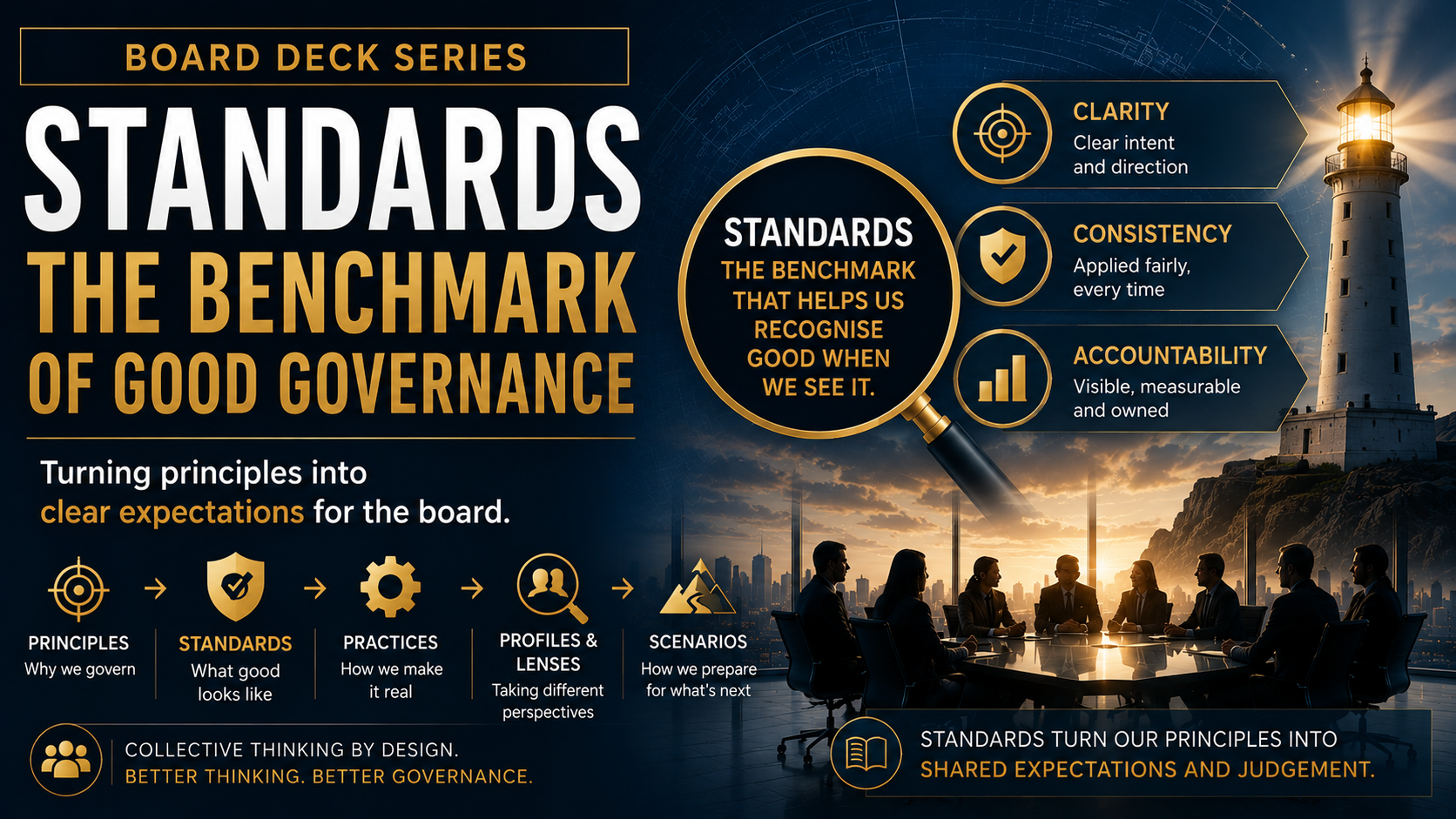
Assess the board against twelve standards, with an honest rubric.
What changes over time
How does a board build judgement it can trust?
The value compounds. Each change makes the next one more likely - until better thinking is simply how the board operates.
Over time, a board earns a quiet confidence - not in itself, but in its practice. Confidence that:
- the right questions are being asked
- nothing important is being overlooked
- decisions line up with strategy
- judgement is getting more consistent
In the box
What you actually get
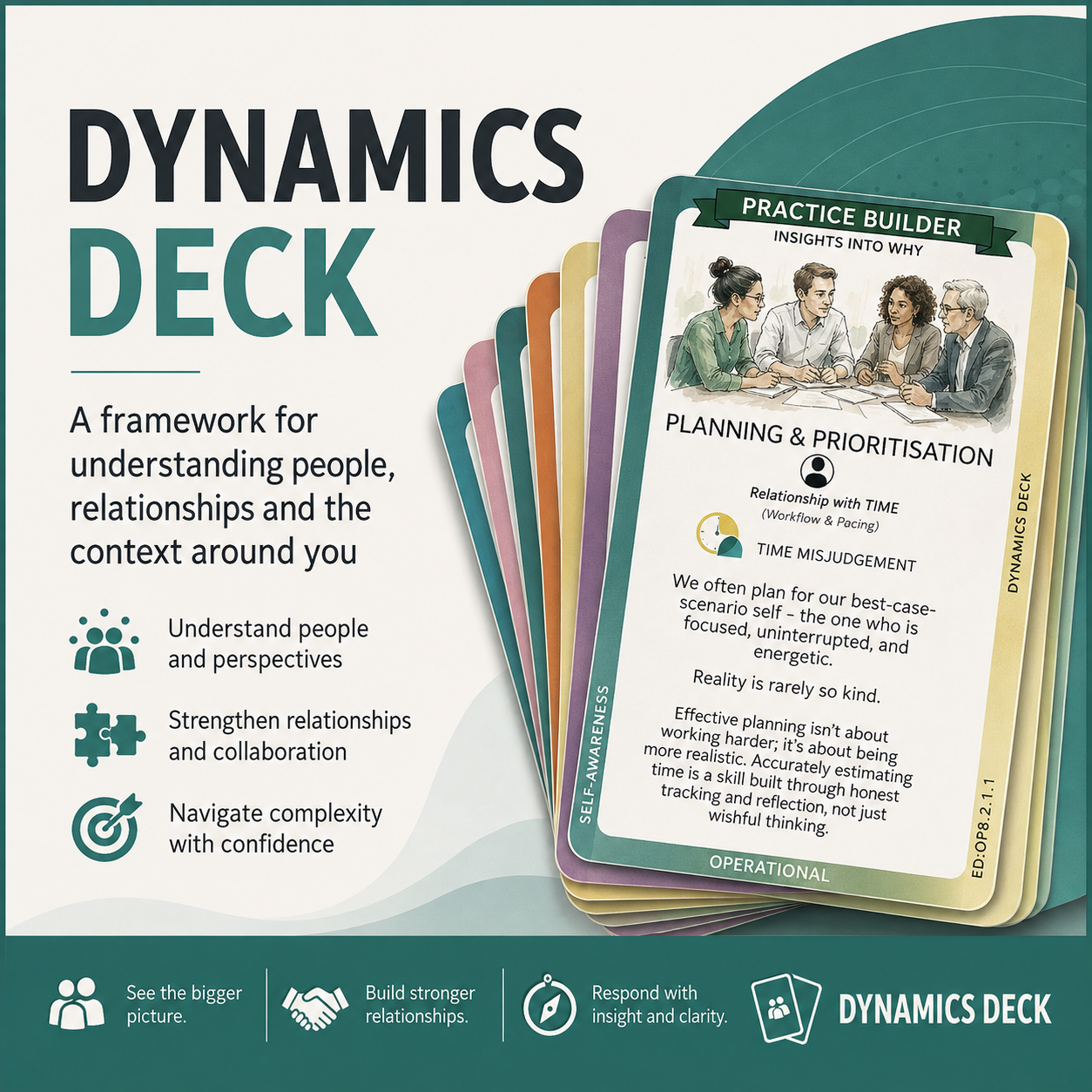
A complete, physical governance system - designed for the table, with enough copies of the key cards to hand around so every member takes part.
Six principles
The shared language for directing attention.
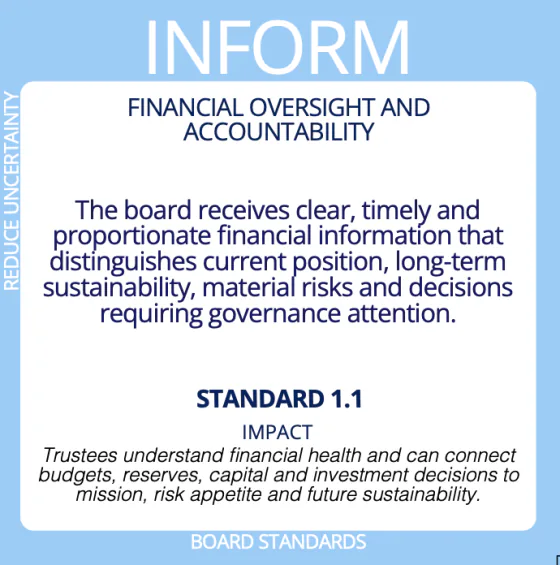
Twelve standards
Reference points for reflection, each with a rubric.
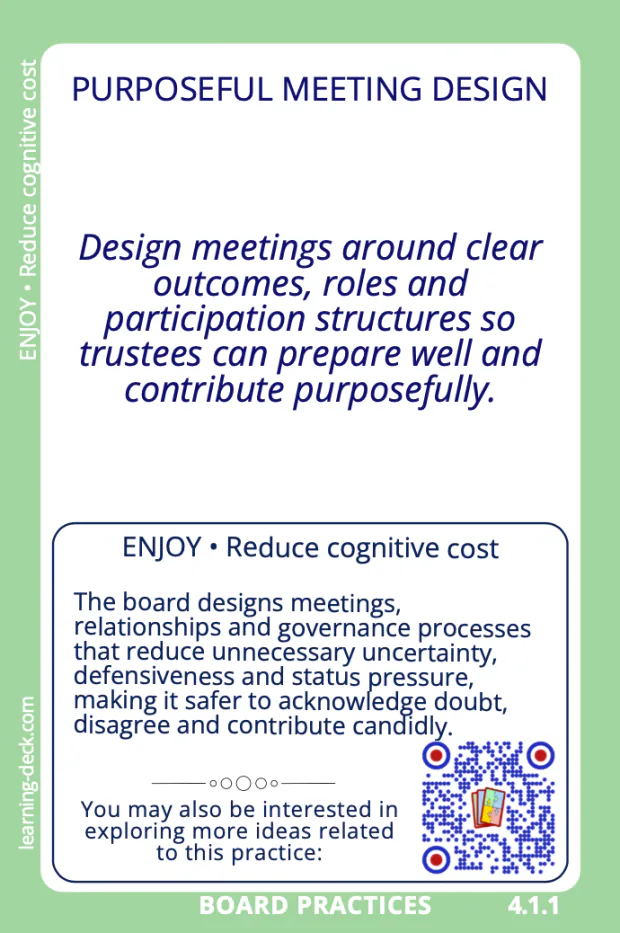
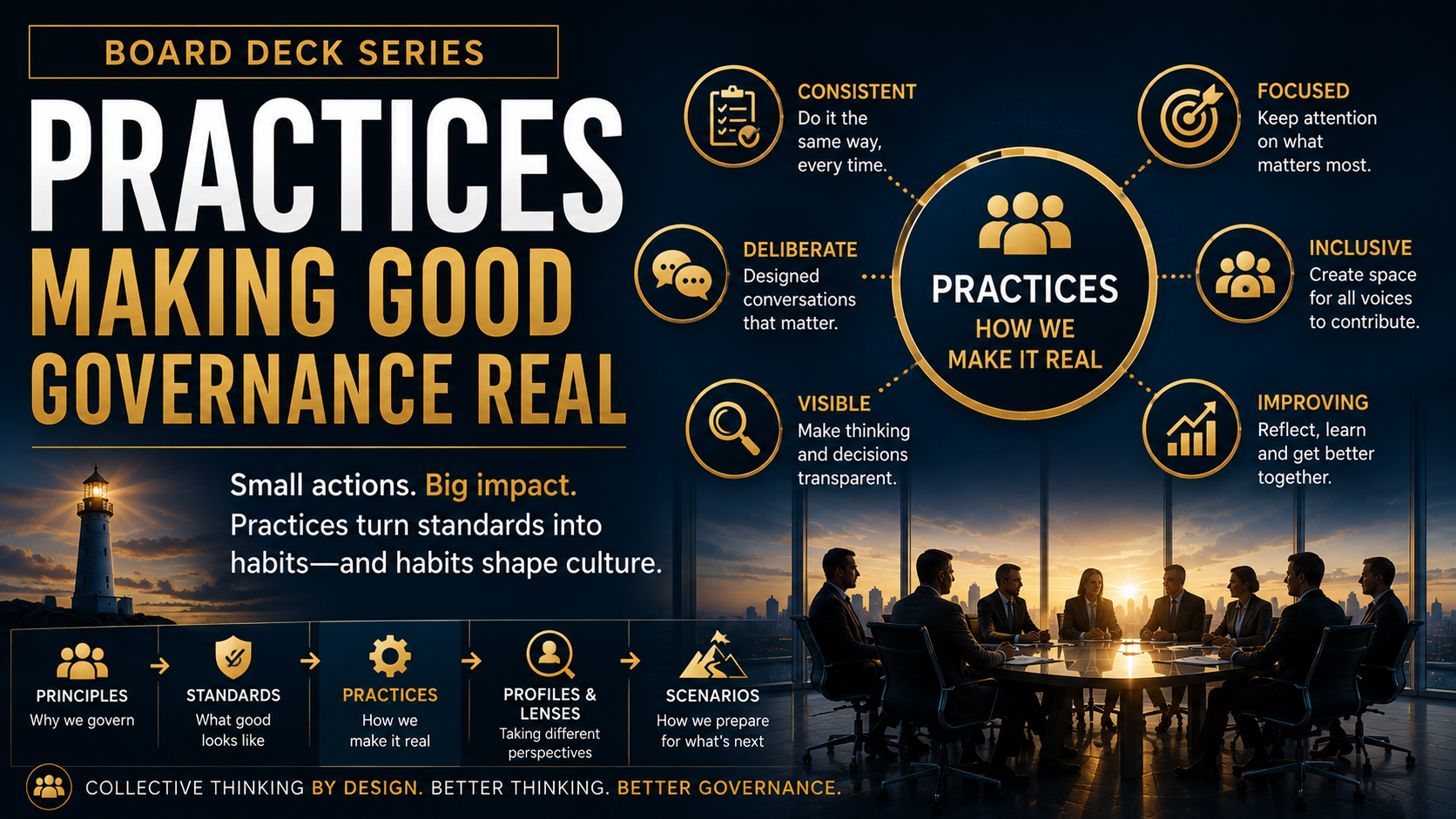
Forty-eight practices
Observable behaviours that make good governance concrete.
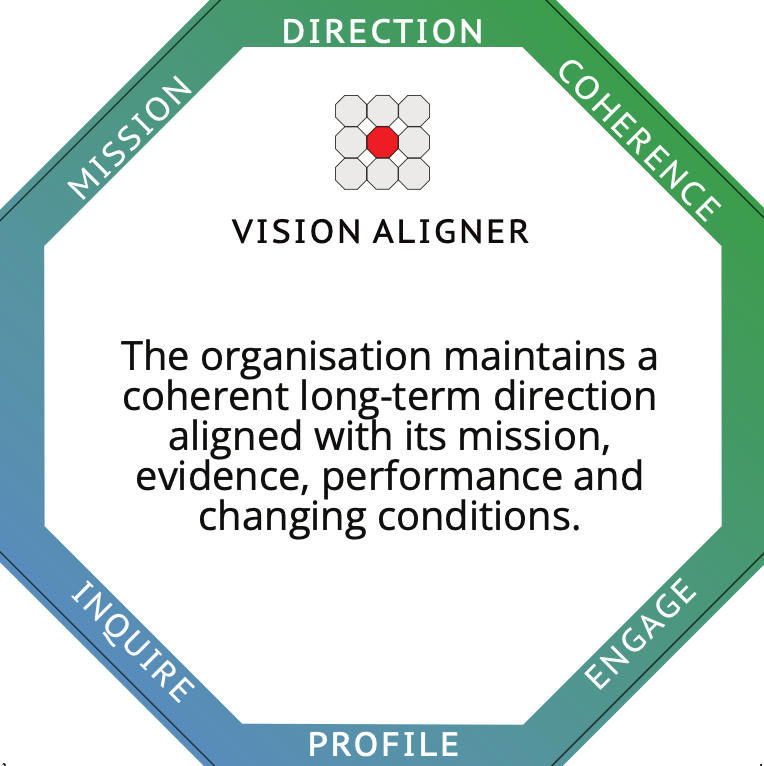
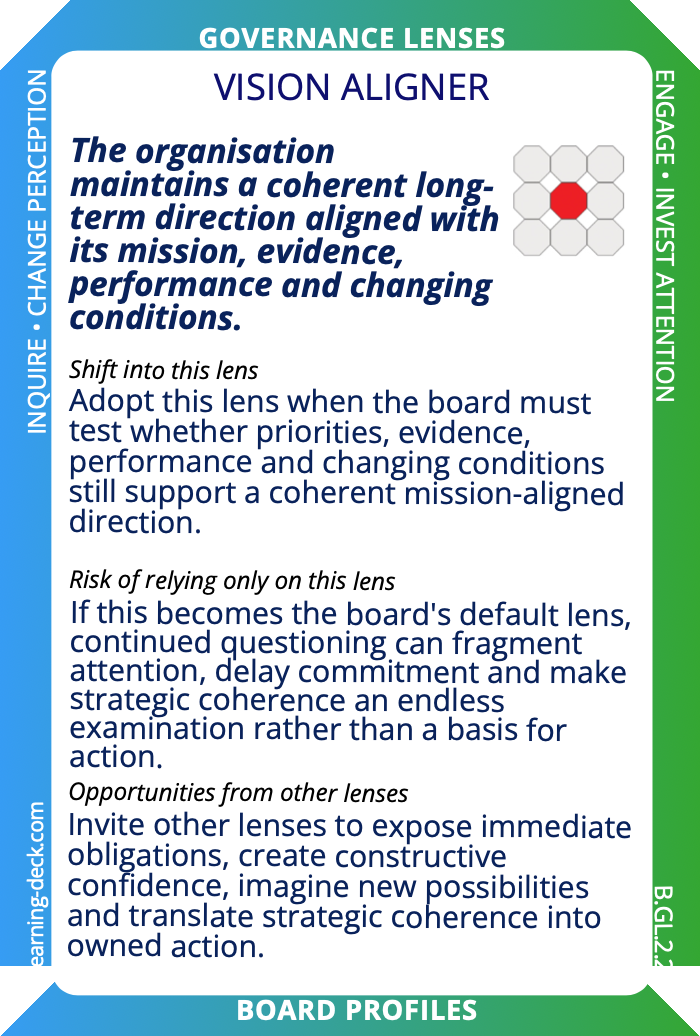
Nine profiles & lenses
Modes of board thinking, and the moves that shift them.
Sixteen scenarios
Real dilemmas from five seats, each with a complication.
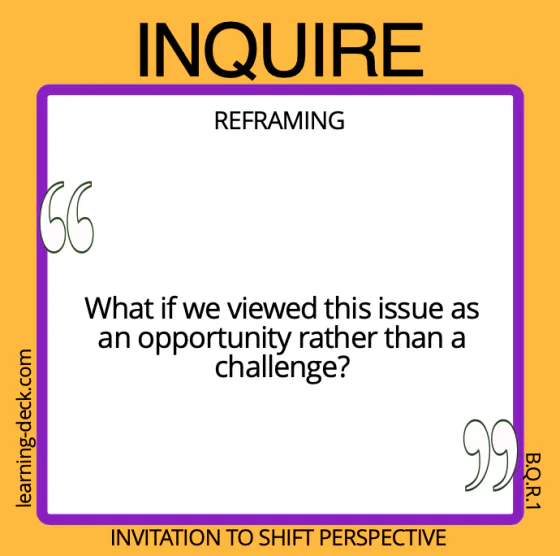
Inquire cards
Questions that redirect a discussion when it stalls or narrows.
A distinction worth making
This isn't a course in governance. It's a way of governing better.
Most governance products teach the theory. The Board Deck is used in the room, on live decisions. A nine-session induction guide walks a board through the deck - the nine map, the six principles, the Governance Lenses, and how to run a scenario. Session one is open to read now, no purchase required.
Collective Governance by Design
The digital complement
The principles in the room. The record in the system.
The Board Deck makes governance principles tangible in a room. Loom - the governance platform for international schools - keeps those principles persistent across meetings, leadership changes, and years: risk registers, authority plans, decision records, and strategic oversight that holds between meetings.
Build a board that thinks together, deliberately.
Give your board a shared language for attention, judgement and decision - one it can use in every meeting, not just remember from a training day.
Free EU shipping · 30-day returns · Part of the Synnovate Suite
Video Series
The Board Deck, explained
Seven short videos walking through the principles, practices and thinking behind the Board Deck.