Induction Guide
Dynamics Deck
Six sessions for working with the patterns that drive workplace dysfunction — using two interlocking frameworks: SHIFT (the leader's view) and START (how change feels from the other side). Pick a card to start.
Sessions 2–7 are available to registered purchasers — tap a locked card to enter the access password.
This session is locked
Sessions 2–7 are available to registered purchasers of the Dynamics Deck. Enter your access password to read this and the other locked sessions.
Don't have a password? Email nik@learning-deck.com.
Session 01 · Open
Start here — Orientation
What this deck helps you do, and how the cards fit together. 20–30 minutes.
Before you begin
Open the box. Don't take the cards out immediately. Look at how they're arranged.
You'll see a 3 × 3 grid. This isn't storage — this is the system.
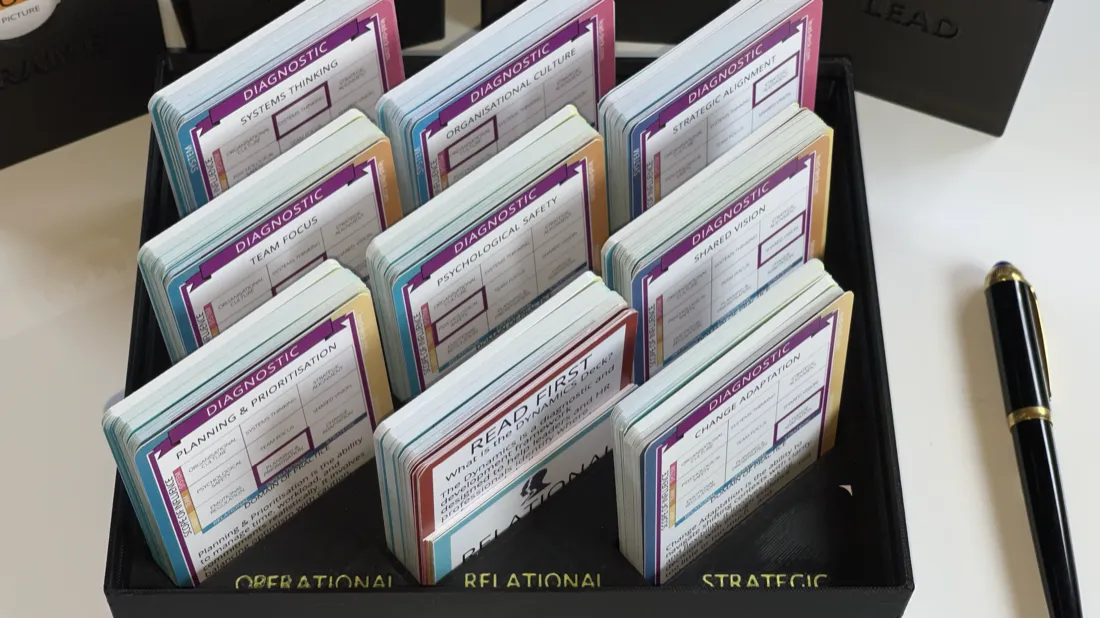
The structure: the Dynamic Nine Map ℹ︎
The grid organises team dynamics across two dimensions:
- Where the pattern sits — Self (internal responses, habits, emotional regulation) · Team (interaction between people) · System (structures, culture, wider conditions)
- What kind of pattern it is — People (relational and emotional dynamics) · Practice (behaviours and ways of working) · Perspective (beliefs, assumptions, worldview)
Together: nine distinct dynamics. Each section in the box represents one area where teams typically get stuck. The full named matrix appears in Session 2 (Foundation).
The core principle
Problems are patterns, not personalities.
This is not about people. It's about patterns. Hold this and the rest of the deck does its work.
What's in the deck
Each section of the box contains a set of cards that work together. Five types in all:
Culture Interpretation
Used first. Pause. Reinterpret. Then proceed.
Dynamics & Diagnostics
Name what's actually happening. Use "this looks like…", not certainty.
Insights
Why the pattern occurs and what drives it. Understand before responding.
Scenarios
Realistic situations. Stay with the scenario before applying to real people.
Practice Builders
Practical small actions. Don't try to fix everything.
1. Culture Interpretation cards ℹ︎
Used first. They help you ask: "What else could this mean?"
Before naming a problem: behaviour may be shaped by culture · assumptions may be incorrect · intent may be misunderstood.
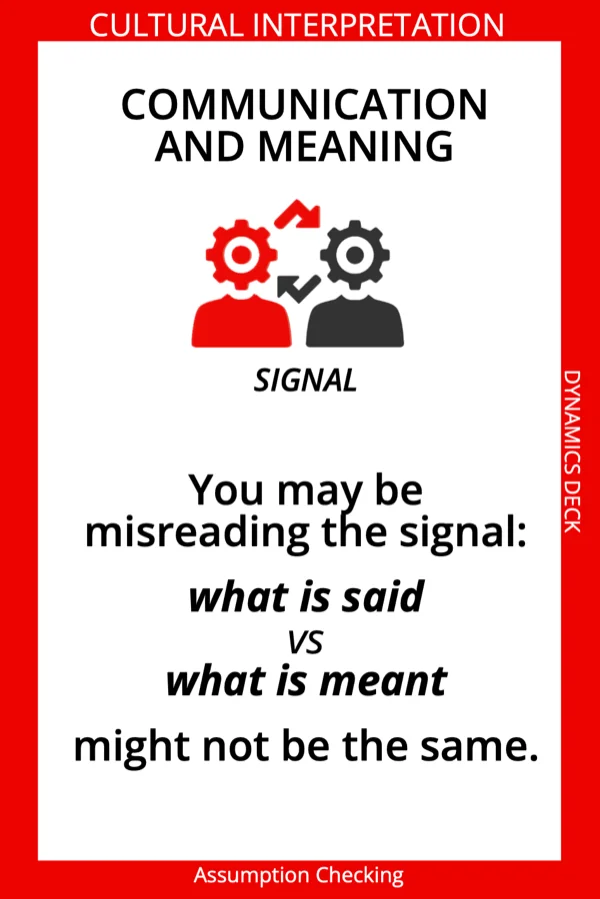
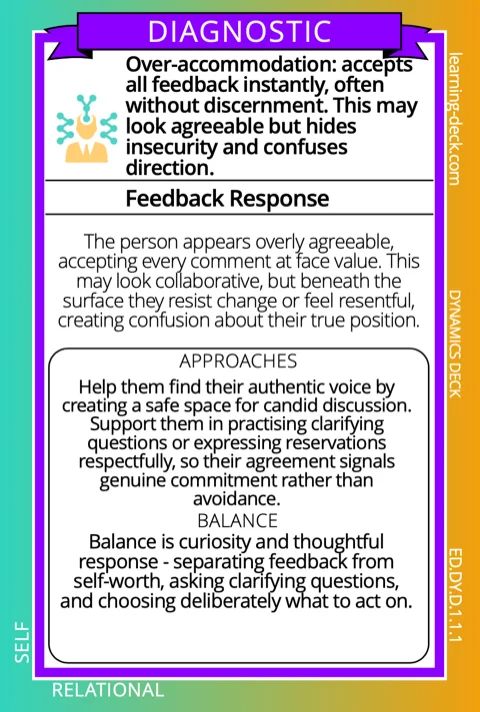
2. Dynamics & Diagnostics ℹ︎
These cards describe the core dynamic, the specific sub-patterns, and observable behaviours. They help you name what is actually happening.
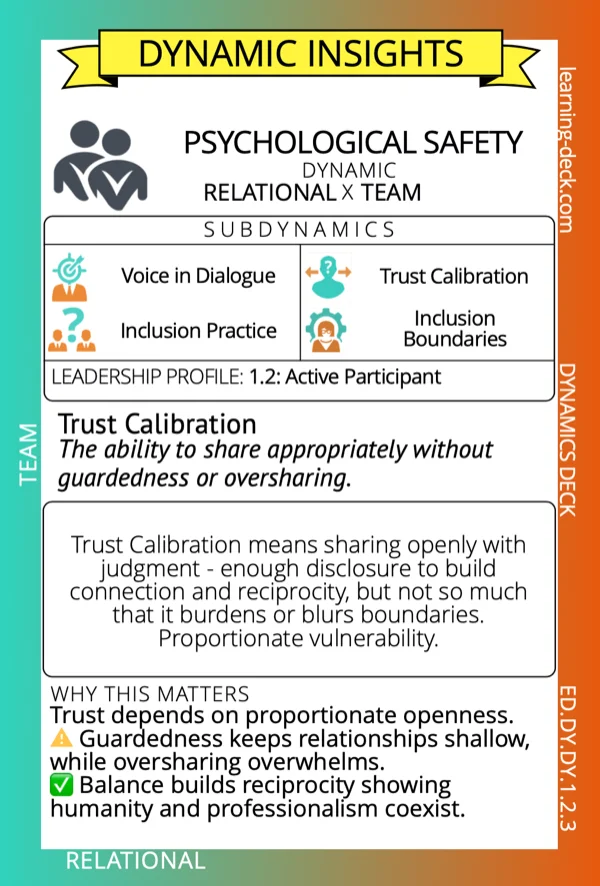
3. Insights ℹ︎
These explain why the pattern occurs, what drives it, and what impact it has. They help you understand before responding.
4. Scenarios ℹ︎
Short, realistic situations. Each dynamic includes scenarios reflecting everyday team tensions, multiple perspectives, and common patterns in action. They allow you to explore the issue safely.
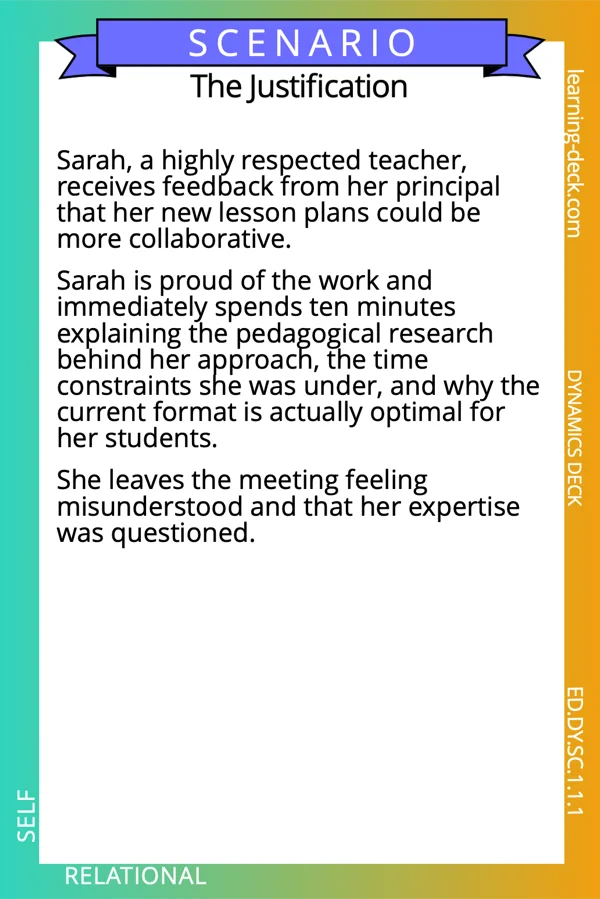
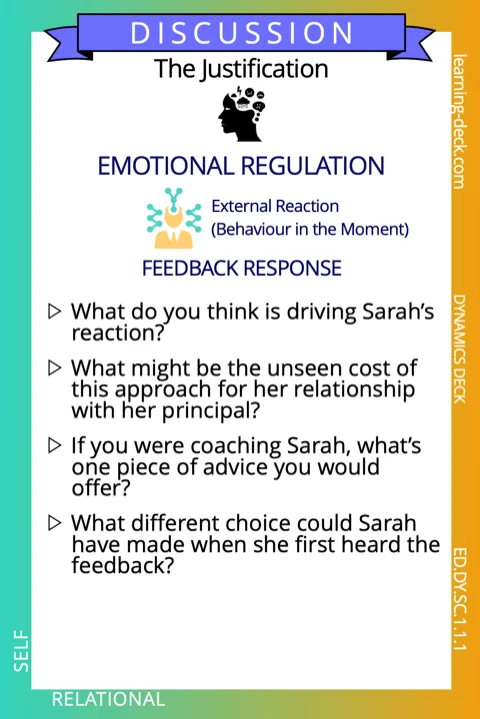
Each scenario card has a front (the situation) and a rear (discussion prompts and perspectives). Stay with the scenario first. Don't immediately apply it to real people.
5. Practice Builders ℹ︎
Practical ways to respond — small, targeted actions. They answer: "What could we do differently?"
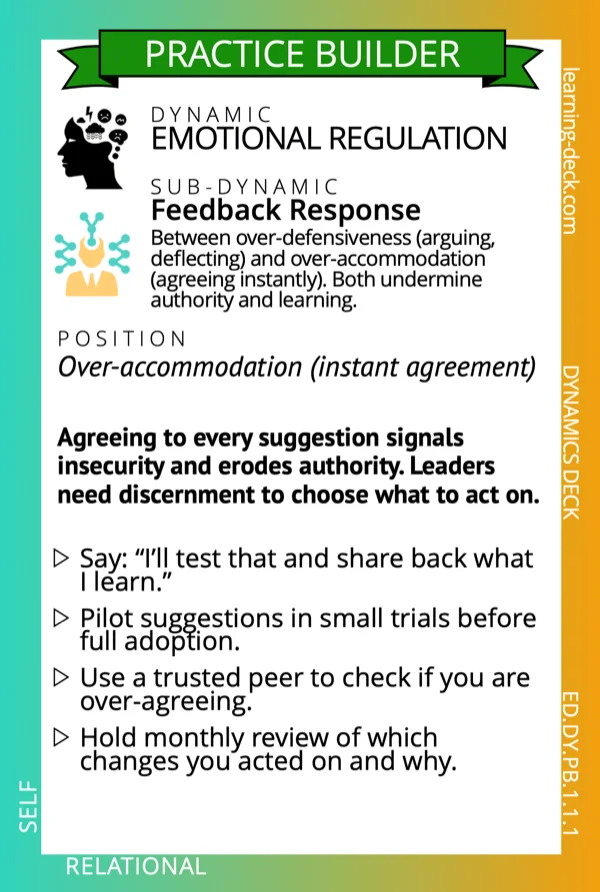
Keep actions small. Don't try to fix everything.
The process: SHIFT ℹ︎
SHIFT is how you move from insight to action — five disciplined steps:
Don't rush to Transform. Most value comes from seeing and framing well.
The emotional layer: START ℹ︎
START explains what happens when people are confronted with change.
Resistance is not failure. It's often part of the process.
How it fits together
- The Grid → shows where the pattern sits
- Culture cards → prevent misinterpretation
- Diagnostics → name the pattern
- Insights → explain it
- Scenarios → explore it safely
- Practice Builders → shift it
- SHIFT → guides your action
- START → explains their response
One line to hold
Once you can see the pattern, you can change it.
Where this deck fits in the suite ℹ︎
This deck answersWhat pattern is driving this behaviour?
Across all eight: make the invisible visible → choose deliberately → act precisely → reflect and adapt.
Where to go from here
You've now seen the structure — the 3 × 3 grid, the five card types, and the two interlocking frameworks (SHIFT for the leader, START for the change process). That's enough to start with. The next session takes you into the first practical exercise: safe pattern recognition using a scenario card.
If you are facilitating
Don't:
- diagnose individuals
- rush to solutions
- force agreement
Instead:
- keep the focus on patterns
- use scenarios to create distance
- allow insight to emerge
Other decks help you act and decide. This deck helps you understand what is really happening. The next session takes you into your first structured pattern-recognition exercise — using a scenario card and the cultural lens together.