Induction Guide
Lead Deck
Five short sessions to make your leadership patterns visible — and widen the range of moves you can choose from. Pick a card to start.
Sessions 2–6 are available to registered purchasers — tap a locked card to enter the access password.
This session is locked
Sessions 2–6 are available to registered purchasers of the Lead Deck. Enter your access password to read this and the other locked sessions.
Don't have a password? Email nik@learning-deck.com.
Session 01 · Open
Start here — Orientation
What this deck is built on, and how the cards fit together. 20–30 minutes.
Before you start using the cards on real leadership situations, take a moment to see the structure. The Lead Deck rests on the same Nine Map as the Learning Deck — but turned outward, to how you lead and how that lands with others.
Before you begin
Open the deck and sort the cards. You'll notice four distinct types:
Square cards
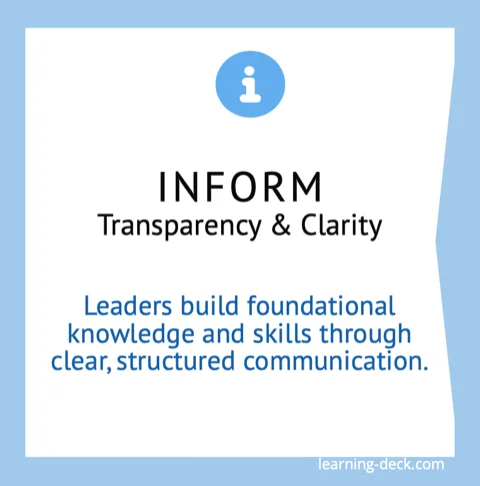
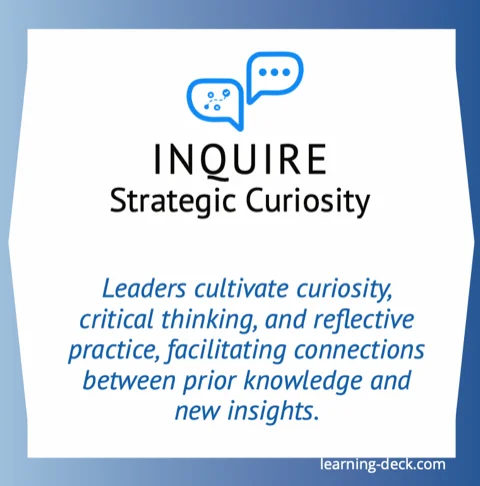
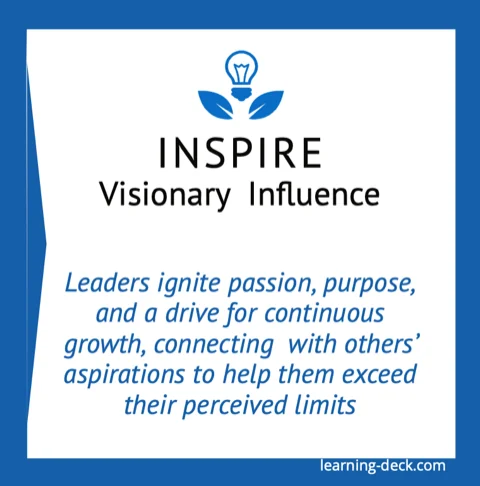
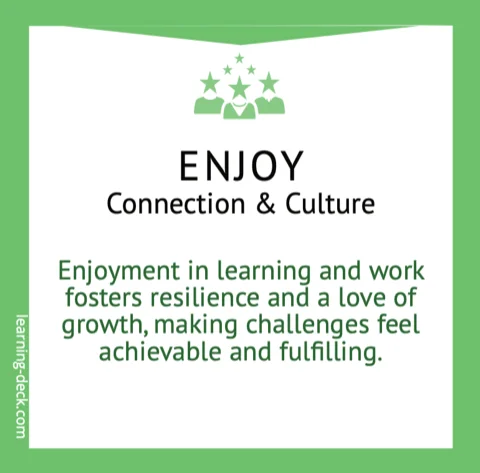
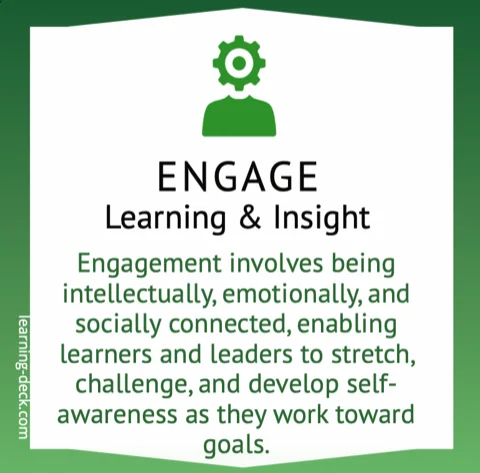
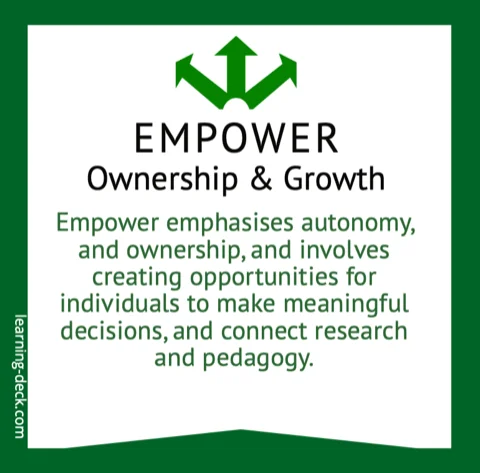
Leadership principles. Two axes: how you lead (Inform · Inquire · Inspire) and what it creates (Enjoy · Engage · Empower).
Octagonal cards
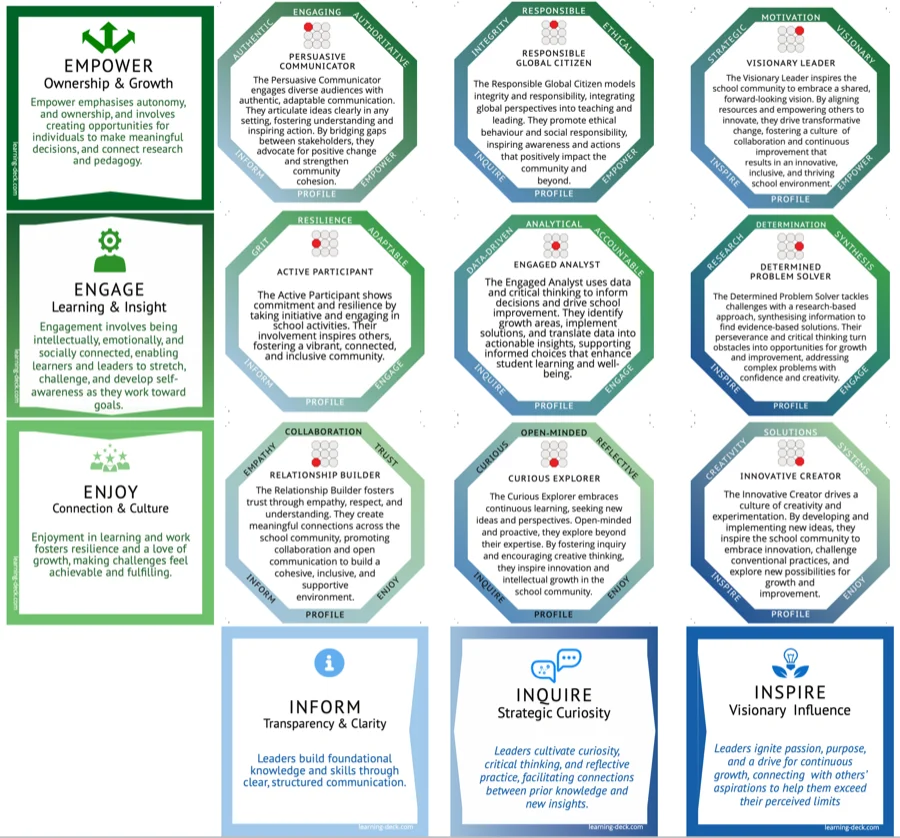
Leadership profiles. Nine ways leadership shows up — each at the intersection of approach and impact.
Practice cards
Observable leadership behaviours. Concrete moves you can make when you want to lead differently.
Reflection & insight cards
Inquire cards deepen reflection. GRIT insights surface beliefs and mindset.
1. The foundation: leadership principles ℹ︎
The square cards define two axes — how you lead, and what your leadership creates for others:
2. The structure: the Leadership Nine Map ℹ︎
When the two sets of principles intersect, they form a 3 × 3 grid — nine leadership profiles. Each intersection is a distinct way leadership shows up.
3. LENS: a pause before choosing how to act ℹ︎
Most leadership mistakes are not about effort. They are about misapplied effort. Acting too quickly, at the wrong level, or in the wrong way can make a situation worse — even with the best intentions.
LENS is a simple orientation tool that helps you step back before responding. It asks two critical questions.
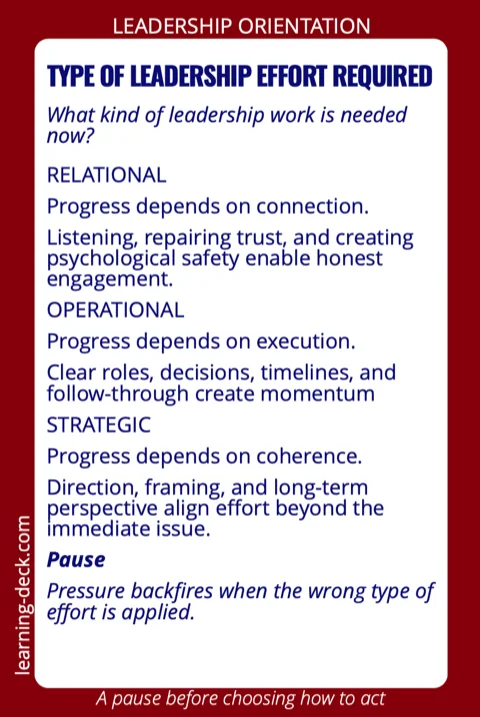
1. What kind of leadership work is needed?
- Relational — Is this about trust, connection, or communication?
- Operational — Is this about clarity, roles, or execution?
- Strategic — Is this about direction, alignment, or long-term thinking?
2. Where does the work need to happen?
- Self — Do I need to adjust my own thinking or response?
- Team — Is this something to work through with others?
- System — Is this shaped by structures, processes, or priorities?
Why this matters
Many leadership challenges persist because:
- relational issues are treated as operational problems
- systemic issues are treated as personal failings
- strategic issues are rushed into quick fixes
LENS helps you avoid this by creating a moment of clarity before action.
How to use it ℹ︎
Before responding to a situation, pause and ask:
What type of work is this? Where does that work sit?
Then choose your response accordingly.
One line to hold
Leadership fails when the right effort is applied in the wrong place.
LENS is not a solution. It is a filter that shapes better decisions across all other cards. Use it before selecting a profile, before choosing a practice, and before entering a difficult conversation.
4. The profiles: leadership in practice ℹ︎
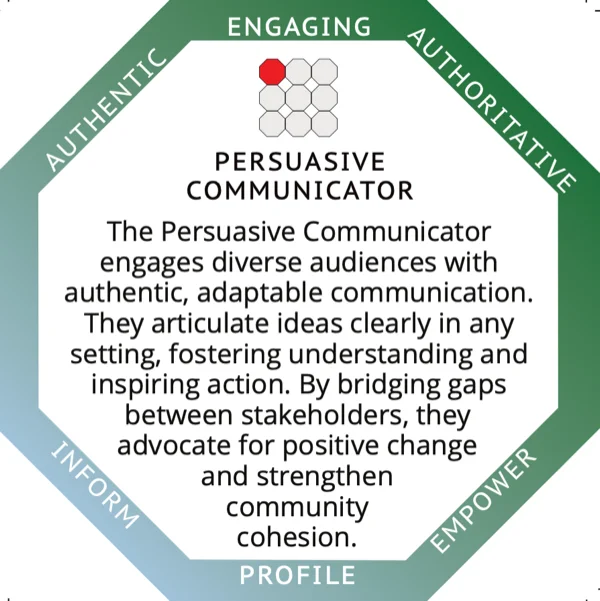
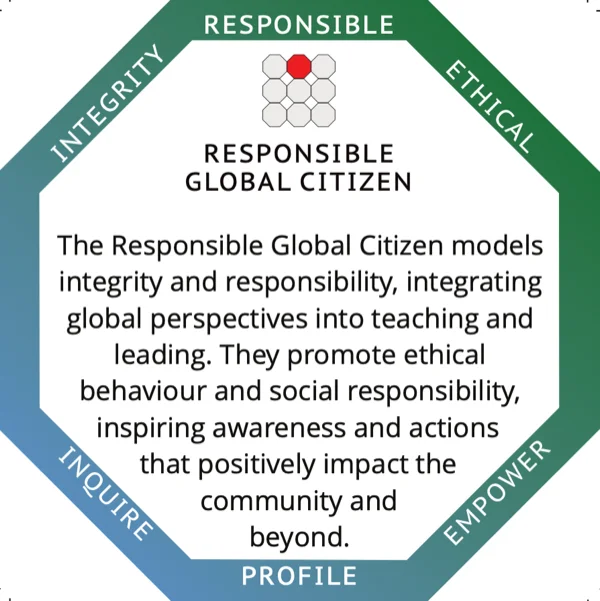
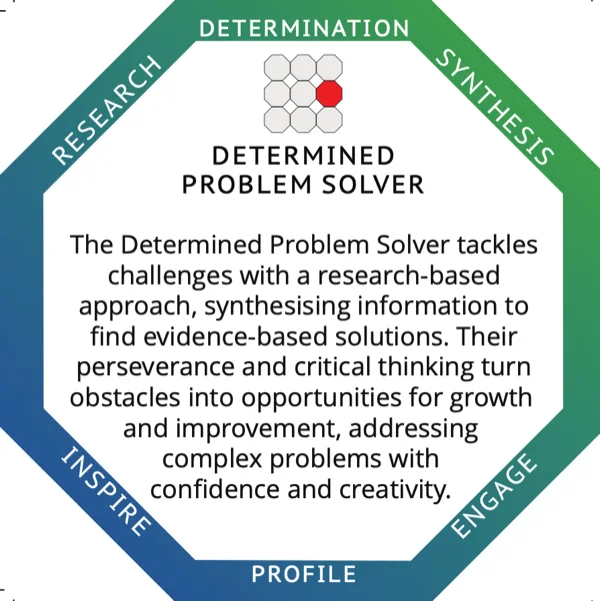
The octagonal cards translate the map into how leadership is experienced by others. Three examples to start with:
5. Lead Practices: observable behaviours ℹ︎
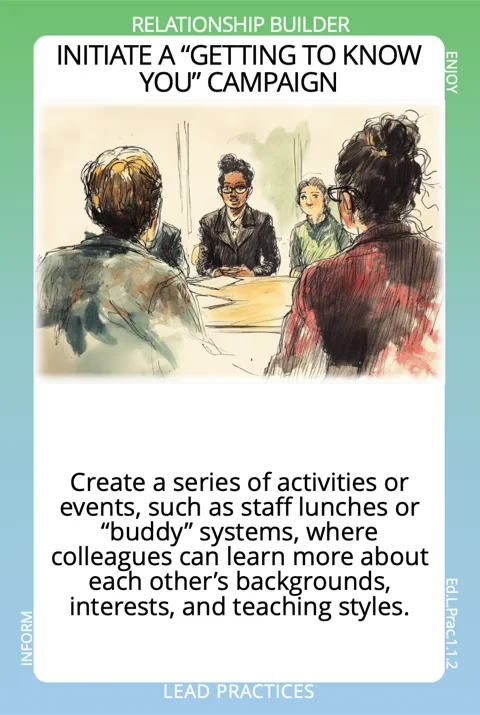
The rectangular practice cards describe specific, observable leadership behaviours — concrete moves you can make. They answer: "if I want to lead differently, what do I actually do?"
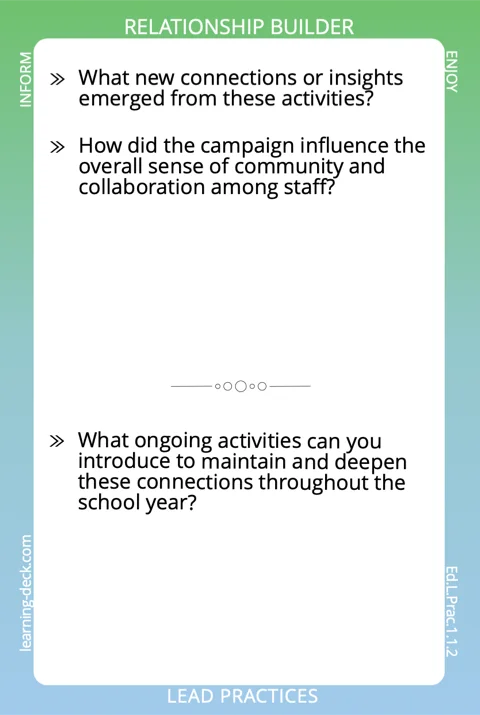
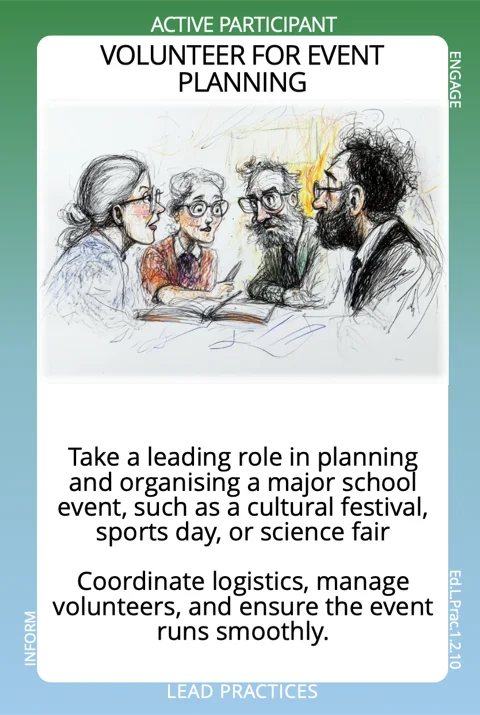
Don't try to use many at once. Leadership shifts happen through small, deliberate changes, applied consistently.
6. Inquire cards: deeper reflection ℹ︎
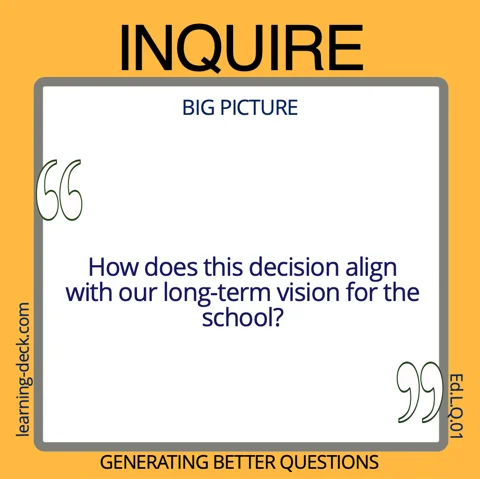
The Inquire cards open new lines of thinking. They're designed to challenge assumptions and move you from surface reflection to deeper insight.
7. Lead Insights: GRIT ℹ︎
The insight cards surface what's beneath the surface — the underlying beliefs, mindset, and internal drivers of leadership behaviour. They're organised around four areas:
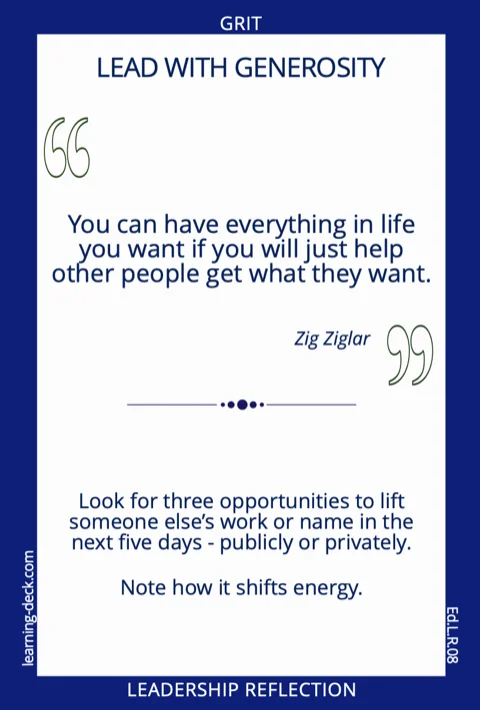
These are not instructions. They are provocations — designed to challenge mindset, not prescribe action.
How it fits together
- Principles → define leadership structure (the two axes)
- The Map → shows the full system
- LENS → pause and orient before reaching for any other card
- Profiles → make leadership visible — how it's experienced
- Practices → shape behaviour with concrete moves
- Inquire cards → deepen thinking
- GRIT insights → challenge mindset
One line to hold
Leadership is not what you intend. It is what others experience.
Where this deck fits in the suite ℹ︎
This deck answersHow does my leadership create impact?
Across all eight: make the invisible visible → choose deliberately → act precisely → reflect and adapt.
Where to go from here
You've now seen all the layers — principles, profiles, LENS, practices, Inquire cards, and GRIT insights. That's enough to start with. The next session takes you into the first practical exercise: a real leadership situation, surfaced and located on the map.
If you're leading a team
- Don't begin with theory — that's a workshop, not a development experience
- Start with a real leadership situation. Use profiles to describe what happened.
- Then introduce the map — it makes the description land in a structure
- Then explore alternatives using practice cards. Test one change. Reconvene.
Avoid: trying to "cover" all profiles · over-explaining the model · turning this into a personality exercise.
The same Nine Map structure appears across learning, teams, and governance. The context changes — the logic stays.