Induction Guide
Team Deck
Seven short sessions to work with real leadership situations — and widen your range of responses to them. Pick a card to start.
Sessions 2–8 are available to registered purchasers — tap a locked card to enter the access password.
This session is locked
Sessions 2–8 are available to registered purchasers of the Team Deck. Enter your access password to read this and the other locked sessions.
Don't have a password? Email nik@learning-deck.com.
Session 01 · Open
Start here — Orientation
What this deck helps you do, and how the cards fit together. 20–30 minutes.
Before you begin
Think of a team you are part of:
- where things work well
- where things feel difficult
- where something is not quite right
This is where this deck is used.
What this deck helps you do
Most team problems are not about effort. They are about:
- unclear expectations
- unspoken assumptions
- misaligned behaviours
- avoided conversations
This deck helps you make team dynamics visible and workable.
What's in the deck
You'll notice five types of cards, each with a distinct role:
Culture & Coaching
Shape the environment people work in.
Tactic cards
Specific leadership moves.
Scenario cards
Common team challenges, explored safely.
Interview cards
Build stronger teams from the start.
Inquire cards
Deepen reflection and challenge assumptions.
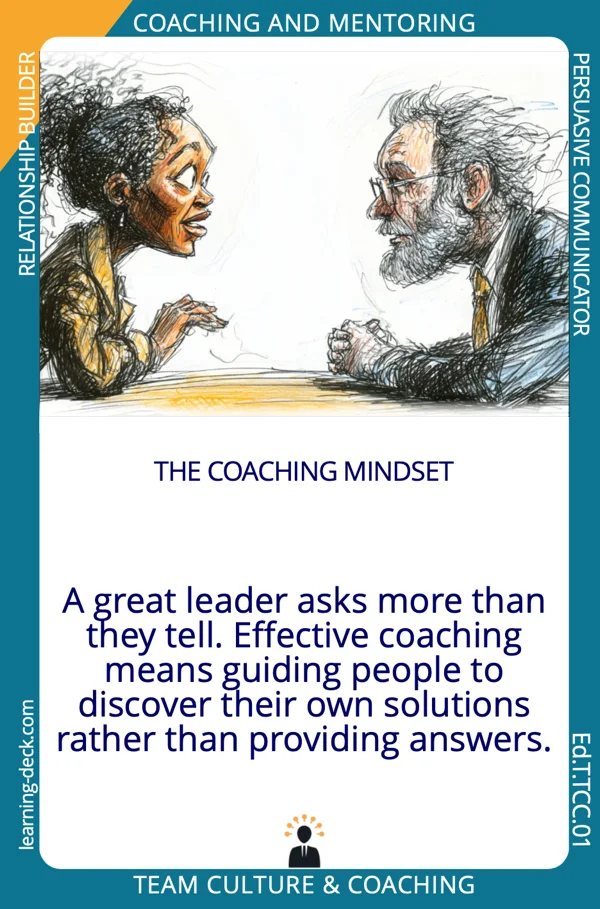
1. Culture & Coaching cards ℹ︎
These focus on:
- how teams feel to work in
- how leaders support others
- how behaviour shapes culture
They help you understand and shape the environment people work in. These are not ideals — they are practical ways culture is created or broken.
2. Tactic cards ℹ︎
These provide:
- specific leadership moves
- practical ways to influence behaviour
- structured approaches to common situations
They answer: "What can I do differently with this team?"
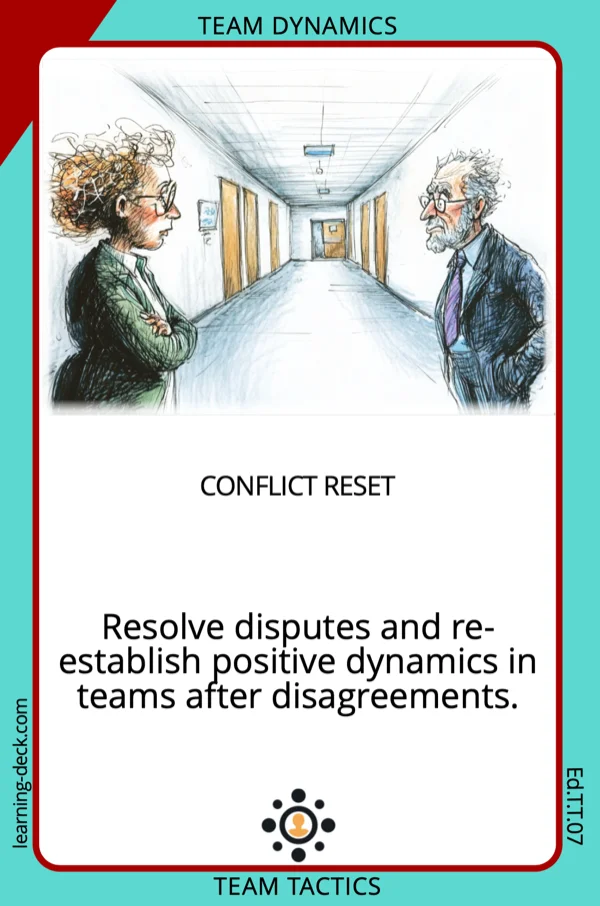
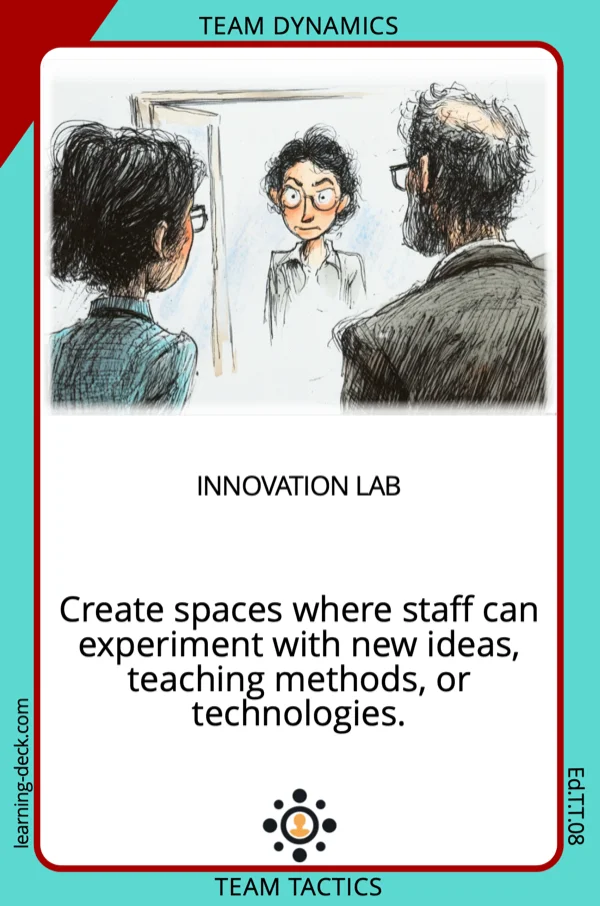
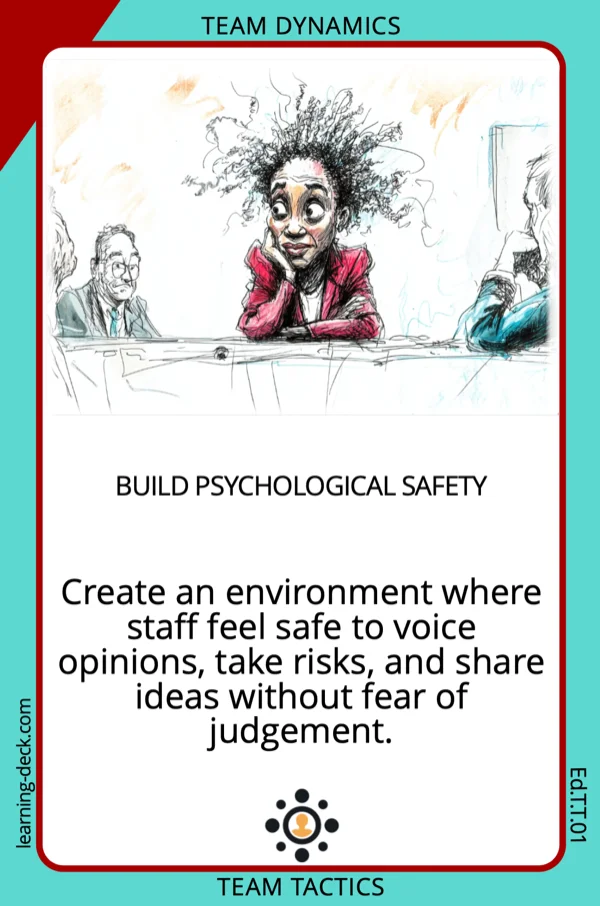
Use one at a time. This is not about applying many techniques.
3. Scenario cards ℹ︎
These describe common team challenges, everyday leadership situations, and moments where things start to drift. They allow you to explore team dynamics without making it personal.
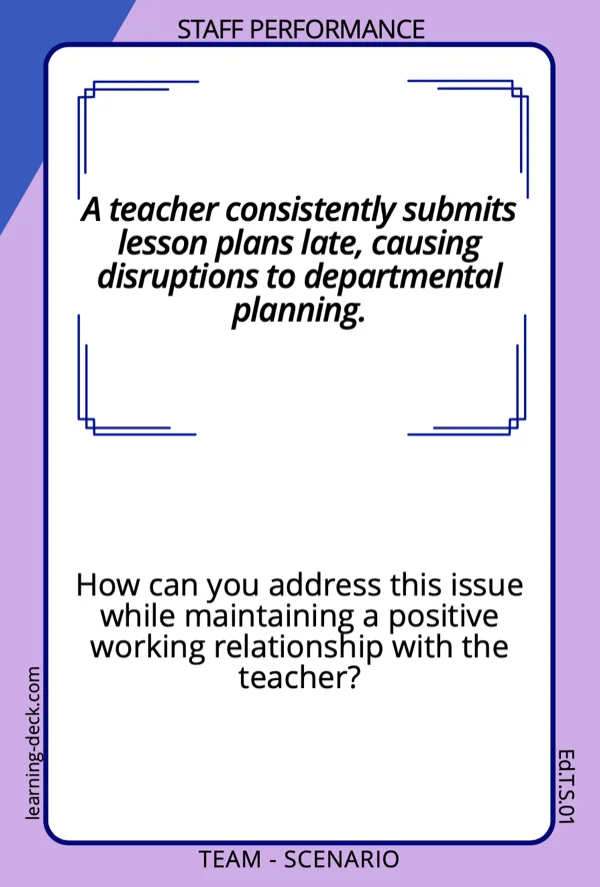
Stay with the scenario first. Don't jump to real people immediately.
4. Interview cards ℹ︎
These provide:
- structured questions
- ways to explore thinking and behaviour
- signals of strong or weak responses
They help you build stronger teams from the start. These are not scripts — they are prompts for deeper insight.
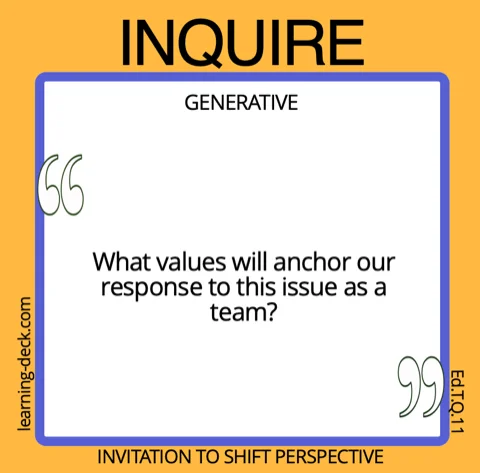
5. Inquire cards ℹ︎
These provide reflective questions, ways to challenge assumptions, and prompts to deepen discussion. They help you move beyond surface-level conversations.
Cultural Interpretation — a standard opening move ℹ︎
Before identifying a team issue, pause. Use a Cultural Interpretation card to ask: What might this mean in a different cultural or professional context?
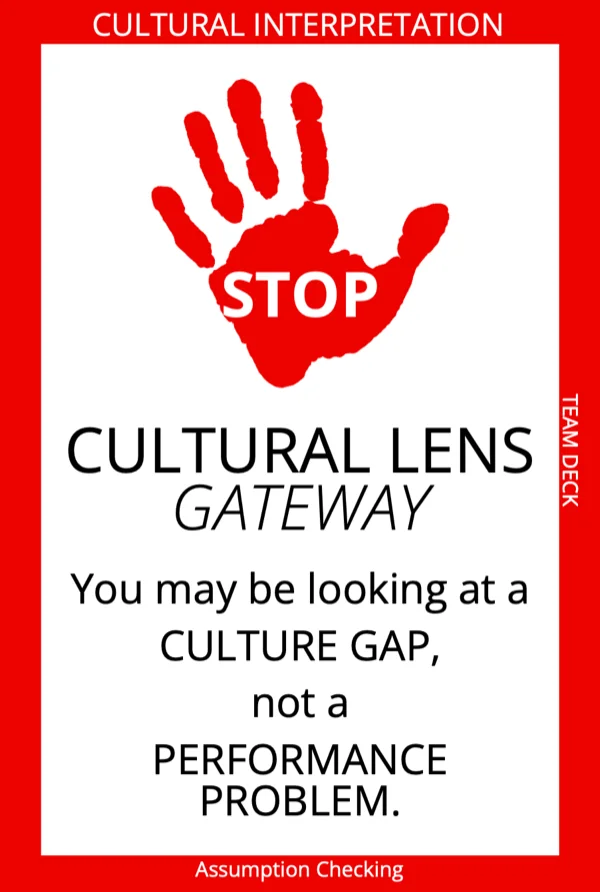
What looks like disengagement, resistance, or lack of clarity may actually be communication style, hierarchy, or different expectations — especially in international or culturally diverse teams.
One step
Pause before judging. Reinterpret before acting.
How it fits together
- Culture & Coaching → shape the environment
- Tactics → guide behaviour
- Scenarios → surface patterns safely
- Interview → build future capability
- Inquire → deepen thinking
One line to hold
Teams don't improve by effort alone. They improve through clarity and alignment.
What this is — and what it isn't
This is not a collection of good thinking tools. The world has plenty of those. Adding more rarely changes how a team actually behaves.
This is about disciplined thinking — not more thinking.
The discipline is choosing fewer cards, used deliberately, in the moments that matter. The deck loses its power the moment it becomes a checklist. It earns its power when one well-chosen move shifts the dynamic.
Where this deck fits in the suite ℹ︎
This deck answersHow do we work together more effectively?
Across all eight: make the invisible visible → choose deliberately → act precisely → reflect and adapt.
Where to go from here
You've now seen what's in the deck — five card types, plus Cultural Interpretation as a standard opening move. That's enough to start with. The next session takes you into the first practical exercise: working with a Scenario card to surface a real team dynamic at safe distance.
If you're leading a team
- Don't begin with solutions — that's a meeting, not a development experience
- Start with a scenario. Explore interpretations.
- Introduce one tactic. Reflect together.
- Apply the cultural lens before naming any issue. Always.
Avoid: jumping to conclusions · making it about individuals too quickly · using too many cards at once · treating the deck as a checklist or set of techniques to apply.
This deck connects leadership to practice. It focuses on what happens between people, not just within individuals. The next session takes you into your first real scenario.