The Team Deck
Your team meets every week. Most of that time is spent talking. Very little of it is spent thinking together.
Schools are full of capable people. Yet the meeting fills with reports, updates, coordination and the quiet defence of positions - and an hour later, no idea is any better than when everyone walked in.
What's really going on
Why do capable teams so rarely think well together?
Because collaboration is assumed, not built. We put good people in a room and expect good thinking to follow. But talking and thinking together are not the same act - and only one of them happens by default.
Left to itself, a meeting fills with what feels safe: people report, update, coordinate and defend. Genuinely improving an idea - challenging it, combining perspectives, changing your mind out loud - takes habits a team rarely has, because no one ever built them.
The pattern underneath
A great team isn't talented people in a room. It's a set of habits.
Collaboration doesn't appear because a school is full of capable professionals, or because they meet regularly. Talent that never gets combined stays exactly that - separate talent, sitting side by side.
What turns a group into a team is a handful of shared habits: making it safe to challenge, building on each other's thinking, resetting when conflict flares, turning disagreement into better ideas. Habits can be built on purpose - or left to chance.
Which is why it exists
That's exactly why we made the Team Deck.
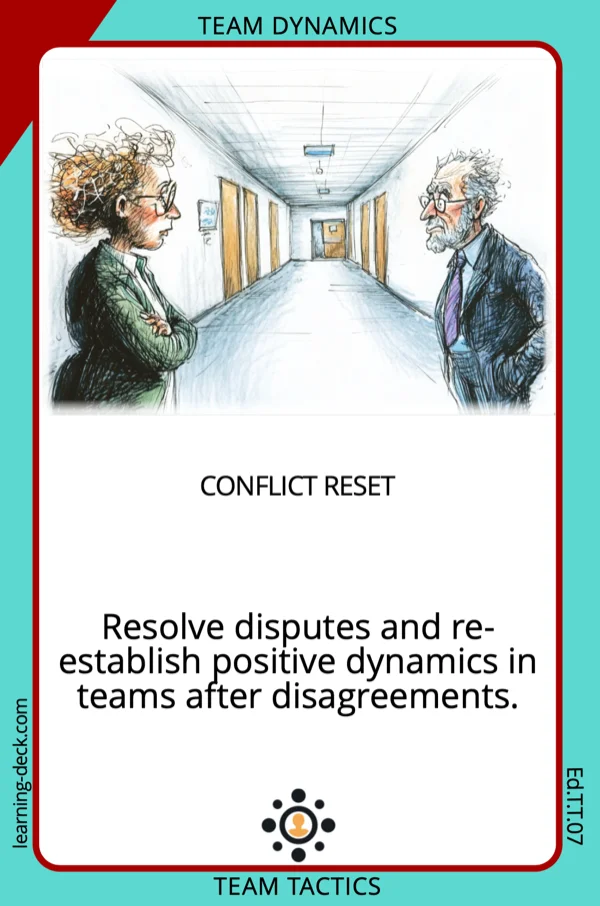
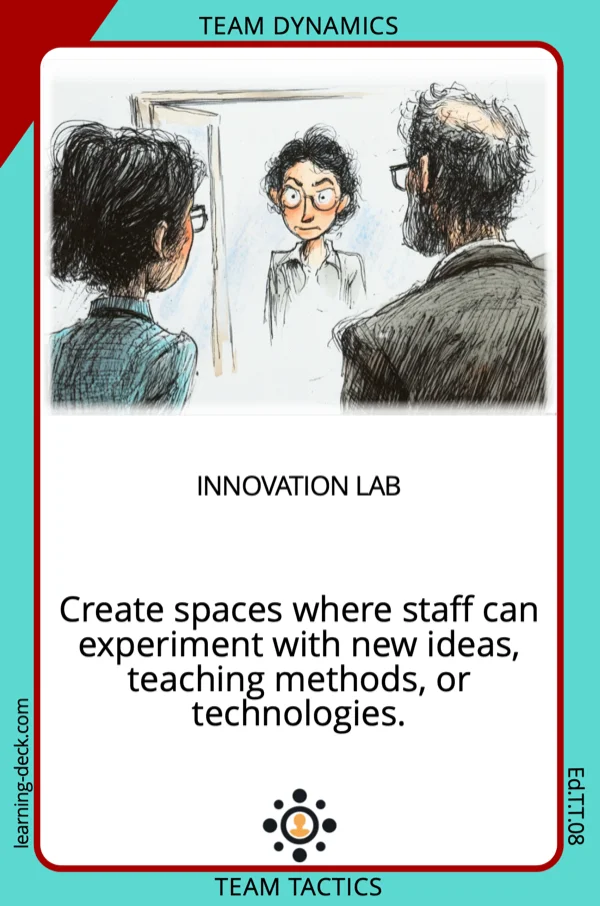
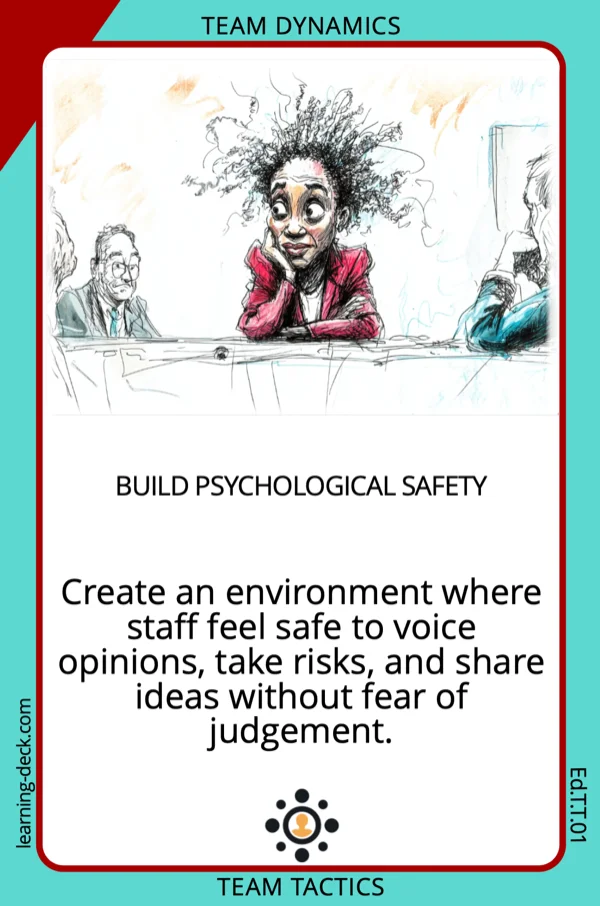
It builds the habits that turn talking into thinking together: psychological safety, so people say the useful thing; a conflict reset, so friction becomes fuel; an innovation lab, so a good idea actually gets better in the room.
Not a set of icebreakers, and not another away-day. Practical tactics, inquiry prompts and coaching moves a team can pick up in the meetings it already holds - so collaboration is designed, not hoped for.

What becomes visible
The difference between talking together and thinking together. Once a team can see it, it can close it - turning a meeting from a place to report into a place where ideas actually improve.
Tactics for thinking together
Practical moves, not good intentions.
Each tactic is a habit a team can run in a real meeting - small, repeatable, and aimed at the moment where collaboration usually breaks.
Backed by team-inquiry cards that open up trust and communication, and coaching prompts that support honest, developmental dialogue.
Why it becomes school improvement
One good meeting is luck. Shared habits are a team.
Culture is not what a school says it values. It is what a school repeatedly practises - and culture remembers what we practise. When the habits of thinking together become routine, a group stops being a group and starts being a team.
When thinking together is a habit rather than a hope, better ideas become the normal output of an ordinary meeting. More on this idea: building a thinking culture →
In the meetings you already hold
How does it fit how we already work?
It doesn't add a meeting. It changes what happens inside the ones you have.
Meetings
Team meetings
Run a tactic that turns reporting into real thinking.
Growth
Coaching & feedback
Support professional dialogue that actually develops people.
Friction
Conflict
Reset tension into a problem the team can solve together.
Hiring
Recruitment
Interview prompts for more reflective, honest hiring.
Ideas
Innovation
Make a good idea genuinely better before it leaves the room.
In the box
What you actually get
A complete, physical set - built for the meeting table and the coaching conversation.

Team inquiry cards
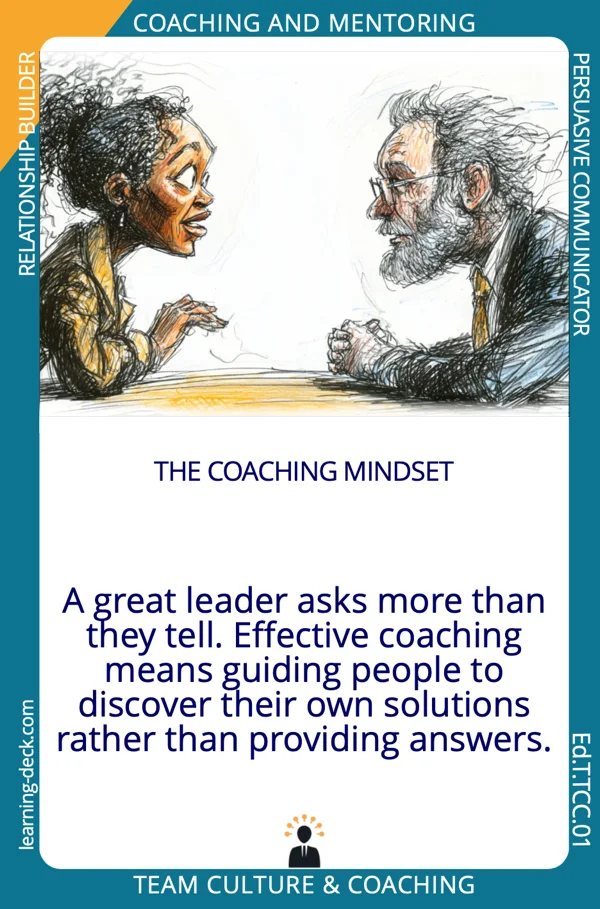
Open up trust, communication and collaboration.
Leadership prompts
Examine the dynamics that shape effective teams.
Strategy tactics
Practical moves to strengthen collaboration.
Coaching prompts
Support professional growth and honest feedback.
Scenario cards
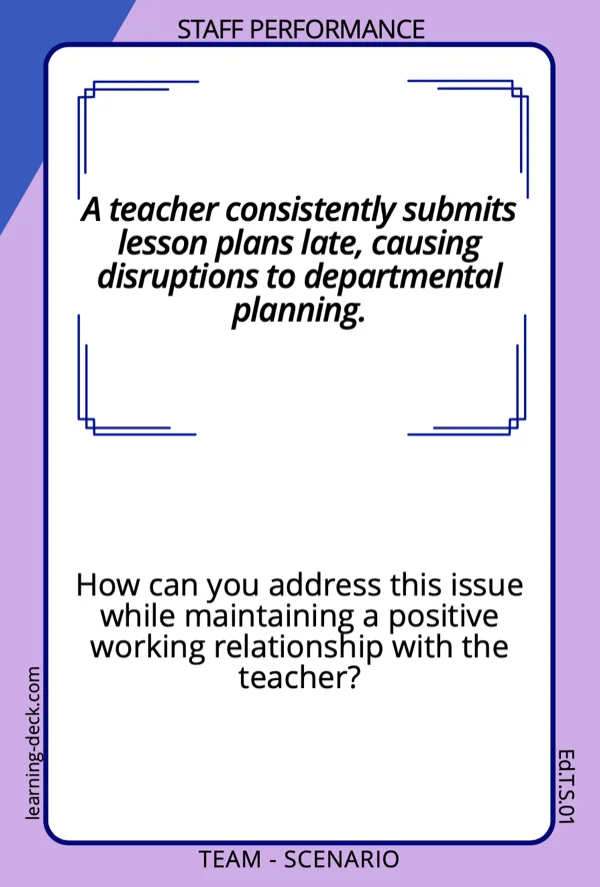
Real team situations to work through together.
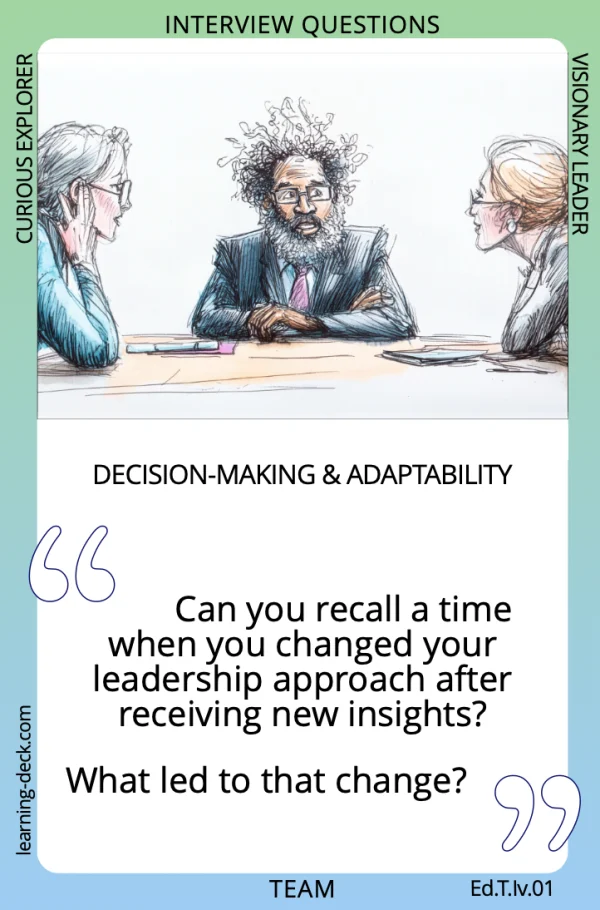
Interview questions
Deeper questions to gauge a real fit - especially for leading a team.
A deck per team is where it works
Thinking together is a team sport.
One set gives a team its first shared habits. A set for every team in the school makes thinking together the way meetings run everywhere - not a one-off in a single room. Volume pricing is available for 5+ sets; tell us your school and we'll handle the quote, shipping and any invoicing you need.
Turn a room full of talking into a team that thinks.
Give your teams the habits that combine their thinking - so the ideas that leave the meeting are better than the ones that arrived.
Free EU shipping · 30-day returns · Part of the Synnovate Suite
Collective Thinking by Design