The deck family
More than learning decks.
Different work. The same design principle.
The first Learning Decks were created to make professional learning easier to use: take an important idea, turn it into a small practice, put it into people's hands and give them a way to try it together.
That principle has since travelled. Some decks help people develop professional practice. One helps groups improve how they think together. Another helps organisations examine how their strategy holds together.
Different work. Different cards. The same underlying idea: make thinking visible enough to use.
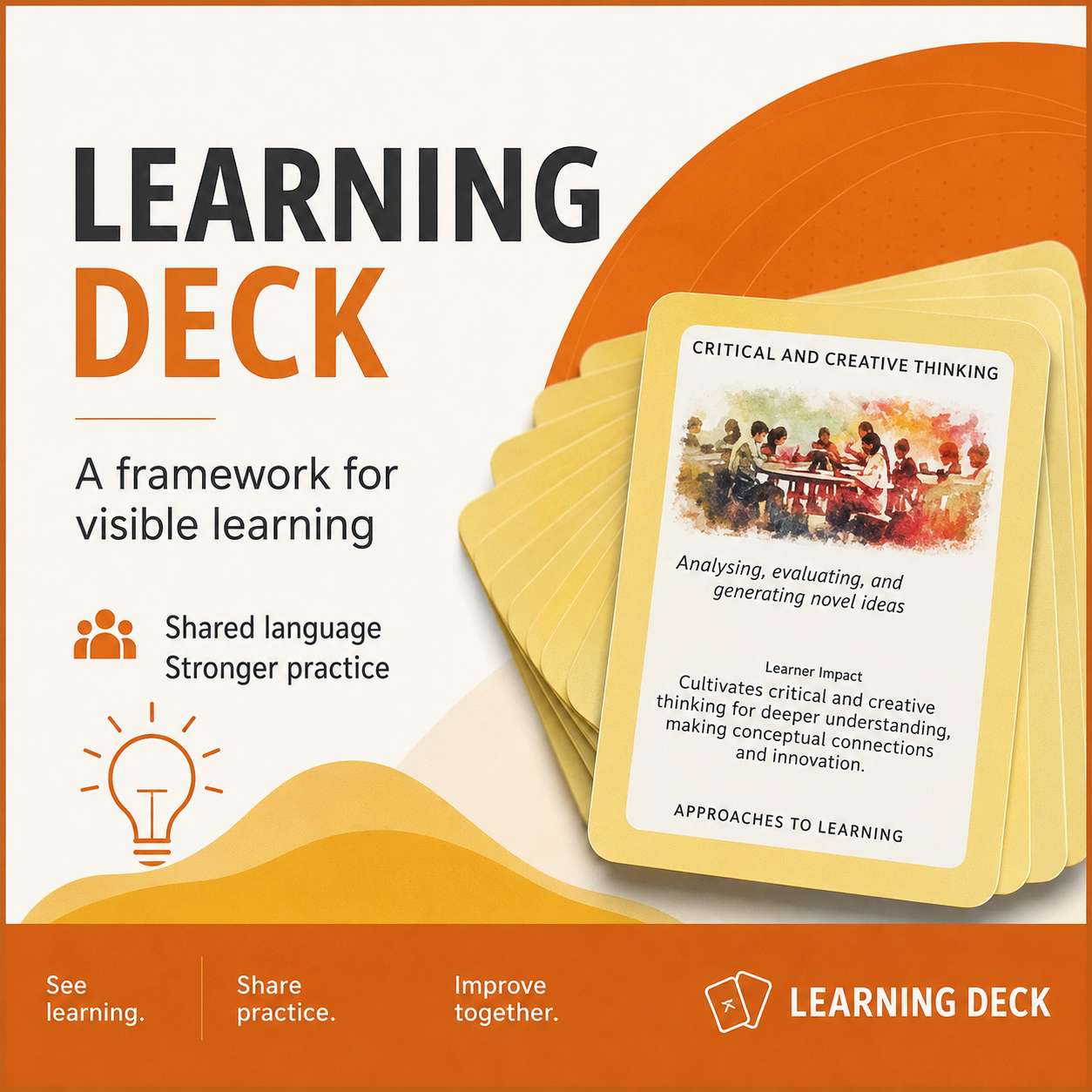
Learning Decks
Change practice.
Learning Decks turn professional learning into things people can actually do. Each deck provides prompts, practices and routines that can be picked up, discussed, tried and adapted. Learning becomes something people do together, not something delivered to them.
Explore the Learning Decks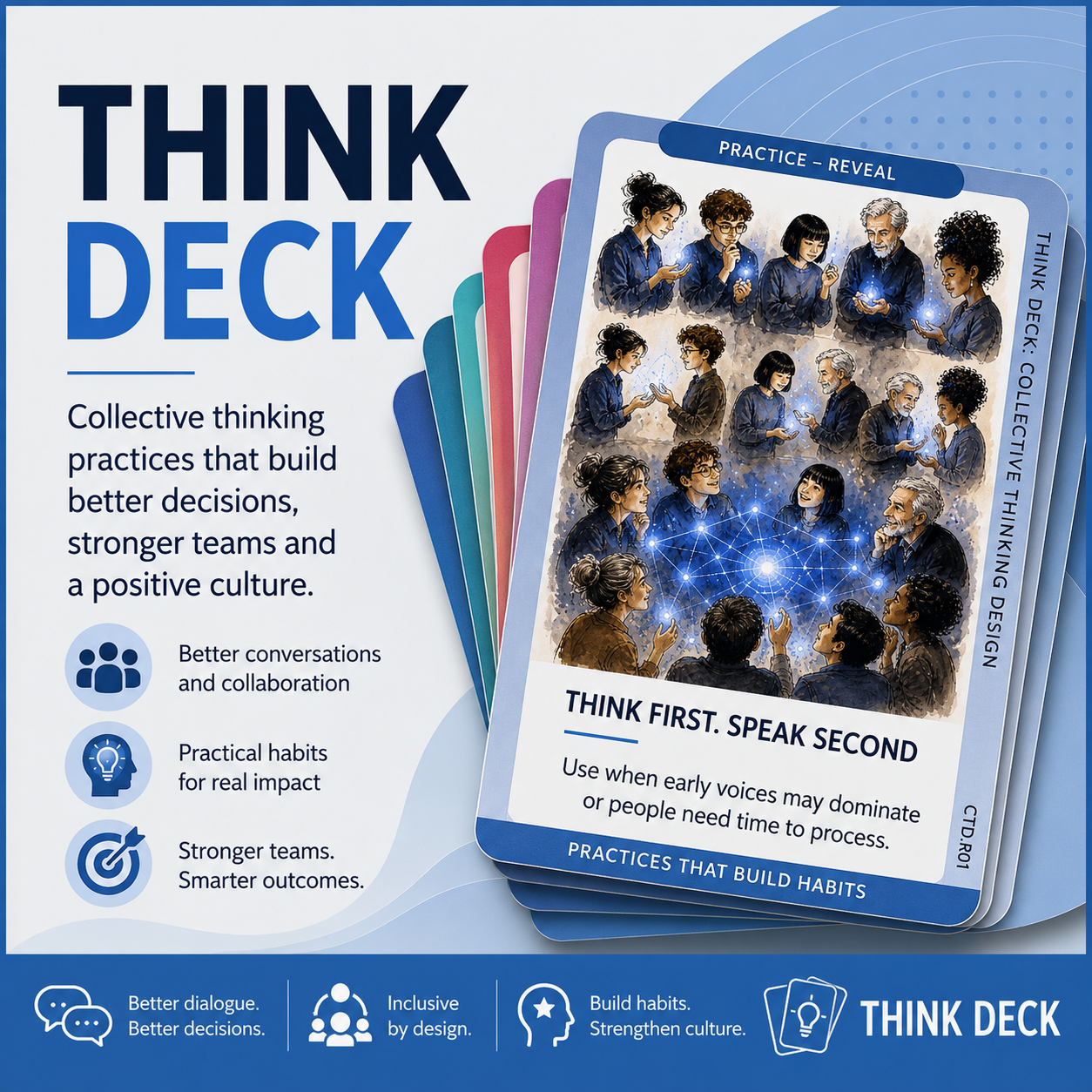
Think Deck
Change how a room thinks.
Every group develops habits. The Think Deck helps teams make those patterns visible and deliberately develop better ways of thinking together. Its cards explore Foundations, Habits, Practices, Patterns, Tensions and Prompts.
Explore Collective Thinking at Synnovate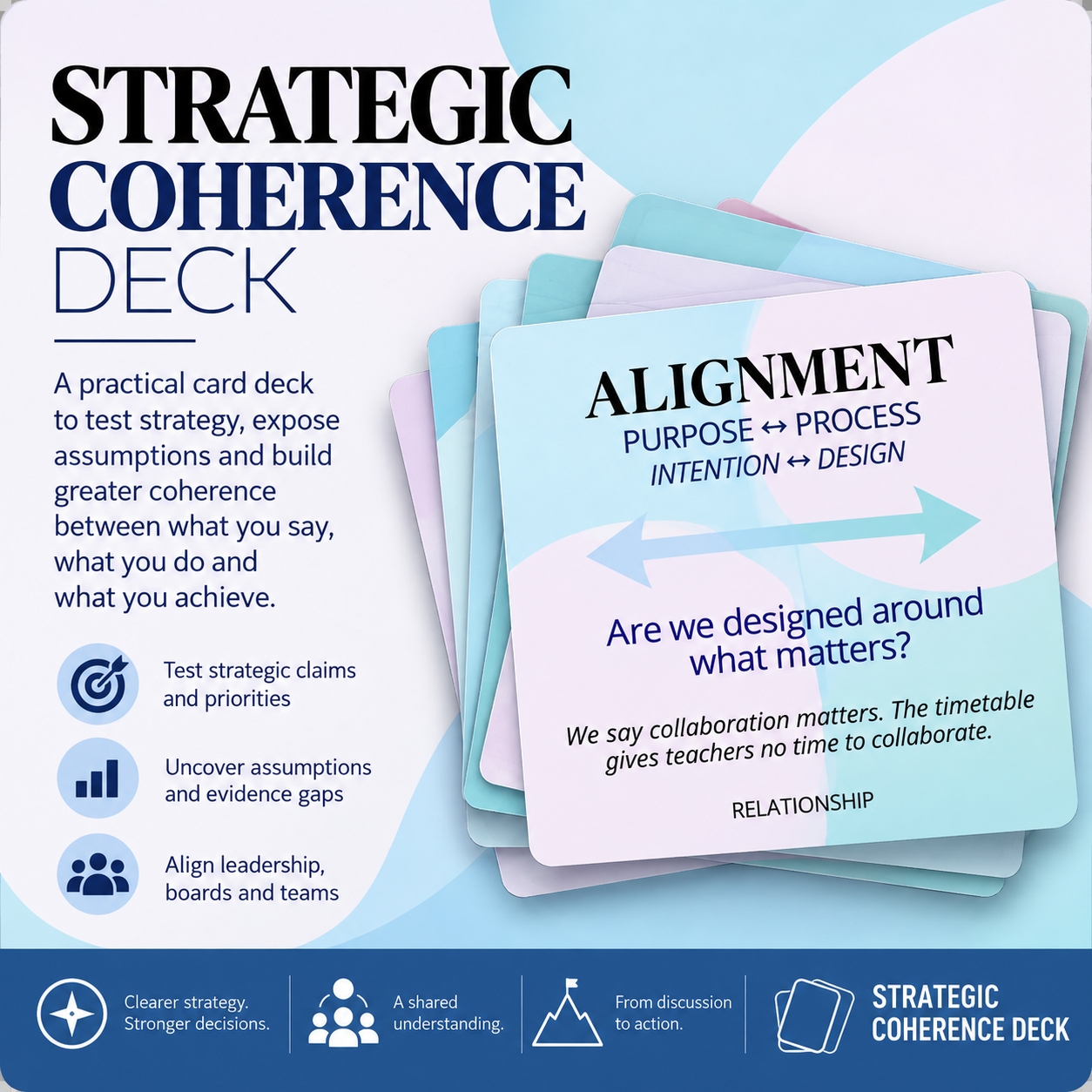
Strategic Coherence Deck
Change how strategy is examined.
Strategic plans make choices visible, not the reasoning underneath them. The Strategic Coherence Deck helps boards and leadership teams examine what matters, what depends on what, and whether claims about intended change are supported by organisational reality and evidence.
Explore Strategic Coherence at SynnovateHow they differ
One family. Different jobs.
| Learning Decks | Think Deck | Strategic Coherence | |
|---|---|---|---|
| Primary object | Practice | Collective thinking | Strategy |
| Core question | What could we do differently? | What is our thinking doing? | Does our reasoning deserve confidence? |
| Changes | Professional practice | How groups think together | Strategic judgement |
| Used by | Educators and teams | Teams, leaders and boards | Leadership teams and boards |
Why cards
Why cards?
Because important ideas are surprisingly easy to agree with and surprisingly difficult to use.
Cards change the interaction. They can be moved, grouped, compared and challenged. They can sit between people rather than belonging to the person with the loudest voice or the most senior title. They let an abstract idea become a shared object of attention.
And unlike a slide that disappears when the workshop ends, they can be picked up again.
A deck turns an idea into something a group can practise.