The Plans Deck
Halfway through the year, a new idea arrives - and the plan quietly begins to bend around it.
Sometimes the change is exactly what's needed. Sometimes it's just the newest priority displacing the last. The hard part isn't choosing between staying the course and changing direction. It's knowing which is wiser - and having a way to think it through together.
What's really going on
Why do schools so often solve the wrong problem?
The plan bends because the problem was never firmly defined. When no one has pinned down exactly what needs solving, every new idea looks about as good as the last - so the newest, loudest or most senior one wins.
Weak decisions rarely come from bad options. They come from a fuzzy problem. And by the time a plan is being written, the most important decision has usually already been made without discussion: which problem everyone agreed to solve.
The pattern underneath
The biggest decision is usually made before anyone notices making it.
Schools are remarkably good at solving problems - and remarkably quick to start. The energy goes into options, actions and timelines. The one step that decides everything downstream, defining the actual problem, is the step most often skipped.
Get the problem right and mediocre options still move you forward. Get it wrong and the best plan in the world drives the wrong way, faster. The wisest decision a school makes is often the one it never realises it is making.
Which is why it exists
That's exactly why we made the Plans Deck.
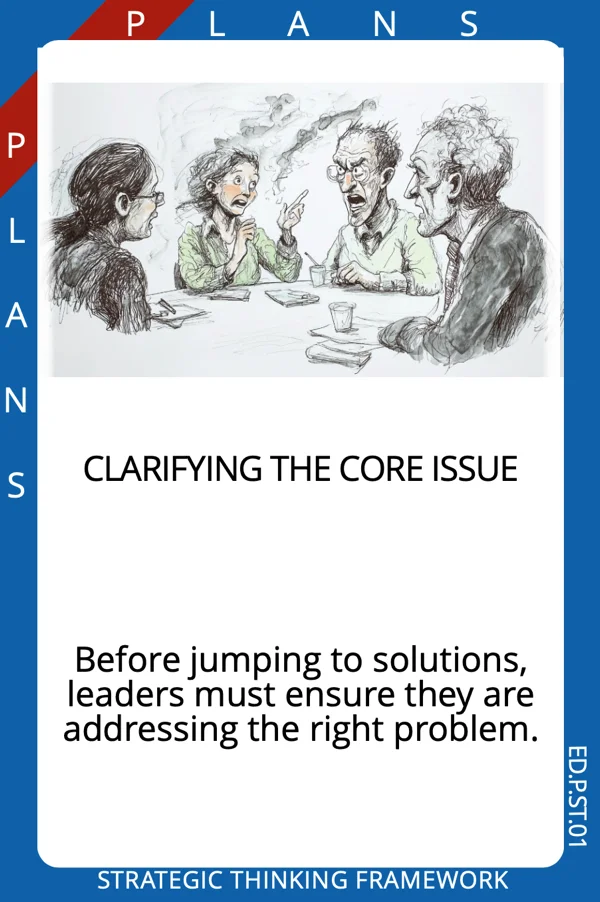
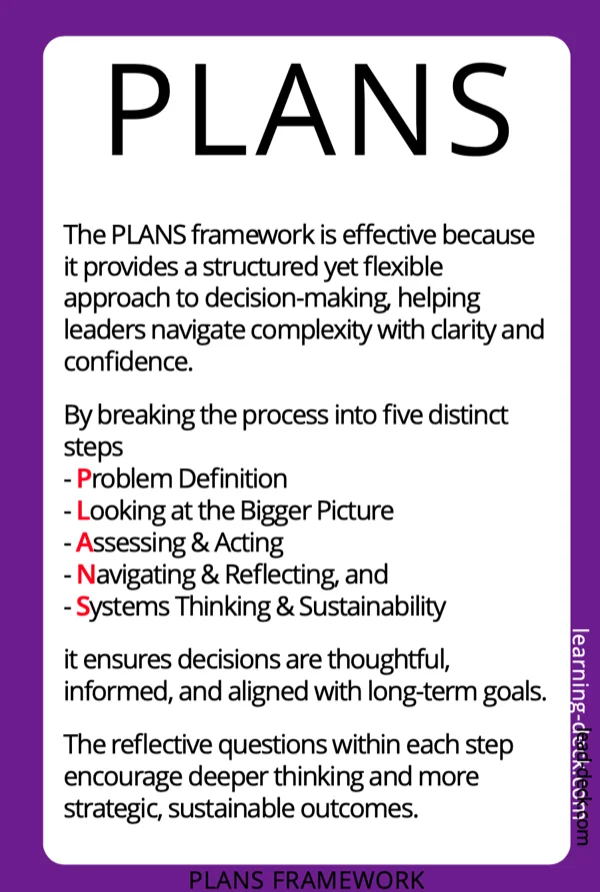
It is structured thinking for strategic decisions, built around the step most planning skips: defining the real problem before choosing a solution. The PLANS framework slows the jump to action just long enough to get the target right.
Not a template to fill in. A shared way to clarify the problem, weigh a genuine decision, trace the wider effects on the system, and connect the strategy to something a school can actually sustain.
What becomes visible
The real problem, before the solutions start. Once a school can see the decision beneath the decision, it stops bending with every new idea and starts choosing on purpose.
Problem first, then plan
A way to think it through together.
The cards move a group from a clear problem, through a genuine decision, to a plan that holds - and a scenario to pressure-test the thinking before it costs a year.
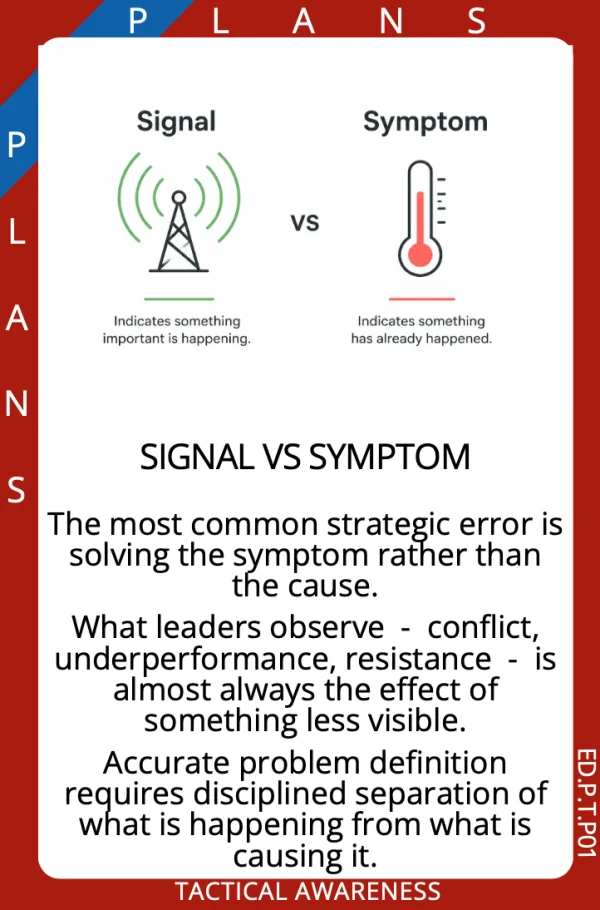
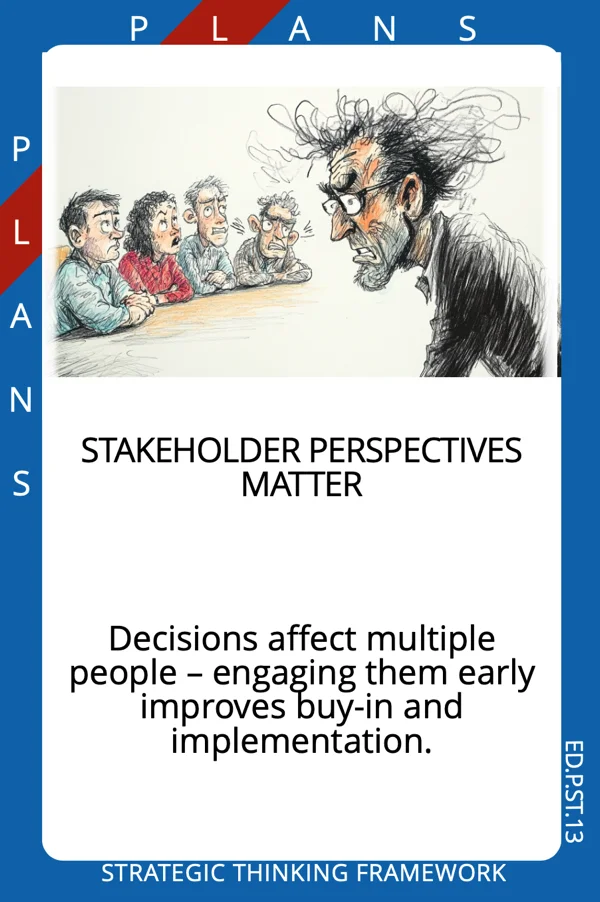
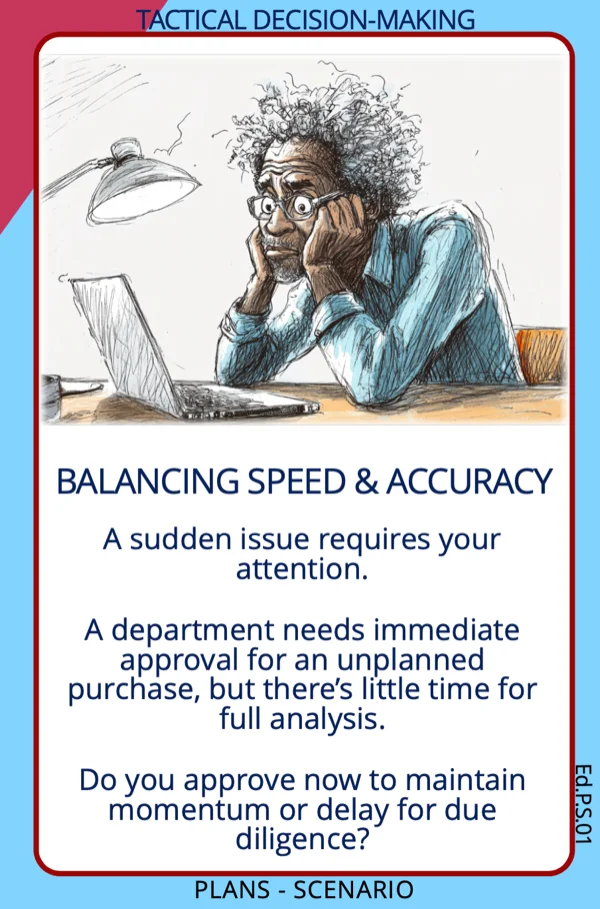
The strategic-thinking framework defines the problem and weighs the decision through several lenses; tactical-awareness reads the wider terrain; Inquire cards reframe the thinking; and scenarios pressure-test it against real school dilemmas.
Why it becomes school improvement
One clear decision is relief. The habit of defining the problem is a culture.
Culture is not what a school says it values. It is what a school repeatedly practises - and culture remembers what we practise. When defining the problem becomes the first move by habit, a school stops chasing priorities and starts steering.
When a school always asks "what is the real problem?" first, plans stop bending with the weather and start holding their line. More on this idea: building a thinking culture →
Where the real decisions happen
When is it for?
Any moment a school is about to commit time, money or attention to a plan.
Strategy
Improvement planning
Define the problem before writing the plan around it.
Mid-year
New priorities
Weigh the new idea instead of just absorbing it.
Choices
Big decisions
Work through complex organisational choices together.
Systems
Knock-on effects
See the wider consequences before committing.
Follow-through
Implementation
Connect the strategy to something that can be sustained.
In the box
What you actually get
A complete, physical set - built for the planning table, where the real decisions are made.
The PLANS framework
Structured thinking that puts the problem before the plan.
Strategic thinking framework
One set of lenses: define the problem, weigh the decision, see the wider effects.
Tactical awareness
Read the wider terrain a decision has to land in.
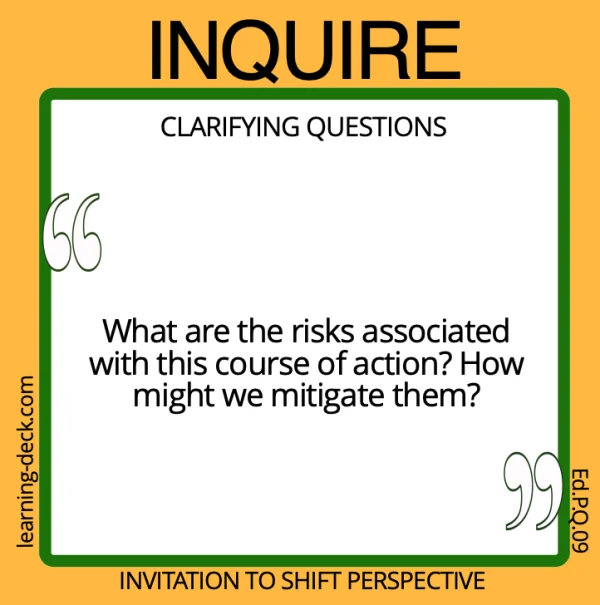
Inquire cards
Questions that reframe and shift the thinking before you commit.
Scenario cards
Real leadership dilemmas to reason through together.
A shared way to decide
Good decisions are easier when a team shares a method.
One set sharpens a single decision. A set across the leadership team makes "define the problem first" the way the school decides - on strategy, on priorities, on the plan. Volume pricing is available for 5+ sets; tell us your school and we'll handle the quote, shipping and any invoicing you need.
Solve the right problem, and the plan takes care of itself.
Give your school a shared way to define the problem before it plans - so effort goes to the target that actually matters.
Free EU shipping · 30-day returns · Part of the Synnovate Suite
Collective Thinking by Design