Every intersection of the Nine Map names a capacity. This is the deep dive beneath one of them: what it means, where established thinking meets it, what the evidence does and does not support, and what might help it develop. A worked example of the pattern, not settled science.
The proposition
We make what matters examinable so that attention can become consequential.
The capacity this intersection asks us to cultivate is adaptability.
Adaptability is the capacity to revise both understanding and action when circumstances change, rather than persisting with an approach because it once worked. It asks someone to notice that conditions have shifted, question the current approach, and change what they do in response.
Adaptability is not the same as flexibility or inconsistency. It is principled revision: changing because the evidence or the situation warrants it, not drifting with whatever pressure is loudest. It differs from judgement, which forms a reasoned view for a choice; adaptability revises that view, and the behaviour attached to it, as things move. And it differs from agency, which originates new action; adaptability changes action already underway.
It sits at the top of the Inquire column, above openness and discernment. Read the column upward and questioning steadily changes behaviour: you become willing to question, you learn to tell what the questioning reveals, then you act differently because of it. Inquiry that never changes anyone’s conduct has stopped short of adaptability.
In each context
The intersection stays generative as context changes. Inquire crossed with Empower keeps pointing towards adaptability, while its expression shifts.
Learning
Learners revise a method or a belief when it stops working, treating a wrong turn as information rather than failure.
Leadership
Leaders change approach as conditions change, and make it safe for teams to say that yesterday’s plan no longer fits.
Governance
Boards revisit strategy when the evidence shifts, rather than defending a decision because it has already been made.
System design
Feedback reaches the places that can act on it, so the system revises itself locally instead of waiting for central redesign.
Theoretical perspectives
Adaptability is not a single construct. Several established bodies of work illuminate different aspects of it. Some speak to it directly; others explain the conditions and capacities it draws on.
Direct perspectives
- Adaptive expertise
- The distinction between adapting knowledge to novel problems and applying a fixed routine efficiently. Adaptability is the first of these.
- Double-loop learning
- Changing the governing assumptions behind action, not only correcting the action within them.
- Self-regulated learning
- Planning, monitoring and adjusting one’s own approach, the machinery by which revision actually happens.
- Requisite variety
- A system can only cope with as much variety as it can generate in response.
- Complex adaptive systems
- How systems reorganise in response to their environment, with no central designer specifying each change.
Important neighbours
- Judgement
- Forming a reasoned view. It sits at Inform × Empower; adaptability revises the view and the action as conditions move.
- Discernment
- Telling what a change actually requires. It sits below, at Inquire × Engage, and feeds adaptability.
- Metacognition
- Noticing that an approach is failing. It matters here but bears on several capacities rather than defining this one.
What research suggests
A caution first. What follows does not validate the six-principle model, and it is not offered as proof. It is the evidential trail: established work that concerns adaptability directly, and separate work that supports part of the mechanism this intersection proposes.
Research directly concerning adaptability
The distinction between adaptive and routine expertise is long-standing: performers who can apply what they know to new problems, versus those who execute familiar procedures efficiently but falter when the problem shifts (Hatano & Inagaki, 1986). Organisational work makes a parallel point, that real adaptation often needs double-loop learning, revising the governing assumptions behind action rather than only correcting the action (Argyris & Schön, 1978), while self-regulation research describes the monitoring and adjustment through which a person changes course (Zimmerman, 2002). From cybernetics comes a useful systems analogy rather than evidence about a human capacity: a regulator can cope only with the variety it is itself capable of generating (Ashby, 1956).
Research supporting part of the mechanism
The claim that examination feeds adaptability rests on narrower ground: transfer of learning to new situations is difficult and depends on the learner, the task and the distance between the original and transfer contexts (Barnett & Ceci, 2002). This shows why fixed application is insufficient, but it does not by itself establish that examination produces revision.
So the honest position holds. Adaptability has substantial theoretical and empirical neighbours, while the specific claim, that making what matters examinable while attention is consequential develops adaptability, remains a hypothesis worth testing rather than a settled finding.
Research base
- Argyris, C., & Schön, D. A. (1978). Organizational learning: A theory of action perspective. Addison-Wesley.
- Ashby, W. R. (1956). An introduction to cybernetics. Chapman & Hall.
- Barnett, S. M., & Ceci, S. J. (2002). When and where do we apply what we learn? A taxonomy for far transfer. Psychological Bulletin, 128(4), 612–637. https://doi.org/10.1037/0033-2909.128.4.612
- Hatano, G., & Inagaki, K. (1986). Two courses of expertise. In H. Stevenson, H. Azuma, & K. Hakuta (Eds.), Child development and education in Japan (pp. 262–272). W. H. Freeman.
- Zimmerman, B. J. (2002). Becoming a self-regulated learner: An overview. Theory Into Practice, 41(2), 64–70. https://doi.org/10.1207/S15430421TIP4102_2
A proposed starting base, not a closed list, grouped by whether a source concerns adaptability itself or supports part of the proposed mechanism.
Design implications
If we take these perspectives seriously, several design implications follow. These are design propositions, not a recipe for producing adaptability.
Praxis
Practices make the design propositions concrete. For adaptability, these might include after-action reviews that ask what has changed and what should change with it, pre-mortems that rehearse how a plan might fail, small reversible experiments in place of large irreversible bets, and explicit permission to stop or switch an approach that is not working.
A practice can support more than one capacity. A pre-mortem develops adaptability while also sharpening discernment. The Nine Map is therefore not a filing system for practices; it provides a way of asking what a practice is intended to develop.
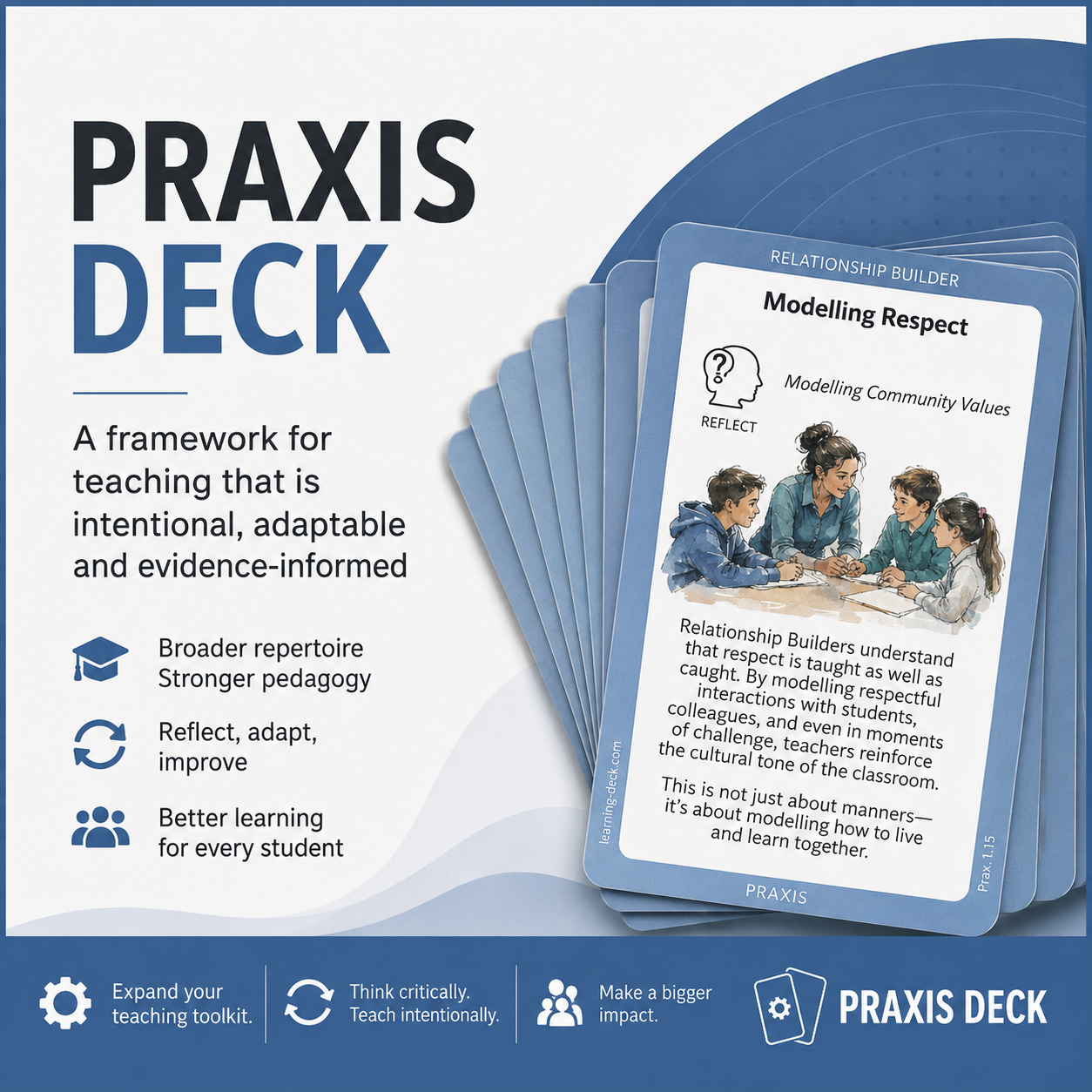
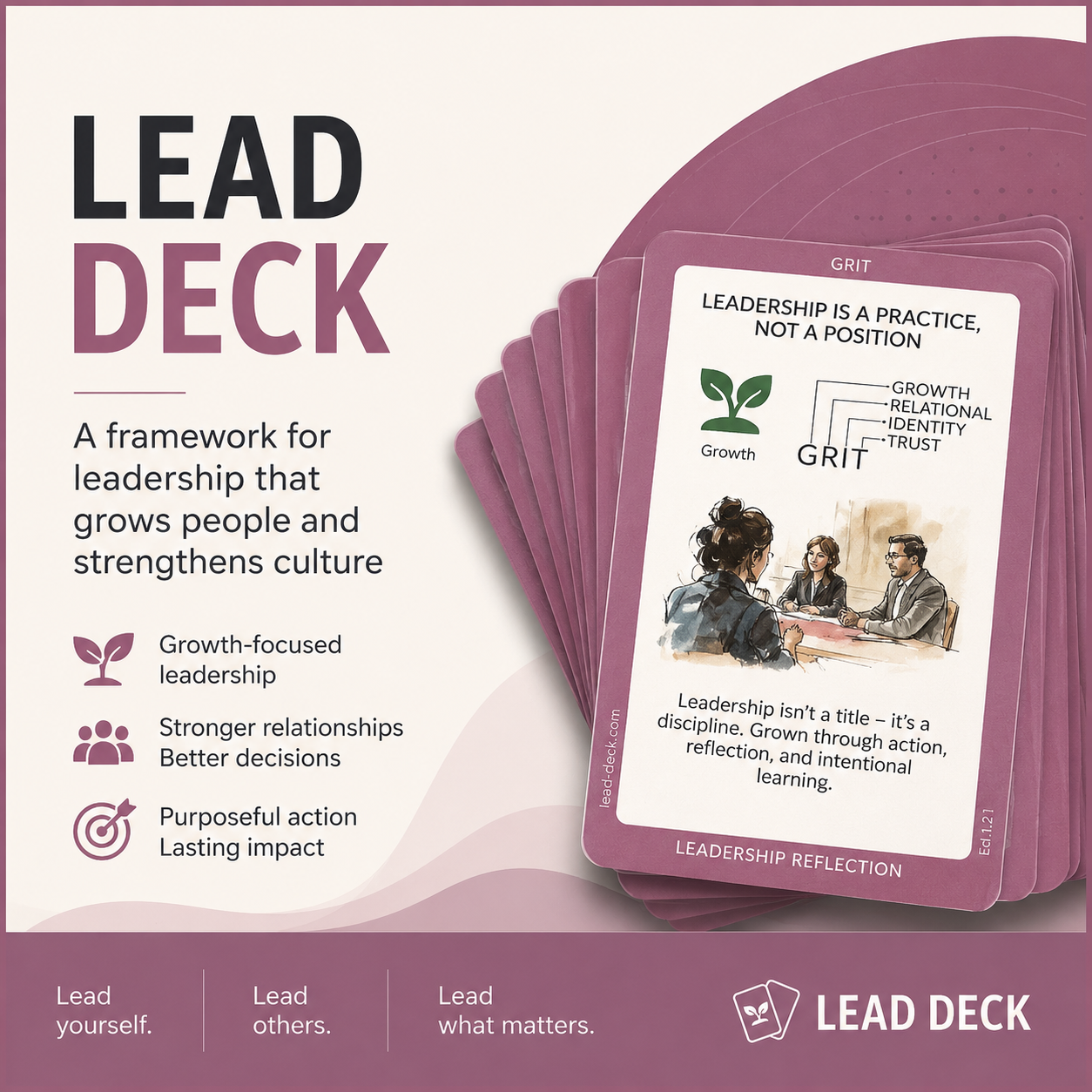

Relevant practices appear across Praxis, Lead and Board because the context changes while the underlying developmental purpose stays the same.
Recognition
How would you know adaptability was developing? You would look for someone increasingly able to notice when conditions have changed, question an approach that once worked, revise both their understanding and their action, and do so because the situation warrants it rather than because pressure demands it.
The last part matters most, because it is the hardest to fake. Changing with every wind can look like adaptability but is not; revising for good reason, and holding steady when there is none, is much harder to counterfeit.
This is also the test that keeps the model honest. If increasingly good adaptability never becomes recognisable, the Inquire and Empower practices are not doing what we think they are.
The feedback loop
Practice, to recognition, to capacity, to principle, to purpose. What we can recognise in practice is how we learn whether the theory of action is working, or whether it needs to change.
Back to the Nine Map. Adaptability is one of nine intersections, each opening into the same depth. Use the map above to move between them.