Every intersection of the Nine Map names a capacity. This is the deep dive beneath one of them: what it means, where established thinking meets it, what the evidence does and does not support, and what might help it develop. A worked example of the pattern, not settled science.
The proposition
We make what matters possible so that attention can become consequential.
The capacity this intersection asks us to cultivate is agency.
Agency is the capacity to exercise intentional influence over events: to shape what happens rather than only respond to it. It asks someone to believe their action can make a difference, and to have the room to act on that belief.
Agency is not the same as activity or compliance. It is intentional, self-authored influence directed towards a possibility, not motion for its own sake or the execution of someone else’s instruction. It differs from judgement, which forms the reasoned view that action can rest on, and from adaptability, which revises understanding and action as circumstances change. Agency is what makes a person an author of what happens next. And Empower, the principle, is the condition, not the capacity: you do not hand someone agency, you create the conditions in which it can be exercised.
It sits at the top of the Inspire column, above possibility and purpose. Read the column upward and what could be steadily becomes influence: you see a possibility, you commit to it as a purpose, then you exercise agency in bringing it about. The Nine Map uses agency in this focused sense while recognising that wider accounts of human agency also include forethought, self-regulation and reflection.
In each context
The intersection stays generative as context changes. Inspire crossed with Empower keeps pointing towards agency, while its expression shifts.
Learning
Learners initiate, choose and shape their work, rather than only completing what is set.
Leadership
People closest to the work act on their own initiative within clear boundaries, without waiting for permission.
Governance
The board delegates real authority so leaders can act, holding them to account for outcomes rather than steps.
System design
Authority, information and resources sit close enough to the work that local action does not require central sign-off.
Theoretical perspectives
Agency is not a single construct. Several established bodies of work illuminate different aspects of it. Some speak to it directly; others explain the conditions and capacities it draws on.
Direct perspectives
- Self-efficacy
- The belief that one’s action can produce an effect. Without it, capability rarely becomes initiative.
- Human agency
- The account of people as intentional originators of action rather than only responders to circumstance.
- Self-determination: autonomy
- Acting from a sense of volition and ownership rather than external control, a basic condition for wholehearted action.
- Personal initiative
- Self-starting, proactive behaviour that goes beyond what is formally required.
- Locus of control
- Whether people experience outcomes as within their influence, which shapes whether they attempt to act at all.
Important neighbours
- Judgement
- The reasoned view action rests on. It sits at Inform × Empower; agency acts, judgement decides what action is sound.
- Purpose
- The committed direction agency enacts. It sits below, at Inspire × Engage.
- Possibility
- Seeing what could be. It sits at Inspire × Enjoy and precedes the will to bring it about.
What research suggests
A caution first. What follows does not validate the six-principle model, and it is not offered as proof. It is the evidential trail: established work that concerns agency directly, and separate work that supports part of the mechanism this intersection proposes.
Research directly concerning agency
The central construct is self-efficacy: people who believe their action can produce an effect attempt more, persist longer and recover better from setbacks (Bandura, 1997). Bandura later set this within a broader account of human agency, characterised by intentionality, forethought, self-regulation and reflection rather than initiation alone (Bandura, 2001). The Nine Map foregrounds the point at which these capacities become intentional influence. Self-determination theory adds that action is most wholehearted when it is autonomous, experienced as one’s own rather than controlled (Ryan & Deci, 2000), and work on personal initiative describes one important expression of agency: self-starting, proactive behaviour (Frese & Fay, 2001).
Research supporting part of the mechanism
Whether people attempt to act at all is shaped by whether they experience outcomes as within their influence (Rotter, 1966). That bears on possibility becoming attempted action without proving that possibility reliably produces agency.
So the honest position holds. Agency has substantial theoretical and empirical neighbours, while the specific claim, that making what matters possible while attention is consequential develops agency, remains a hypothesis worth testing rather than a settled finding.
Research base
- Bandura, A. (1997). Self-efficacy: The exercise of control. W. H. Freeman.
- Bandura, A. (2001). Social cognitive theory: An agentic perspective. Annual Review of Psychology, 52, 1–26. https://doi.org/10.1146/annurev.psych.52.1.1
- Frese, M., & Fay, D. (2001). Personal initiative: An active performance concept for work in the 21st century. Research in Organizational Behavior, 23, 133–187. https://doi.org/10.1016/S0191-3085(01)23005-6
- Rotter, J. B. (1966). Generalized expectancies for internal versus external control of reinforcement. Psychological Monographs: General and Applied, 80(1), 1–28. https://doi.org/10.1037/h0092976
- Ryan, R. M., & Deci, E. L. (2000). Self-determination theory and the facilitation of intrinsic motivation, social development, and well-being. American Psychologist, 55(1), 68–78. https://doi.org/10.1037/0003-066X.55.1.68
A proposed starting base, not a closed list, grouped by whether a source concerns agency itself or supports part of the proposed mechanism.
Design implications
If we take these perspectives seriously, several design implications follow. These are design propositions, not a recipe for producing agency.
Praxis
Practices make the design propositions concrete. For agency, these might include delegated decisions with explicit boundaries, opportunities to initiate rather than only respond, protected room to act on one’s own judgement, and visible support when self-started action does not go to plan.
A practice can support more than one capacity. A delegated decision develops agency while also exercising judgement. The Nine Map is therefore not a filing system for practices; it provides a way of asking what a practice is intended to develop.
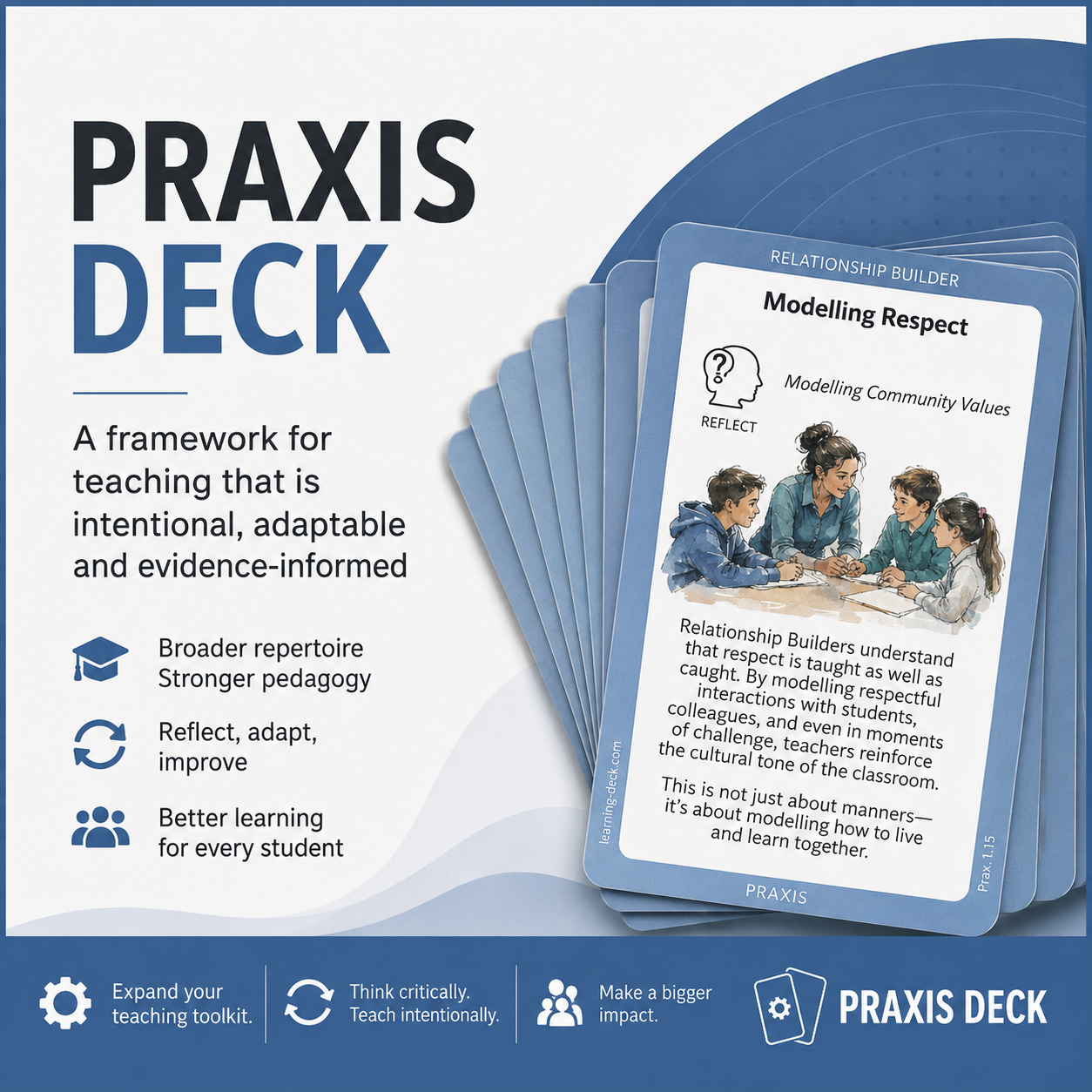
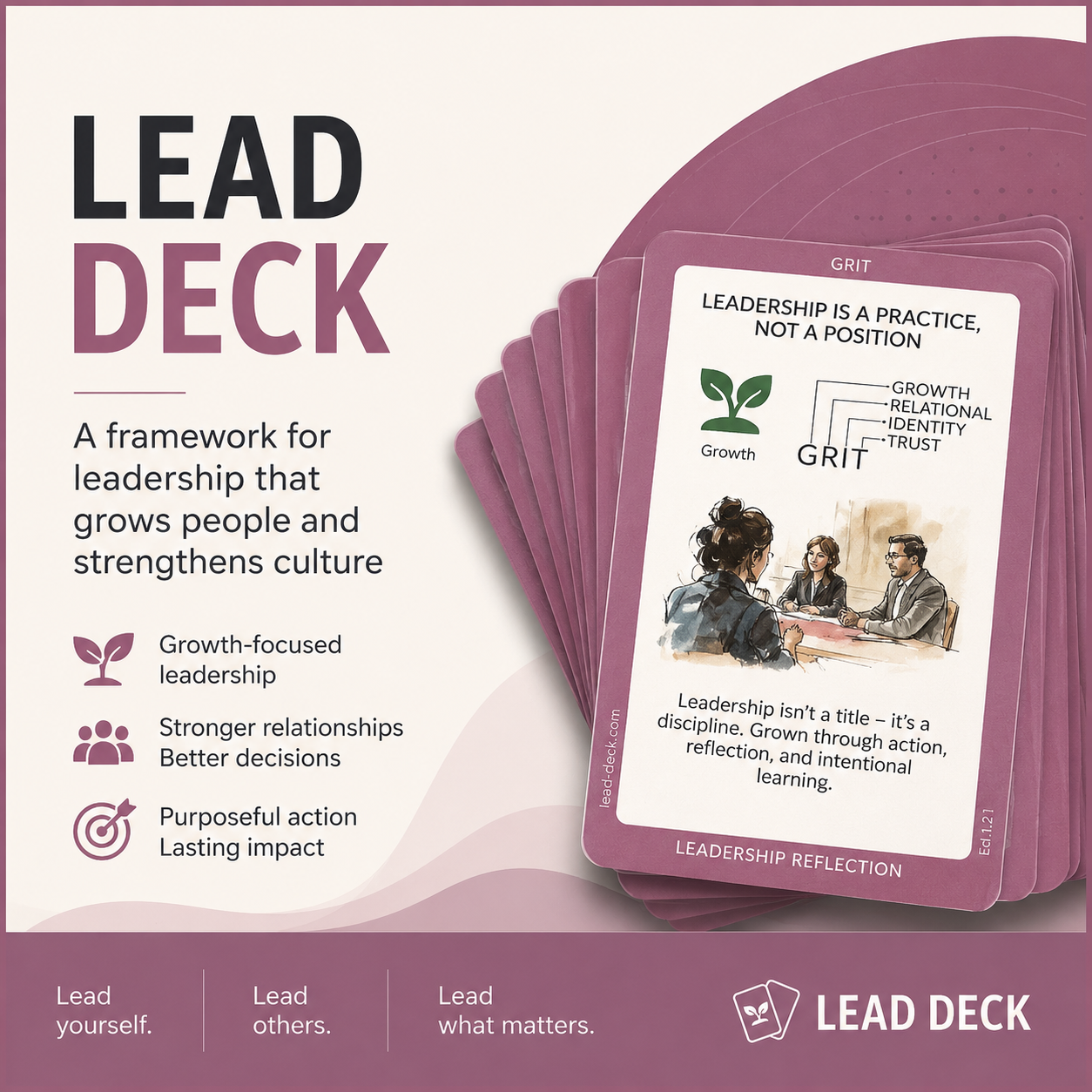
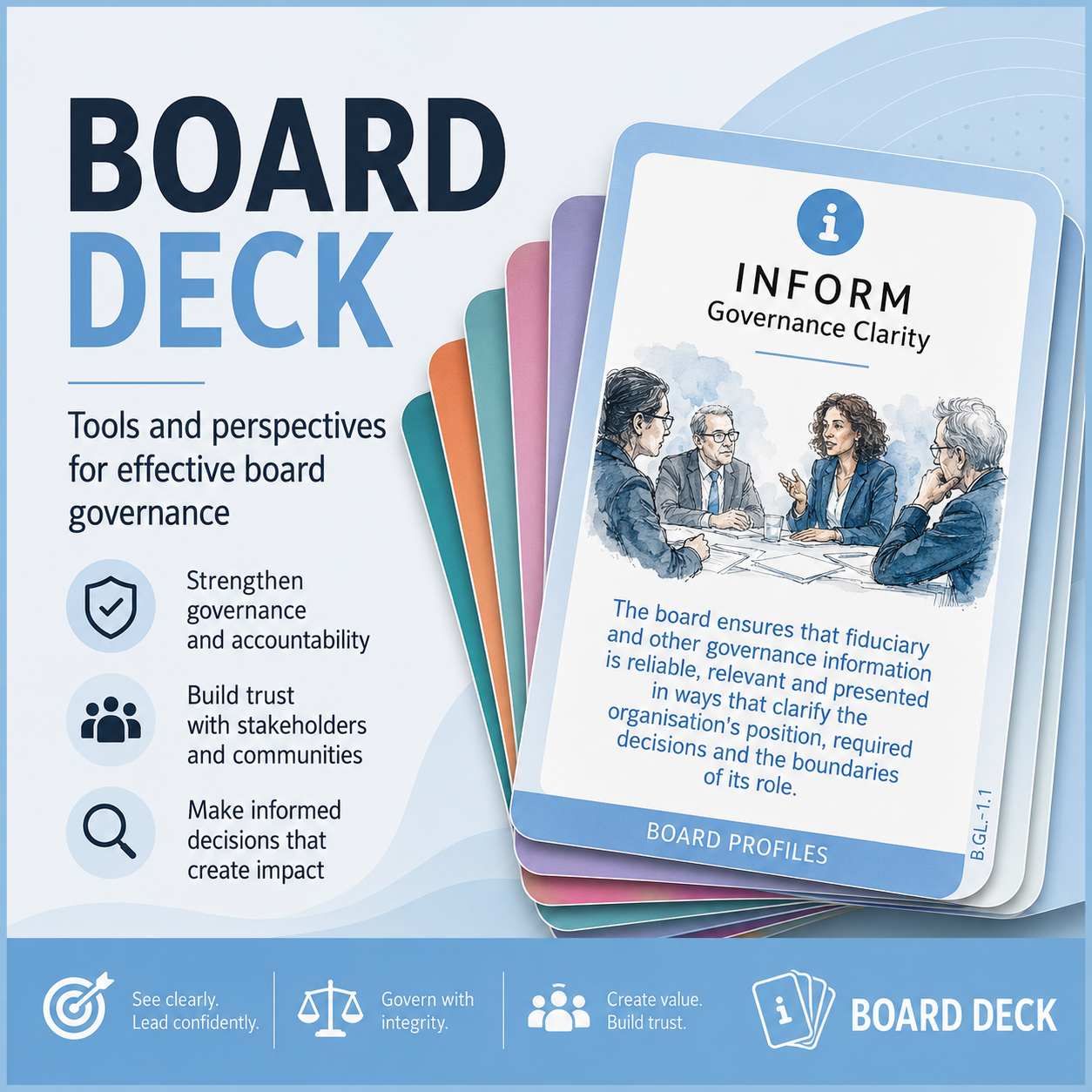
Relevant practices appear across Praxis, Lead and Board because the context changes while the underlying developmental purpose stays the same.
Recognition
How would you know agency was developing? You would look for someone increasingly able to start things rather than only respond, act on their own judgement within boundaries, take responsibility for what follows, and persist when a first attempt does not work.
Persistence through early failure matters most, because it is the hardest to fake. Initiative that evaporates at the first setback was closer to enthusiasm than to agency.
This is also the test that keeps the model honest. If increasingly good agency never becomes recognisable, the Inspire and Empower practices are not doing what we think they are.
The feedback loop
Practice, to recognition, to capacity, to principle, to purpose. What we can recognise in practice is how we learn whether the theory of action is working, or whether it needs to change.
Back to the Nine Map. Agency is one of nine intersections, each opening into the same depth. Use the map above to move between them.