Every intersection of the Nine Map names a capacity. This is the deep dive beneath one of them: what it means, where established thinking meets it, what the evidence does and does not support, and what might help it develop. A worked example of the pattern, not settled science.
The proposition
We make what matters examinable so that attention can be invested.
The capacity this intersection asks us to cultivate is discernment.
Discernment is the capacity to distinguish, what matters from what does not, what is credible from what is dubious, signal from noise, by examining rather than accepting. It asks someone to invest attention in evaluation: weighing evidence, questioning sources, telling quality apart.
Discernment is evaluation, not decision. It is the developed ability to tell things apart; judgement is what uses those distinctions to form a reasoned view for a consequential choice. Discernment can be excellent and stop there, invested rather than yet consequential. It also differs from openness beneath it: openness is the willingness to question, discernment is the earned ability to tell, once you do, what the questioning is worth.
It sits in the middle of the Inquire column, between openness and adaptability. Read the column upward and questioning steadily changes behaviour: you become willing to question, you learn to discern what the questioning reveals, then you act differently because of it.
In each context
The intersection stays generative as context changes. Inquire crossed with Engage keeps pointing towards discernment, while its expression shifts.
Learning
Learners weigh sources, spot weak reasoning, and tell a strong argument from a plausible-sounding one.
Leadership
Leaders distinguish signal from noise in what reaches them, and what deserves attention from what merely demands it.
Governance
The board tells robust assurance from reassuring presentation, and material risk from background detail.
System design
Filtering and review distinguish credible information from the rest before it drives decisions.
Theoretical perspectives
Discernment is not a single construct. Several established bodies of work illuminate different aspects of it. Some speak to it directly; others explain the conditions and capacities it draws on.
Direct perspectives
- Critical thinking
- The disposition and skill to interpret, analyse and evaluate claims and arguments rather than accept them at face value.
- Reflective judgment
- How people come to weigh evidence and justify beliefs where problems have no certain answer.
- Epistemic cognition
- Thinking about the grounds of knowing: what counts as evidence, and how sure one can be.
- Argument evaluation
- Telling a sound argument from a plausible-sounding one, and strong evidence from weak.
- Signal detection
- Distinguishing signal from noise under uncertainty, and the costs of confusing the two.
Important neighbours
- Judgement
- Using distinctions to form a view for a choice. It sits above, at Inform × Empower; discernment evaluates, judgement decides.
- Understanding
- Grasping how things relate. It sits beside, at Inform × Engage; discernment works on what is understood.
- Openness
- The willingness to question. It sits below, at Inquire × Enjoy, and makes discernment possible.
What research suggests
A caution first. What follows does not validate the six-principle model, and it is not offered as proof. It is the evidential trail: established work that concerns discernment directly, and separate work that supports part of the mechanism this intersection proposes.
Research directly concerning discernment
Critical thinking has been given a careful expert-consensus definition, including the disposition and skill to interpret, analyse, evaluate and draw warranted inferences rather than accept claims at face value (Facione, 1990). That wider construct crosses the Nine Map’s boundary between discernment and judgement; this cell foregrounds its evaluative work. Developmental research likewise shows that weighing evidence and justifying beliefs where no certain answer exists matures over years and unevenly (King & Kitchener, 1994; Kuhn, 1999). Research on individual differences in reasoning shows substantial variation in how people respond to classic reasoning problems and normative standards (Stanovich & West, 2000).
Research supporting part of the mechanism
Discernment also leans on domain knowledge: telling credible from dubious usually requires knowing the field well enough to see what is off (Willingham, 2007). That supports the link from examination to sound distinction without establishing the intersection’s full claim.
So the honest position holds. Discernment has substantial theoretical and empirical neighbours, while the specific claim, that making what matters examinable while attention is invested develops discernment, remains a hypothesis worth testing rather than a settled finding.
Research base
- Facione, P. A. (1990). Critical thinking: A statement of expert consensus for purposes of educational assessment and instruction (The Delphi Report). American Philosophical Association.
- King, P. M., & Kitchener, K. S. (1994). Developing reflective judgment: Understanding and promoting intellectual growth and critical thinking in adolescents and adults. Jossey-Bass.
- Kuhn, D. (1999). A developmental model of critical thinking. Educational Researcher, 28(2), 16–25, 46. https://doi.org/10.3102/0013189X028002016
- Stanovich, K. E., & West, R. F. (2000). Individual differences in reasoning: Implications for the rationality debate? Behavioral and Brain Sciences, 23(5), 645–665. https://doi.org/10.1017/S0140525X00003435
- Willingham, D. T. (2007). Critical thinking: Why is it so hard to teach? American Educator, 31(2), 8–19.
A proposed starting base, not a closed list, grouped by whether a source concerns discernment itself or supports part of the proposed mechanism.
Design implications
If we take these perspectives seriously, several design implications follow. These are design propositions, not a recipe for producing discernment.
Praxis
Practices make the design propositions concrete. For discernment, these might include comparing stronger and weaker arguments side by side, critiquing sources against explicit criteria, distinguishing evidence from assertion in real material, and calibration exercises that check judgements of quality against outcomes.
A practice can support more than one capacity. Comparing two arguments develops discernment while also deepening understanding. The Nine Map is therefore not a filing system for practices; it provides a way of asking what a practice is intended to develop.
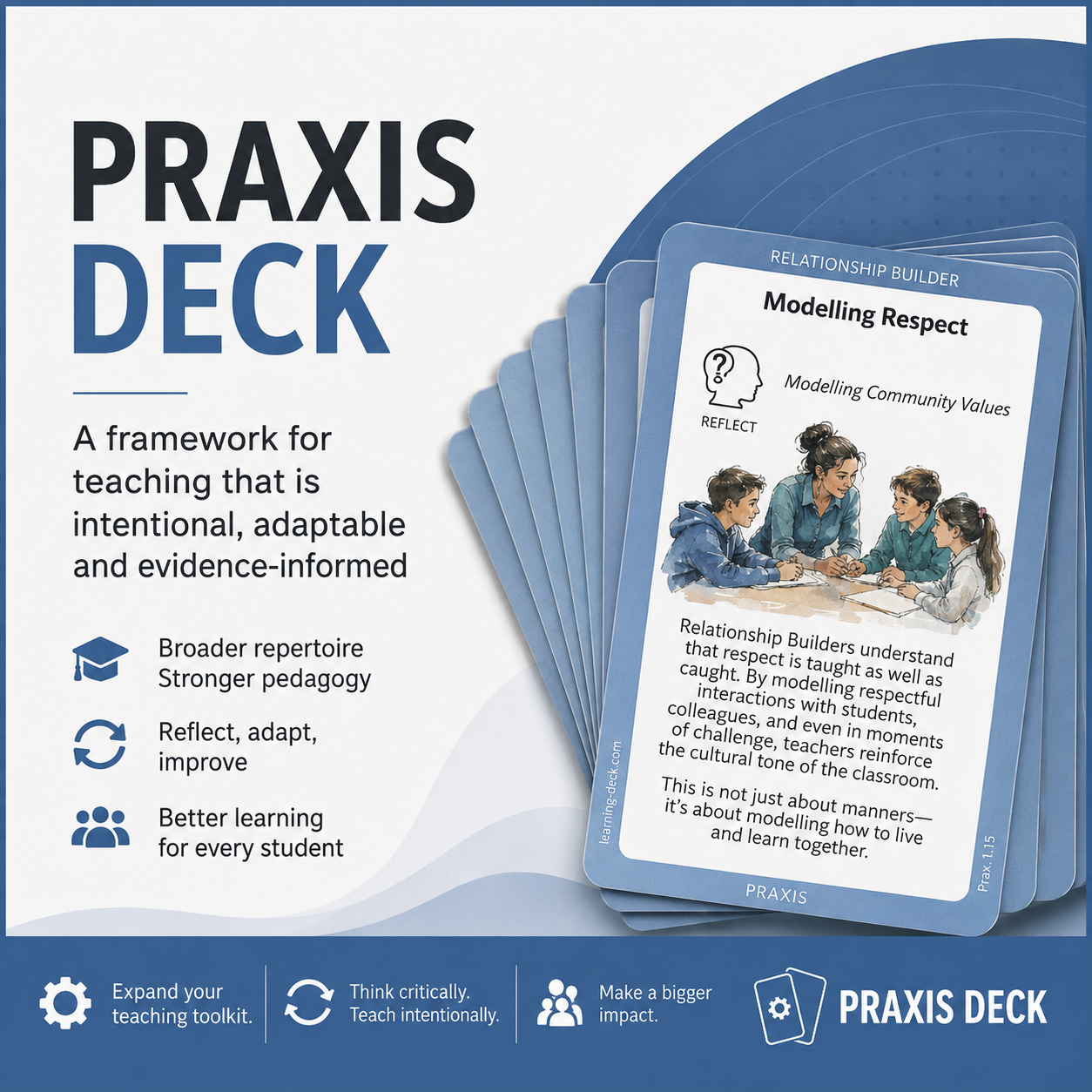
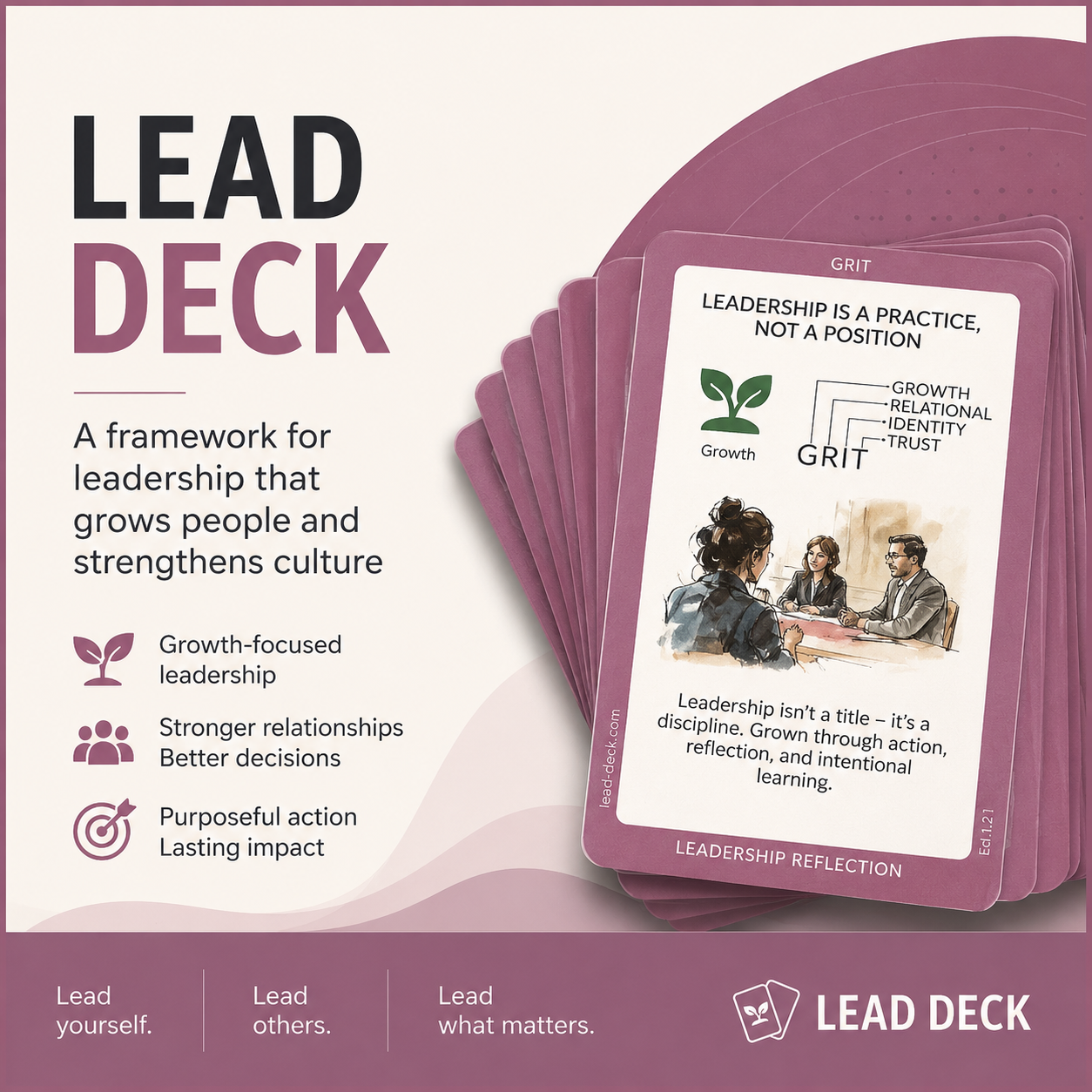
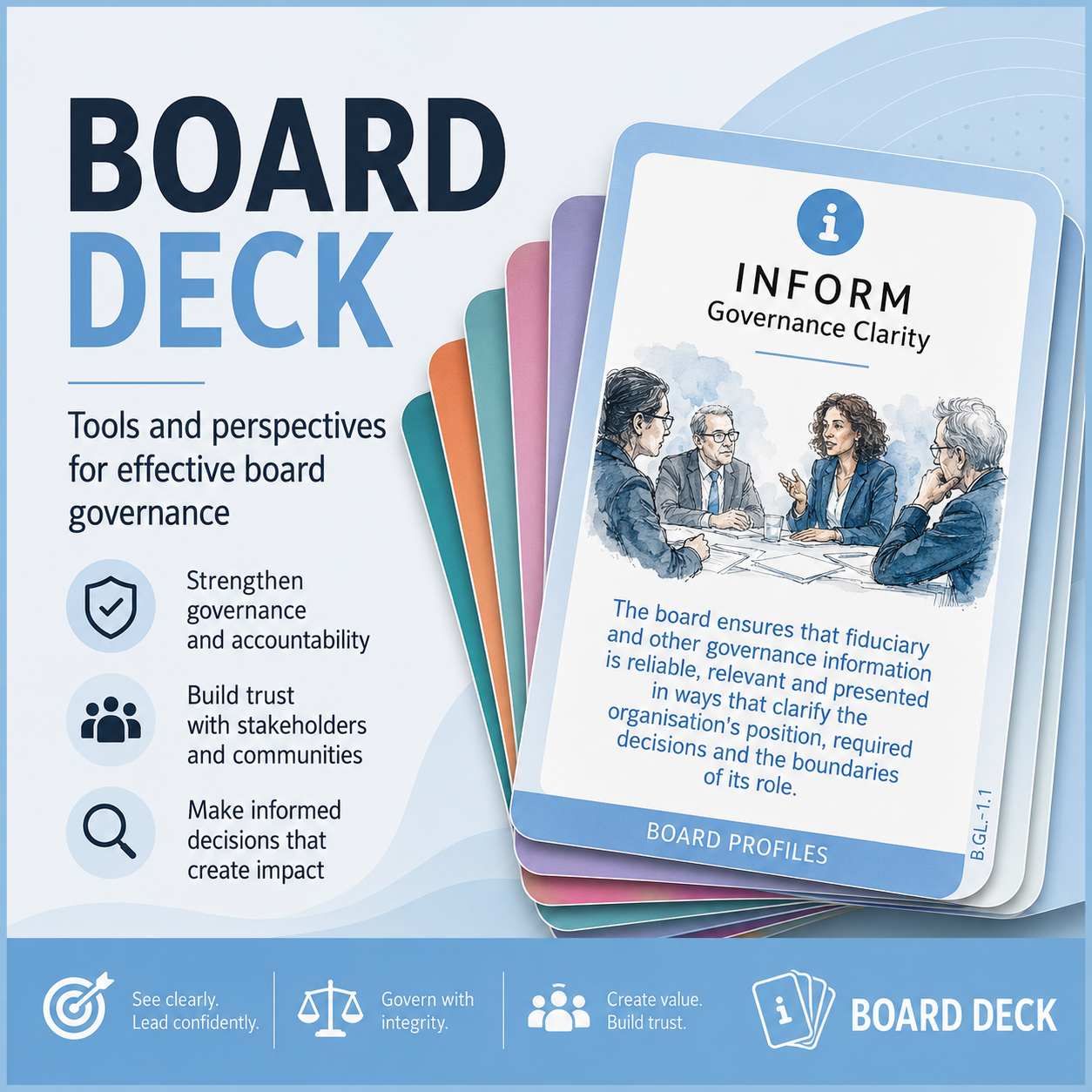
Relevant practices appear across Praxis, Lead and Board because the context changes while the underlying developmental purpose stays the same.
Recognition
How would you know discernment was developing? You would look for someone increasingly able to tell a strong argument from a plausible-sounding one, credible evidence from weak, what matters from what merely demands attention, and to say on what grounds.
Giving the grounds matters most, because it is the hardest to fake. A correct verdict reached for no articulable reason is closer to luck than to discernment.
This is also the test that keeps the model honest. If increasingly good discernment never becomes recognisable, the Inquire and Engage practices are not doing what we think they are.
The feedback loop
Practice, to recognition, to capacity, to principle, to purpose. What we can recognise in practice is how we learn whether the theory of action is working, or whether it needs to change.
Back to the Nine Map. Discernment is one of nine intersections, each opening into the same depth. Use the map above to move between them.