Every intersection of the Nine Map names a capacity. This is the deep dive beneath one of them: what it means, where established thinking meets it, what the evidence does and does not support, and what might help it develop. A worked example of the pattern, not settled science.
The proposition
We make what matters knowable so that attention can stay available.
The capacity this intersection asks us to cultivate is orientation.
Orientation is the capacity to locate oneself, to know where one is, what is going on, and what matters here, without attention being consumed by unnecessary uncertainty. It is the foundational knowing that frees attention for everything built on top of it.
Orientation is knowing where you are, not yet understanding how it works. You can be well oriented, clear on the task, the setting and what counts, before you understand any of it deeply. Orientation is available attention: it removes avoidable uncertainty so attention is free, rather than investing it. Its job is to take away the friction of not knowing where to stand, so that understanding and judgement have somewhere to begin.
It sits at the foot of the Inform column, beneath understanding and judgement. Read the column upward and knowing steadily becomes consequential, but it has to start somewhere: with people knowing where they are. Uncertainty about the basics quietly consumes the attention that deeper work needs.
In each context
The intersection stays generative as context changes. Inform crossed with Enjoy keeps pointing towards orientation, while its expression shifts.
Learning
Learners know what they are doing, why, and what a good outcome looks like, so attention is not spent guessing.
Leadership
People know the priorities, the boundaries and who decides, without decoding it in real time.
Governance
Board members arrive clear on what each item is for, decision, discussion or noting, rather than working it out in the meeting.
System design
Policies, processes and responsibilities are findable and consistent enough to remove avoidable uncertainty.
Theoretical perspectives
Orientation is not a single construct. Several established bodies of work illuminate different aspects of it. Some speak to it directly; others explain the conditions and capacities it draws on.
Direct perspectives
- Situation awareness
- Perceiving what is going on, grasping what it means and anticipating what follows, the basic footing for acting well.
- Sensemaking
- How people construct a workable account of an ambiguous situation, enough to act.
- Cognitive load
- Working memory is limited; avoidable uncertainty consumes it, leaving less for the task itself.
- Uncertainty reduction
- Reducing not-knowing about the basics so attention is freed for everything above it.
- Wayfinding
- How people build a usable model of an unfamiliar environment enough to move through it.
Important neighbours
- Understanding
- Grasping how things relate. It sits above, at Inform × Engage; orientation precedes and enables it.
- Openness
- Willingness to question. It sits beside, at Inquire × Enjoy, sharing the same available-attention condition.
- Psychological safety
- The team condition that keeps attention available rather than spent on self-protection.
What research suggests
A caution first. What follows does not validate the six-principle model, and it is not offered as proof. It is the evidential trail: established work that concerns orientation directly, and separate work that supports part of the mechanism this intersection proposes.
Research directly concerning orientation
In demanding, fast-moving settings, performance depends on situation awareness: perceiving what is happening, grasping what it means and anticipating what comes next (Endsley, 1995). Endsley’s construct is broader than orientation as the Nine Map uses it, extending into understanding and judgement; here it helps identify the foundational act of locating oneself within a situation. Where the situation is ambiguous, people rely on sensemaking to construct an account workable enough to act on (Weick, 1995). Research on cognitive load adds a narrower mechanism: because working memory is limited, avoidable complexity in how information is presented can consume capacity the task itself needs (Sweller, 1988).
Research supporting part of the mechanism
The condition underneath orientation, attention available rather than consumed by threat, has its own evidence: teams with higher psychological safety surface problems and information more readily (Edmondson, 1999). That supports the availability side of this intersection without settling its full claim.
So the honest position holds. Orientation has substantial theoretical and empirical neighbours, while the specific claim, that making what matters knowable while attention is available develops orientation, remains a hypothesis worth testing rather than a settled finding.
Research base
- Edmondson, A. (1999). Psychological safety and learning behavior in work teams. Administrative Science Quarterly, 44(2), 350–383. https://doi.org/10.2307/2666999
- Endsley, M. R. (1995). Toward a theory of situation awareness in dynamic systems. Human Factors, 37(1), 32–64. https://doi.org/10.1518/001872095779049543
- Sweller, J. (1988). Cognitive load during problem solving: Effects on learning. Cognitive Science, 12(2), 257–285. https://doi.org/10.1207/s15516709cog1202_4
- Weick, K. E. (1995). Sensemaking in organizations. Sage.
A proposed starting base, not a closed list, grouped by whether a source concerns orientation itself or supports part of the proposed mechanism.
Design implications
If we take these perspectives seriously, several design implications follow. These are design propositions, not a recipe for producing orientation.
Praxis
Practices make the design propositions concrete. For orientation, these might include clear success criteria and worked examples at the start, agendas that state what each item is for, findable and consistent reference material, and framing that removes avoidable uncertainty before work begins.
A practice can support more than one capacity. A clear success criterion supports orientation while also enabling understanding. The Nine Map is therefore not a filing system for practices; it provides a way of asking what a practice is intended to develop.
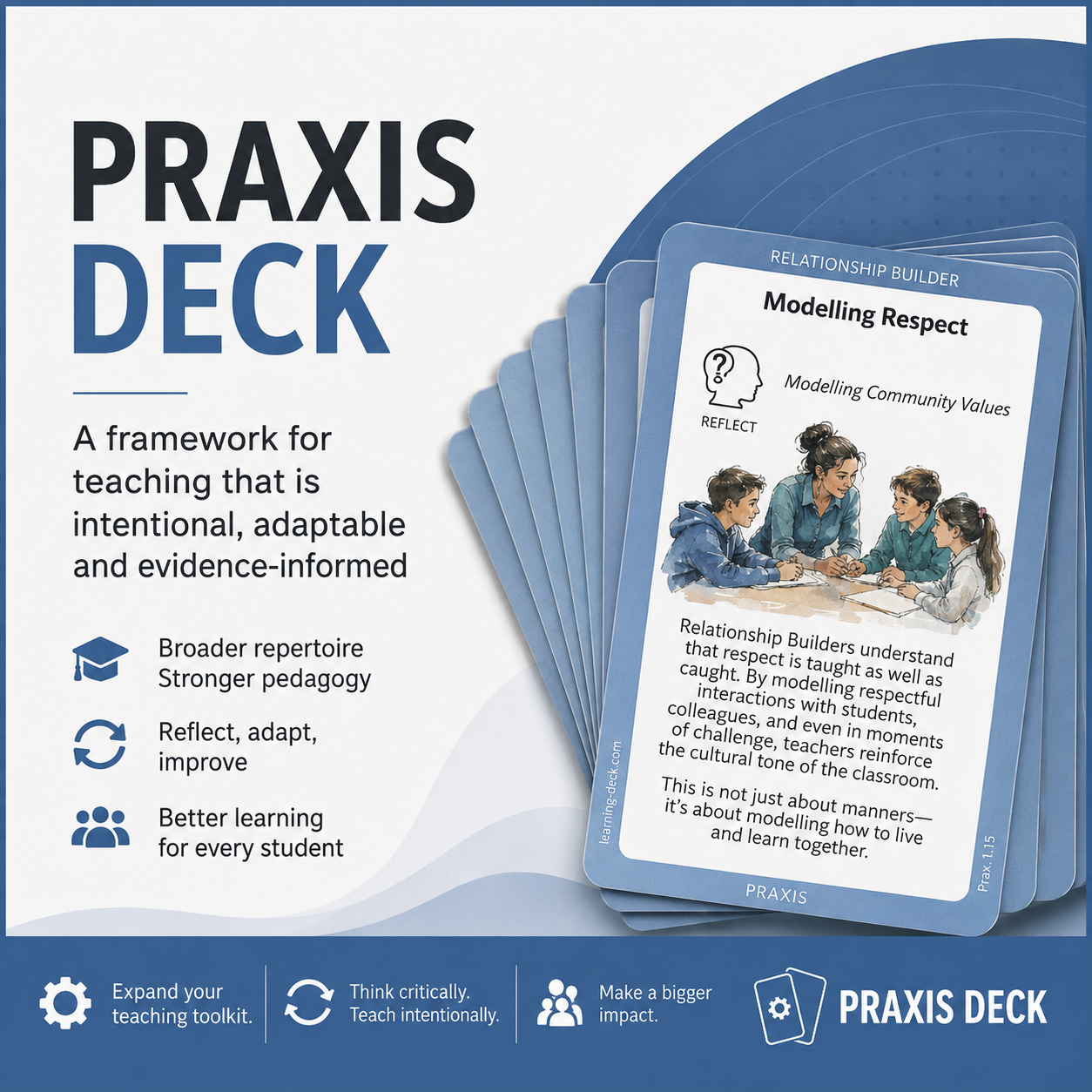
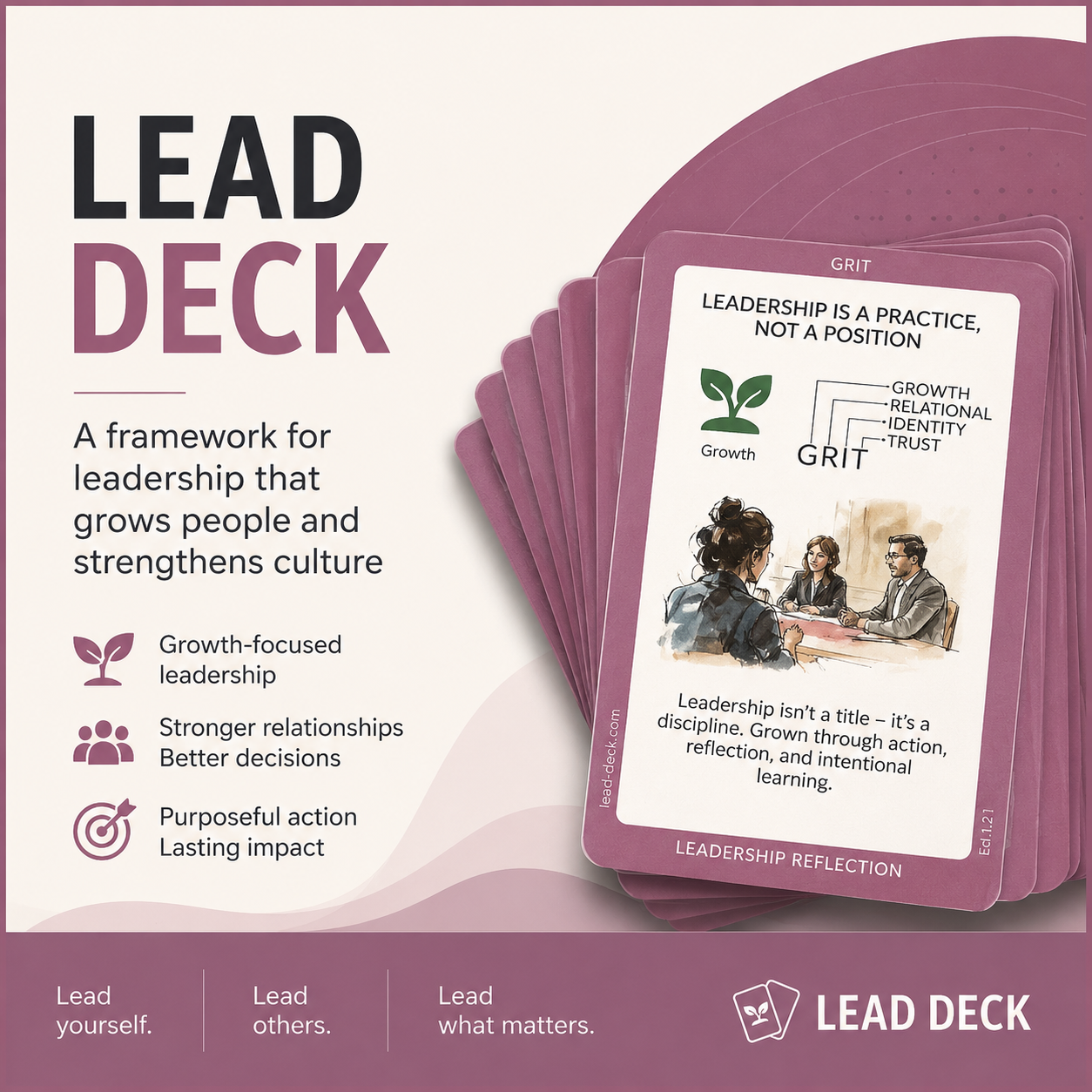
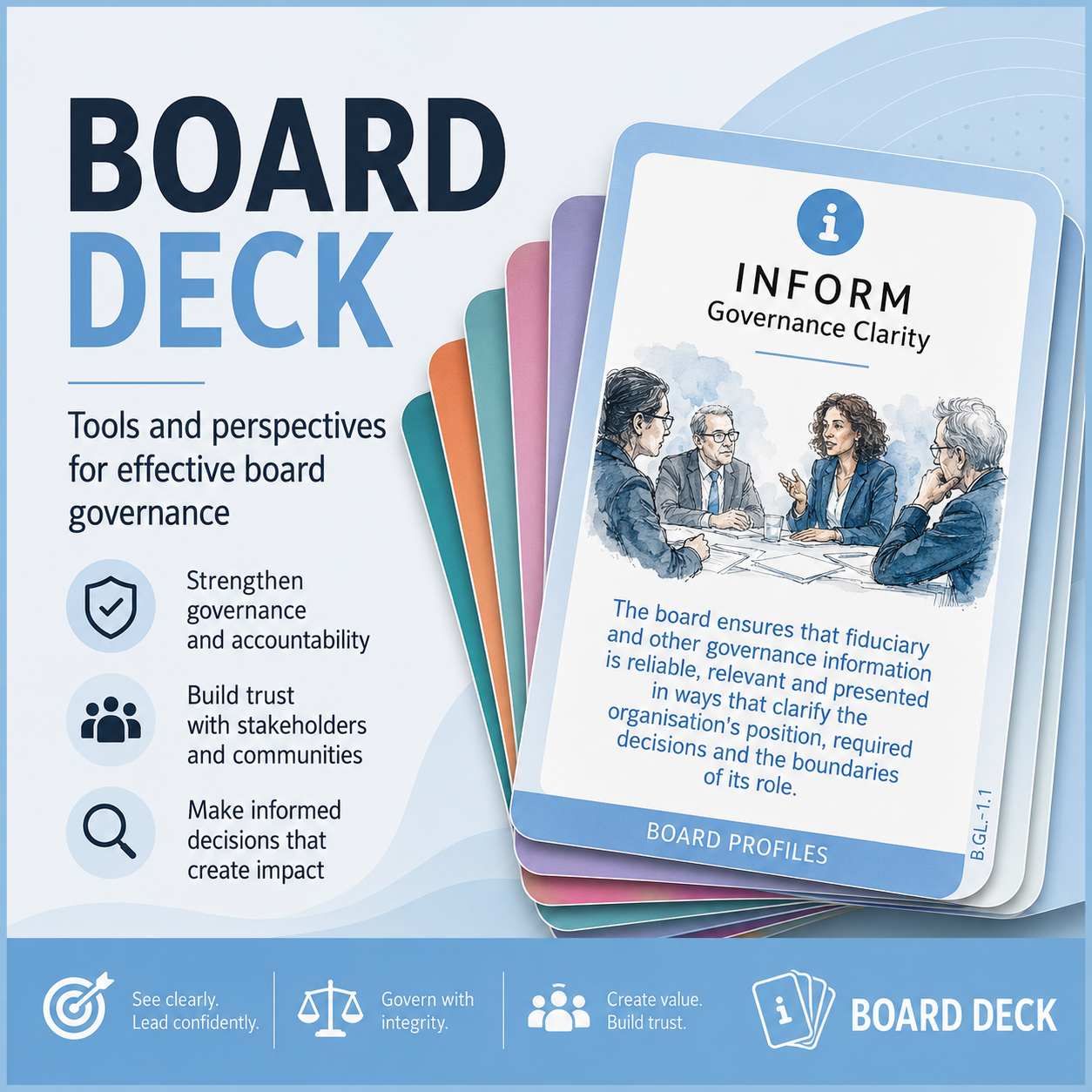
Relevant practices appear across Praxis, Lead and Board because the context changes while the underlying developmental purpose stays the same.
Recognition
How would you know orientation was developing? You would look for someone increasingly able to say where they are, what is going on, what matters here and what a good outcome looks like, without that knowledge having to be supplied afresh each time.
Needing it supplied less often matters most, because it is the hardest to fake. Being told where you are is not the same as being oriented; the test is whether the footing holds when no one is briefing you.
This is also the test that keeps the model honest. If increasingly good orientation never becomes recognisable, the Inform and Enjoy practices are not doing what we think they are.
The feedback loop
Practice, to recognition, to capacity, to principle, to purpose. What we can recognise in practice is how we learn whether the theory of action is working, or whether it needs to change.
Back to the Nine Map. Orientation is one of nine intersections, each opening into the same depth. Use the map above to move between them.